




Antique Japanese Silk
Antique japanese silk brings hand-painted panels, embroidered textiles and traditional garments into a room, offering rich texture and centuries of craftsmanship.
Antique Japanese Silk
When you search for antique japanese silk, you encounter textile wall art, folding screens, paintings and garments spanning multiple centuries.
The pieces most frequently met on this page include textile wall art, paintings on silk, folding screens and traditional kimonos.
These items originate from the 17th century through the Meiji period, Victorian era and the early 20th century, reflecting diverse decorative and wearable forms.
How antique japanese silk was made
Maker materials combine silk textiles, wood frames, paper supports and ink or paint applications, frequently complemented by glass, brass and lacquer elements.
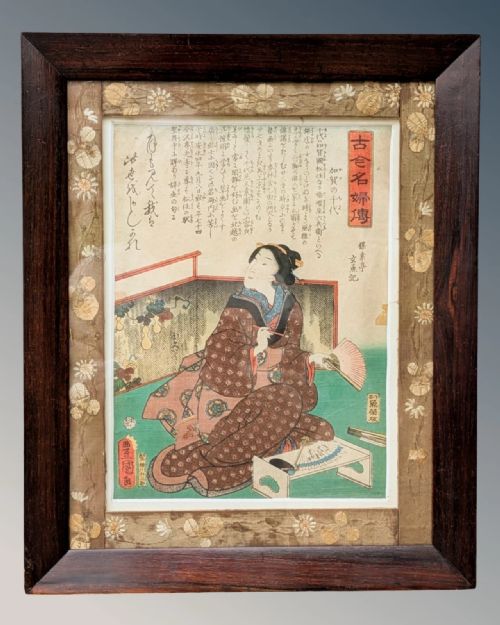
Artisans executed detailed paintings, woodblock prints with silk brocade mounts, and intricate needlework depicting subjects like birds, animals and figures.
A goose in flight demonstrates that antique silk was capable of capturing avian aerodynamics long before modern photography.
What varies in quality
Quality rests in the precision of the brushwork, the fineness of the silk weave and the complexity of the needlework or painting.
Condition of the delicate silk fabric and the integrity of accompanying wood, lacquer or metal mounts heavily influence the overall standard of each piece.
Iida Takashimaya Company
The Antique Japanese Silk Glossary
- Kimono
- A traditional Japanese garment consisting of long sleeves and a T-shaped wrapped front, often fashioned from decorated silk.
- Meiji Period
- A historical era spanning from 1868 to 1912 noted for significant artistic production and opening to Western trade.
- Edo Period
- The period of Japanese history lasting from 1603 to 1867 characterised by peace and distinct cultural arts.
- Ukiyo-e
- A genre of Japanese art encompassing woodblock prints and paintings depicting scenes of everyday life and nature.
- Furisode
- A style of formal kimono worn by unmarried women distinguished by very long sleeves.
Antique Japanese Silk: Frequently Asked Questions
How do I clean antique japanese silk?
Silk textiles require gentle professional care to avoid damaging fragile threads, painted details and historical fibres.
Dust accumulation should be minimised using soft brushes without applying moisture or chemical cleaners.
Can antique japanese silk be displayed in sunlight?
Direct sunlight causes natural silk dyes and painted pigments to fade severely over time, losing their original vibrancy.
Display pieces in rooms with indirect lighting or use UV-protective glazing on framed works to preserve the textile.
What is a folding screen used for?
Folding screens serve as decorative room dividers or freestanding backdrop panels within interior spaces.
They allow large rooms to be visually sectioned while showcasing detailed paintings or embroidered silk panels.
How are paintings on silk mounted?
Paintings on silk are frequently mounted onto paper scrolls, folding screens or placed within wooden frames with brocade borders.
This mounting provides structural support to the delicate silk fabric while framing the central artwork.