




Oriental Portrait Painting
These oriental portrait painting works bring centuries of skilled likeness and cultural dress straight into your home.
Oriental Portrait Painting
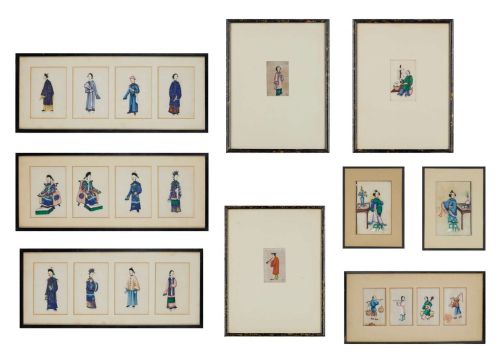
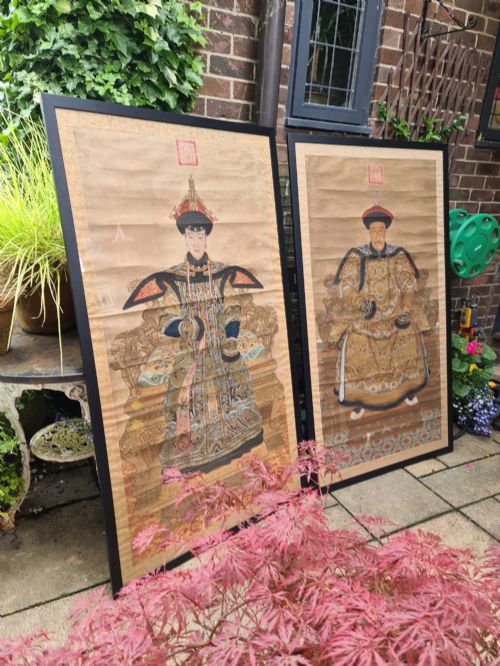
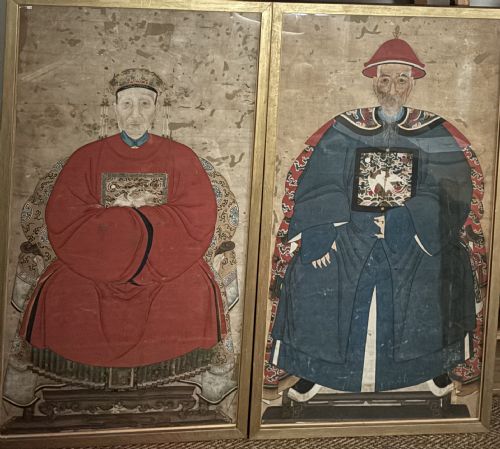
Oriental portrait painting covers framed artworks, scrolls, and miniatures originating from Asian traditions alongside European interpretations from the nineteenth century onward. You will regularly encounter Chinese ancestor portraits, reverse glass pieces, and delicate pith paper studies alongside Indian gouache miniatures and Japanese silk paintings.
Execution dates cluster heavily in the nineteenth and early twentieth centuries, capturing traditional dynasties and changing artistic currents. Whether mounted in original frames or preserved as hanging scrolls, these works offer direct visual records of historical figures and everyday types.
Materials and Techniques
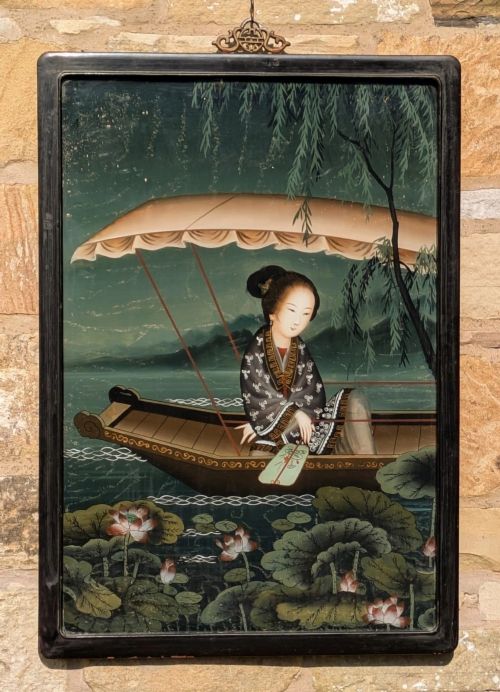
Reverse glass paintings required meticulous planning because the artist painted directly onto the back of the glass, beginning with the foreground details and finishing with the background. Scroll paintings and miniatures utilised fine brushes on silk or paper, often mounted securely within wood and glass frames for protection.
Several cats make unexpected appearances in these historical portraits, gazing out alongside their dignified human companions.
Evaluating Quality and Execution
Quality rests primarily on the precision of the brushwork and the preservation of the pigments across silk, paper, or glass. Finer works display exact facial expressions, delicate hand rendering, and vibrant colour retention that remain stable despite age.
The sophistication of the mounting and framing also distinguishes finer examples, particularly where original frames or traditional scroll mountings survive intact. Greater care in composition and depth separates master portraiture from more commercial export pieces.
Frederick Goodall RA·Takabatake Kasho·Ya Ming·Takashi Nakayama
The Oriental Portrait Painting Glossary
- Pith paper
- A delicate material formed from the pith of the Tetrapanax papyrifer plant, commonly used in nineteenth-century Chinese export watercolours. It possesses a velvety texture that absorbs watercolour and gouache with striking luminosity.
- Ancestor portrait
- A formal painting commissioned to honour deceased family members, particularly in China. These works typically depict subjects in rigid, dignified frontal poses wearing official or ceremonial robes.
- Reverse glass painting
- An artwork executed on the rear side of a pane of glass so that the final image is viewed through the transparent front. This technique demands confident execution since errors cannot be painted over.
- Gouache
- An opaque water-based medium consisting of pigment mixed with a water-soluble binder. It provides solid, flat areas of colour well suited to detailed miniature painting.
- Scroll painting
- A traditional East Asian format designed to be rolled up when not on display. These pieces use flexible supports of silk or paper backed with layers of textile.
Oriental Portrait Painting: Frequently Asked Questions
What is an oriental portrait painting?
These works are hand-painted likenesses originating from Asian traditions or created by artists depicting Eastern subjects during the nineteenth and twentieth centuries.
They encompass diverse formats including framed silks, glass panels, scrolls, and paper miniatures.
How can I tell the age of these paintings?
Dating relies on examining the materials, framing methods, and stylistic conventions associated with specific periods like the Qing dynasty or early twentieth-century production.
Paper degradation, pigment types, and backing materials also offer reliable clues to historical age.
Where should I hang a glass painting?
Reverse glass paintings suit interior walls where they avoid strong direct sunlight, which can fade the pigments over time. Sturdy wall fixings are essential due to the combined weight of the glass, painting, and frame.
Keep them away from damp areas like kitchens or unheated rooms.