





Oriental Planter Pot
An oriental planter pot brings sculptural weight and centuries of decorative artistry to interior spaces, housing mature greenery with distinct character.
Oriental Planter Pot
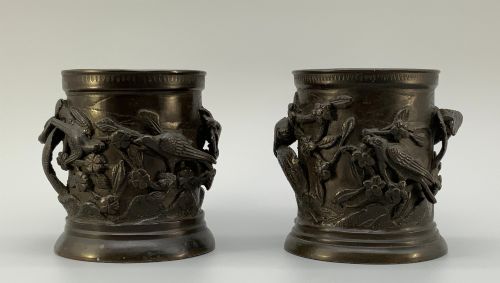
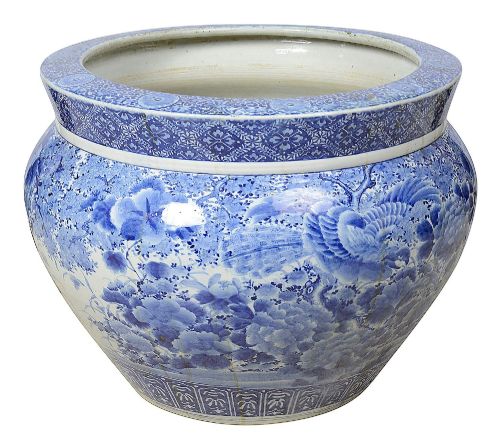
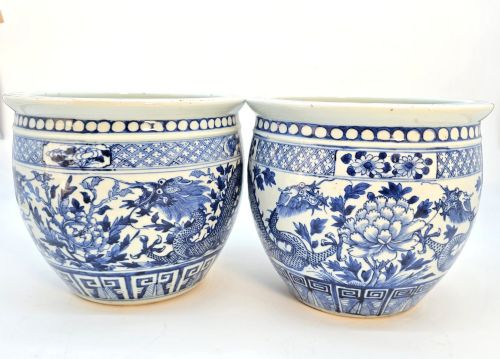
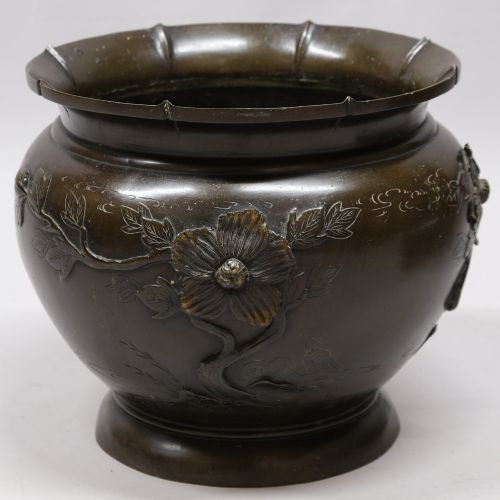
When buyers search for an oriental planter pot, they encounter a diverse selection of vessels designed to display plants, trees, and floral arrangements within domestic settings. These pieces primarily encompass substantial porcelain fish bowls and heavy metal jardinières originating from Chinese and Japanese traditions. The selection spans distinct historical eras, including the Japanese Meiji period and the Chinese Qing dynasty.
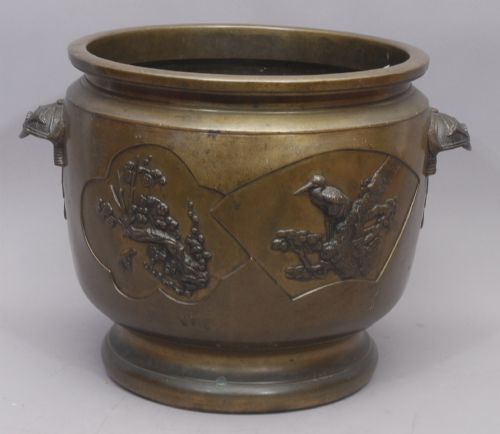
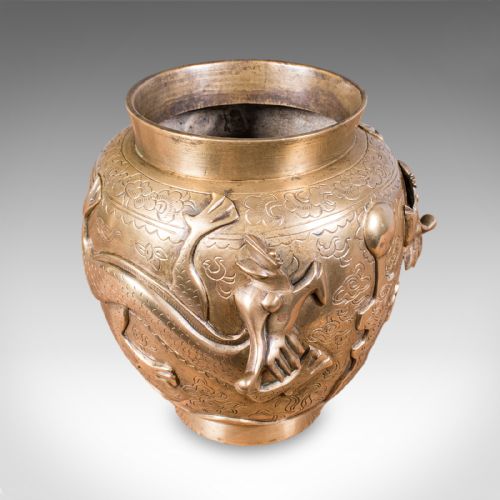
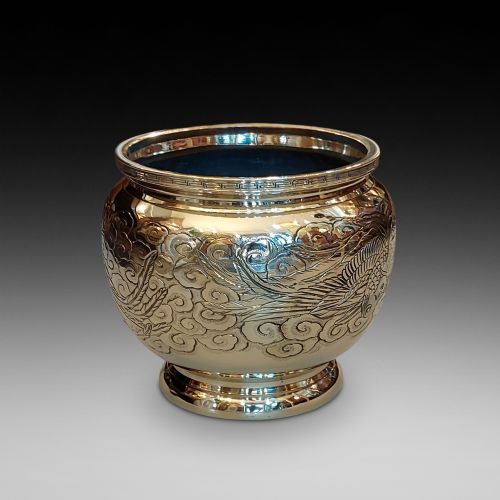
The most common forms met on this page are round or hexagonal porcelain vessels decorated in blue and white, alongside patinated bronze and brass bowls. Many examples arrive paired with carved hardwood stands or drip trays, designed to elevate the planter from the floor or table surface. These vessels frequently display traditional motifs such as birds, blossoms, and peonies rendered in varied artistic styles.
Originating from workshops across East Asia, these decorative items reflect the aesthetic priorities of their respective periods, from the refined restraint of Edo bronzes to the vibrant palettes of Canton porcelain. Buyers often select them to anchor a room with a distinct focal point or to house traditional bonsai specimens. Each piece bridges functional horticulture with elaborate applied art.
Materials and Construction
Makers utilised durable ceramic and porcelain bodies, applying cobalt blue underglazes or polychrome enamel palettes such as Famille Rose before high-temperature firing. Bronze and brass vessels were cast using traditional methods, often incorporating champlevé or cloisonné enamel work where coloured pastes fill recessed or wired metal partitions. These metallic pieces frequently received patination treatments to produce deep, weathered surface tones.
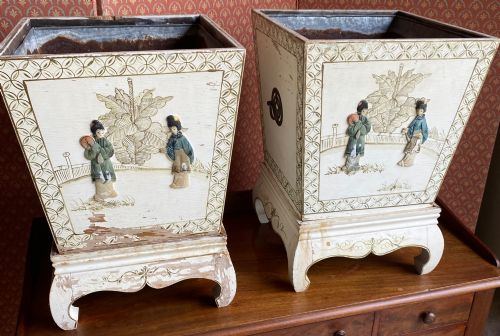
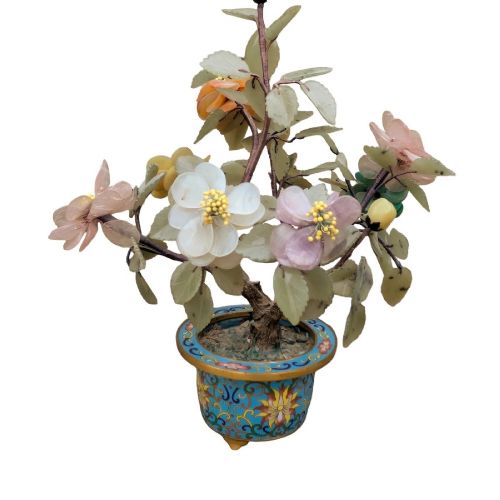
Hardwood components, including ebonised stands and portico tables, were constructed by skilled joiners to support the considerable weight of filled ceramic and bronze bowls. Artisans also incorporated organic materials like carved hardstones, jade, and assorted minerals to build intricate miniature flowering trees within the planters.
Oriental Planter Pot Retail Price Guide 2026
Typical asking prices for oriental planter pot among the pieces listed under this phrase on Sellingantiques today, from the lower quarter to the upper quarter. They describe what is for sale here now, not the wider market.
Some heavy bronze bowls double as domestic fish habitats.
Evaluating the Pieces
Quality rests primarily in the crispness of the casting, the precision of the enamel work, and the depth of the porcelain glaze. Superior bronze bowls display sharply defined relief decoration and stable, intentional patination rather than flat or uniform surfaces. Ceramic pieces of higher standing exhibit controlled firing results, vibrant pigments, and well-defined seal marks or reign characters.
The integration of associated elements, such as matching wooden stands and drip trays, significantly influences the integrity of the piece. Objects that retain their original supporting structures demonstrate a higher degree of preservation. Artisanal skill appears in the delicate balance of proportion between the vessel and its decorative program.
Makuzu Kozan II
The Oriental Planter Pot Glossary
- Jardiniere
- A decorative ceramic or metal pot designed to hold a plant or flower display. These vessels often sit directly on the floor or upon a dedicated stand.
- Cloisonne
- A metalwork technique where thin wire partitions are soldered to a base and filled with enamel paste before firing. This creates intricate cellular patterns across the surface.
- Meiji Period
- A distinct era in Japanese history spanning from 1868 to 1912, noted for significant artistic production and international export. Pieces from this time often feature accomplished bronze casting and detailed Satsuma pottery.
- Famille Rose
- A prominent palette of opaque enamel colours introduced in Chinese ceramics during the Qing dynasty, characterised by pink and rose hues. Artisans used these tones to render naturalistic floral and avian scenes.
- Champleve
- An enamelling method where troughs are gouged directly into a thick metal surface and filled with enamel before heating. The surrounding exposed metal forms the visible outlines of the design.
Oriental Planter Pot: Frequently Asked Questions
How do I care for a vintage planter?
Metal and ceramic pots require gentle cleaning with soft cloths to preserve surface patinas and delicate enamel work. Avoid using harsh chemical abrasives on antique glazes or patinated bronze.
Because many older vessels lack modern drainage holes, place a plastic nursery pot inside the jardiniere to hold the plant and catch excess water.
How can I tell the period of a bronze planter?
Dating relies on examining casting techniques, surface patination, and the style of decorative motifs. Nineteenth-century Meiji bronzes often exhibit specific surface textures and signature styles distinct from earlier periods.
Matching stands, construction methods, and any associated workshop marks help narrow down the production era.
Are these planters suitable for outdoor use?
Most antique and vintage pieces are intended for indoor display to protect delicate enamels, glazes, and patinated metals from frost and weathering. Placing ceramic or bronze vessels outside can lead to glaze crazing or structural damage.
Using them within sheltered interior conservatories or garden rooms provides the appropriate environment.