
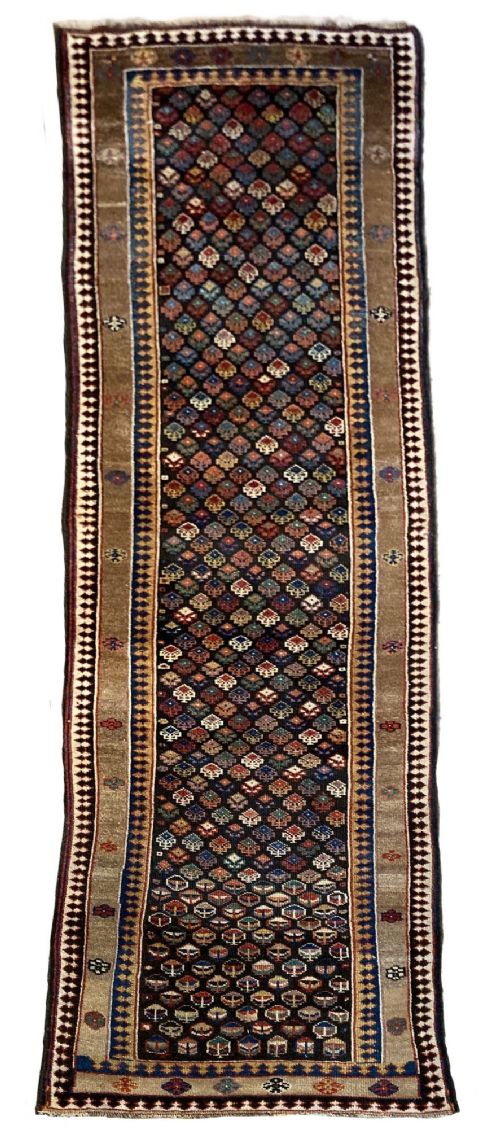


Oriental Passage Carpet
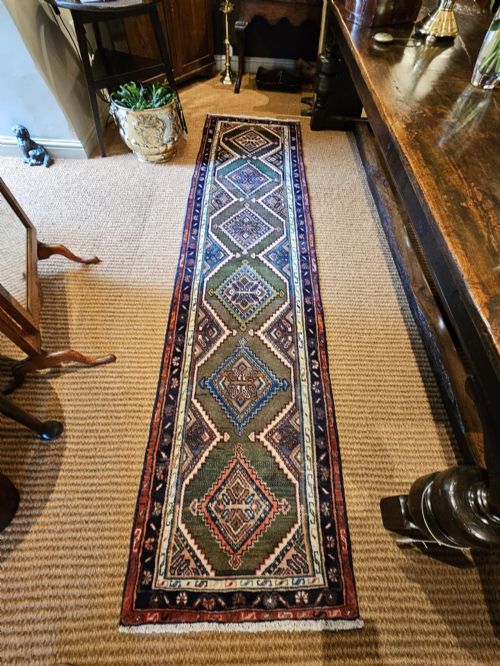
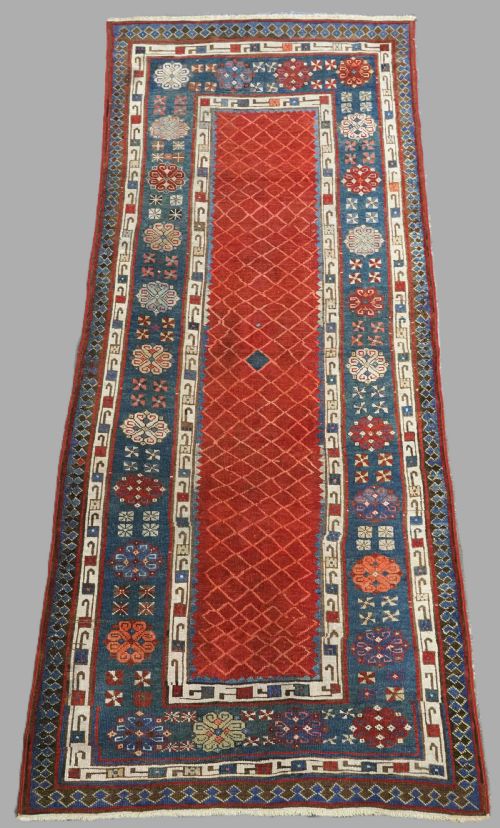
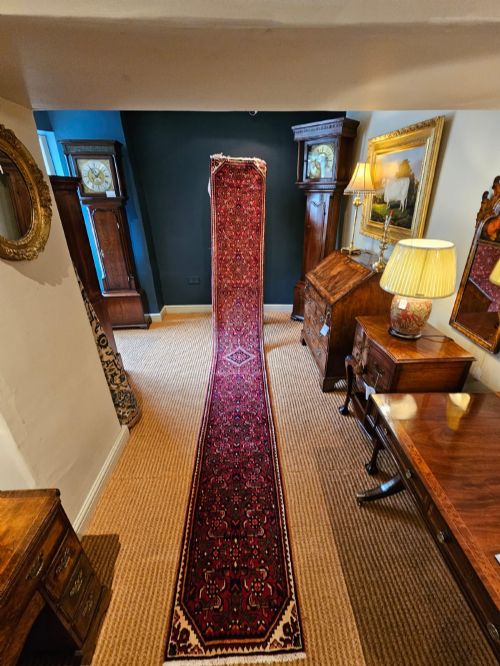
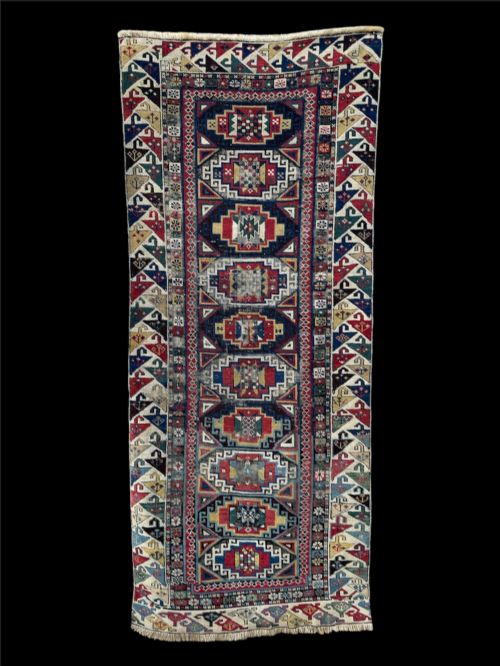
These oriental passage carpet examples bring together long woollen runners and carpets from Caucasian and Persian origins.
Oriental Passage Carpet
An oriental passage carpet takes the form of a long, narrow runner designed specifically for hallways, staircases, and corridors. When buyers search for an oriental passage carpet, they encounter pieces spanning the nineteenth and early twentieth centuries, originating from traditional weaving regions.
The pieces listed here showcase distinct regional styles including Persian Heriz, Bidjar, Ferahan, Kurdish, and Caucasian village and tribal weaves. These long formats serve functional circulation spaces while delivering deep indigo, madder red, ivory, and olive green grounds to an interior.
Materials and construction
These carpets rely on durable wool pile knotted onto cotton foundations, utilising hand-spun natural yarns that accept traditional plant and insect dyes. The structural tightness of the knotting varies by region, with village workshops employing dense wool weaves to withstand heavy passage.
Narrow proportions require disciplined geometric or all-over field layouts, from repeating shrub and boteh motifs to complex lattice designs executed by regional weavers.
Listings feature traditional wool and cotton carpets dated from the nineteenth century through the 1930s, originating across Persian and Caucasian workshops.
Distinctions in quality
Quality rests in the integrity of the wool pile, the precision of the tribal geometry, and the depth achieved by natural dyestuffs across the field. Superior examples maintain full pile and crisp drawing within narrow proportions, showing uniform tension along the entire length.
The distinction between ordinary and exceptional pieces lies in the vibrancy of the palette and the preservation of original edge finishes and end fringes.
The Oriental Passage Carpet Glossary
- Runner
- A long, narrow carpet format traditionally woven for hallways, corridors, and staircases. These pieces measure significantly longer than their width.
- Pile
- The upright woolen surface of a carpet formed by the cut ends of knots. A full pile retains the original height and density intended by the weaver.
- Boteh
- A recurring teardrop or almond-shaped motif representing a floral shoot or cypress tree. This ancient symbol appears frequently across Persian and Caucasian fields.
- Warp
- The stationary longitudinal threads stretched on the loom before knotting begins. Cotton serves as the primary foundation material in these rugs.
Oriental Passage Carpet: Frequently Asked Questions
Where should I place an oriental passage carpet?
These long formats suit narrow hallways, long corridors, and substantial staircases where foot traffic demands a durable woolen surface. Their elongated proportions bridge separate rooms while introducing rich regional colour to transition spaces.
Ensure you measure the corridor width and length carefully, leaving adequate wooden or stone flooring visible at the edges to frame the piece properly.
How do I identify a Caucasian runner?
Caucasian pieces typically display sharp geometric medallions, crisp latch-hook motifs, and bolder, saturated primary colours arranged in strict vertical or diagonal symmetry. The wool often feels slightly crisper than softer Persian equivalents.
Examining the structural stiffness and the specific border guards helps separate northern Caucasian tribal workshops from Persian village weaving.
Are these carpets made of pure wool?
The pile consists of hand-spun wool, chosen for its resilience under foot traffic and its ability to hold natural dye colours over decades of use. Foundation threads beneath the pile utilise cotton for structural stability.
This combination provides the necessary weight to lie flat on floorboards while maintaining a flexible, durable body.
How do I care for an antique runner?
Regular gentle vacuuming without a rotating brush bar removes grit that settles deep within the woolen pile. Use a quality underlay to prevent slipping and reduce friction between the rug and the floor.
Professional specialist cleaning is recommended every few years to protect the natural lanolin in the wool and maintain the clarity of the dyes.