


Oriental Lacquered Trinket Box
An oriental lacquered trinket box offers a storied container for small valuables, combining intricate surface art with practical storage.
Oriental Lacquered Trinket Box
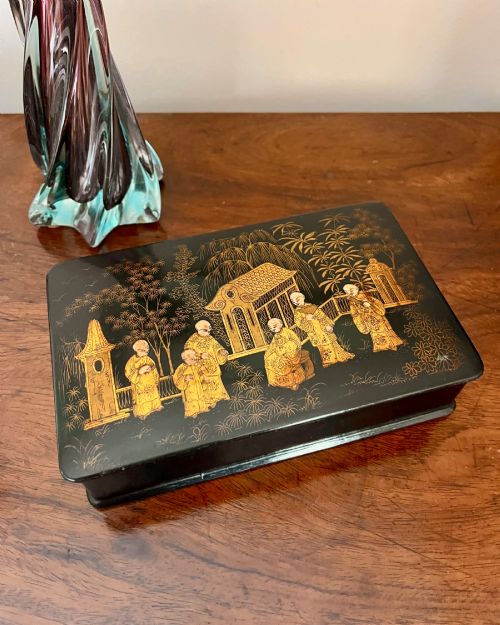
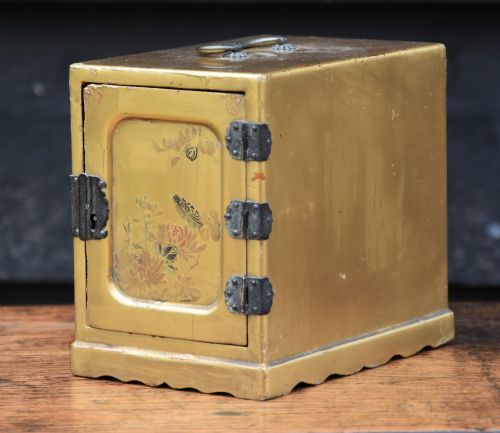
An oriental lacquered trinket box serves to hold jewellery, keepsakes, and small treasures safely within a decorated casing. Buyers searching for an oriental lacquered trinket box encounter various forms including table cabinets, lidded pots, and jewellery boxes.
These pieces draw from diverse origins and styles such as Japanese Meiji period works, Chinese Qing dynasty designs, and Kashmiri craftsmanship. The nineteenth century yields the majority of examples seen on this page.
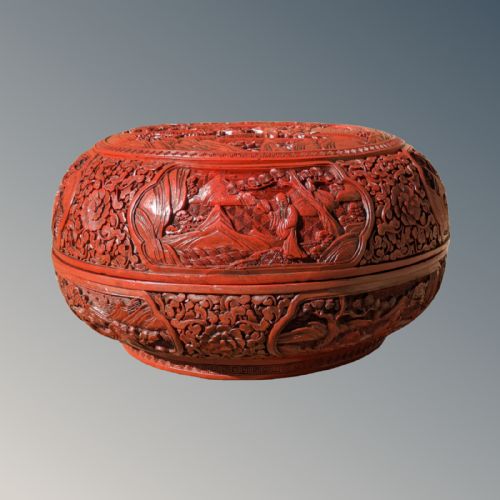
Makers utilised wood, papier-mache, and cinnabar lacquer as foundational materials for these decorative vessels. Many incorporate painted details, gold leaf, and brass hardware to enhance their visual appeal.
How they were made
Artisans built the structural core using wood or papier-mache before applying multiple layers of lacquer to achieve a smooth finish. This resin surface received intricate painting, carved cinnabar designs, or applied gold leaf.
Metal elements such as brass fittings and hinges provided structural reinforcement and closure mechanisms for boxes and table cabinets. Kashmiri examples often featured traditional painted motifs applied directly over the prepared lacquered or wooden body.
Listings feature items from the eighteenth century, the nineteenth century, the Edwardian period, and the year 1800.
What varies in quality
The depth and execution of the surface ornamentation separate standard examples from finer works, particularly in carved cinnabar or detailed gold leaf application. Finer pieces demonstrate superior control in painting and lacquer layering over wood or papier-mache.
The structural integrity of the box, including the precise fit of lids and the condition of brass hardware, indicates the original standard of manufacture.
The Oriental Lacquered Trinket Box Glossary
- Lacquer
- A durable resin finish applied to wooden or papier-mache objects to create a glossy, protective surface. It forms the defining characteristic of these boxes.
- Cinnabar
- A red mineral pigment used to colour thick layers of lacquer that are subsequently carved with intricate patterns. This technique is prominent in Chinese Qing dynasty pieces.
- Chinoiserie
- European artistic style reflecting Chinese motifs and decorative techniques. It appears on various nineteenth-century items.
- Meiji Period
- An era in Japanese history spanning the late nineteenth and early twentieth centuries noted for distinct decorative arts. Kodansu jewellery boxes frequently date to this time.
- Kodansu
- A small Japanese tabletop cabinet with multiple drawers and compartments designed for storing valuables. These miniature chests often feature elaborate gilt decoration.
Oriental Lacquered Trinket Box: Frequently Asked Questions
What were oriental lacquered trinket boxes used for?
These containers held precious items, personal ornaments, and small keepsakes within domestic spaces. Their compartments protected delicate possessions from dust and damage.
Larger versions like table cabinets and turban boxes stored specialised garments, headdresses, or collections of small valuables. They functioned as both decorative furnishings and practical storage.
How do I care for a lacquered box?
Keep the box away from direct sunlight and sustained moisture to protect the delicate lacquer surface and painted details. Gentle dusting with a soft, dry cloth preserves the finish.
Avoid using liquid cleaners or chemical polishes, which can damage the aged resin or gold leaf. Stable indoor humidity prevents the underlying wood or papier-mache from warping.
How can I tell Japanese from Chinese boxes?
Japanese pieces from this selection often originate from the Meiji period, featuring gilt lacquer and distinct cabinetry forms such as the kodansu. Chinese examples frequently display carved cinnabar lacquer or Qing dynasty motifs.
Chinoiserie items present a European interpretation of Asian design rather than native workmanship. Examining the specific motifs and material techniques clarifies the regional origin.
What is Kashmiri lacquerwork?
Kashmiri boxes utilise traditional Indian craftsmanship often applied to wooden or papier-mache foundations. These pieces are distinguished by painted patterns and graduated sets of lidded pots.
The regional style encompasses distinctive palettes and painted ornamentation that differ from East Asian carved lacquer or gilt work. They reflect a unique intersection of local and traditional Indian artistry.