



Oriental Lacquer Screen
An oriental lacquer screen brings rich texture, deep black or polychrome surfaces, and folding architectural presence to any interior.
Oriental Lacquer Screen
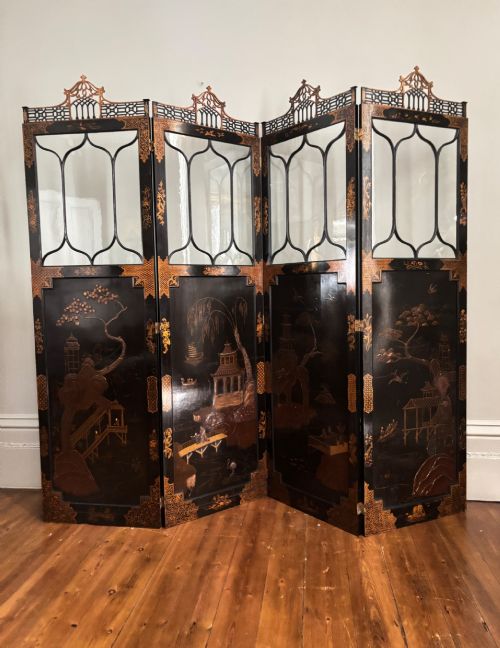
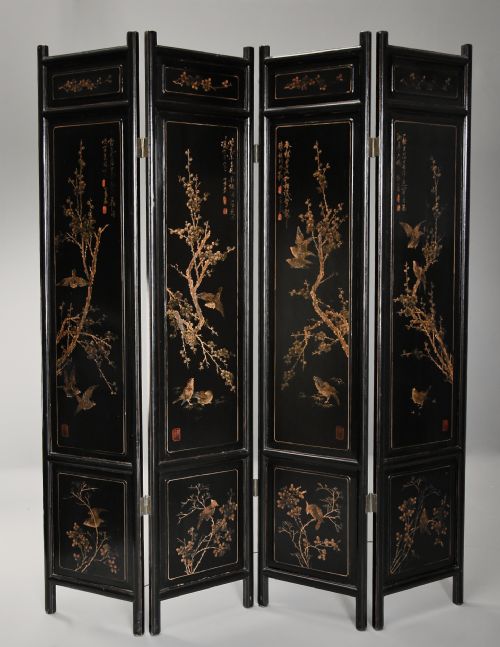
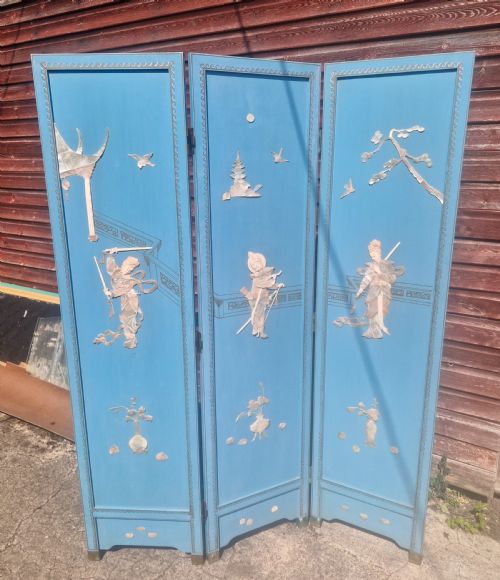
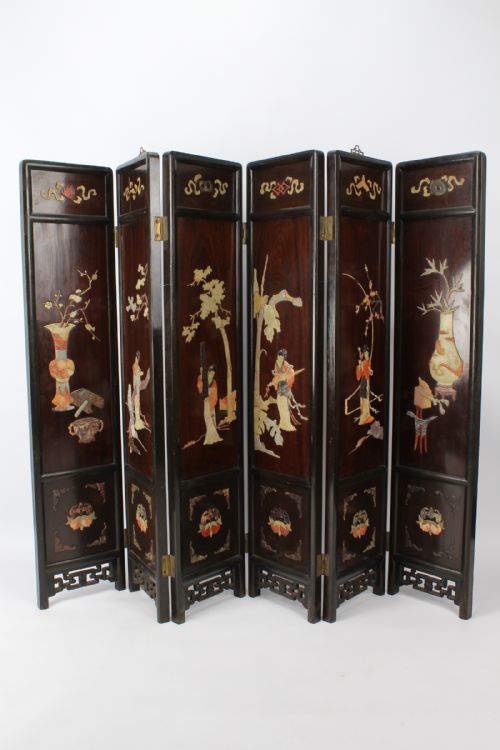
An oriental lacquer screen is typically a multi-panel folding room divider, dressing screen, or smaller tabletop and fire screen designed to partition space or decorate a wall. The examples found here span from the eighteenth century through the mid-twentieth century, encompassing Chinese Coromandel work, Japanese folding forms, and British Regency and Victorian Chinoiserie interpretations.
Buyers will encounter freestanding multi-fold panels alongside framed wall art, plaques, and pole screens. These pieces serve both practical partitioning functions and decorative roles, utilising traditional folding mechanisms to adjust light and shadow across a room.
Materials and construction
These pieces rely on wood, hardwood, and lacquered wood substrates built into sturdy frames for folding leaves and panels. Artisans applied layers of lacquer to achieve deep, lustrous surfaces capable of receiving further ornamentation.
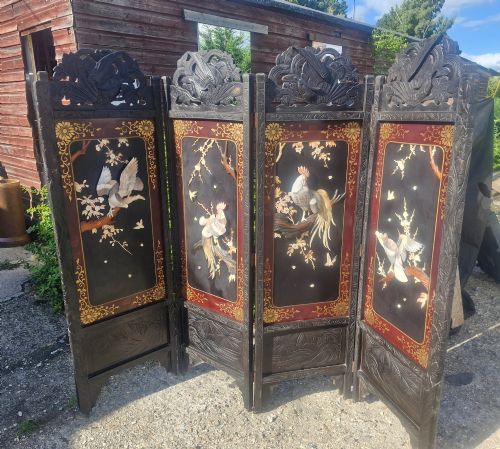
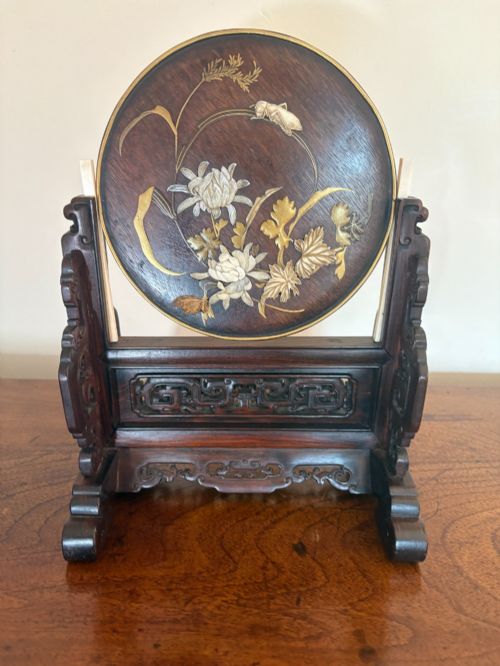
Decoration involves meticulous techniques including gold leaf application, painting, and the embedding of bone, mother-of-pearl, abalone, and hardstone. Incised Coromandel work carves through layered grounds to expose contrasting hues beneath, while textile panels introduce woven elements.
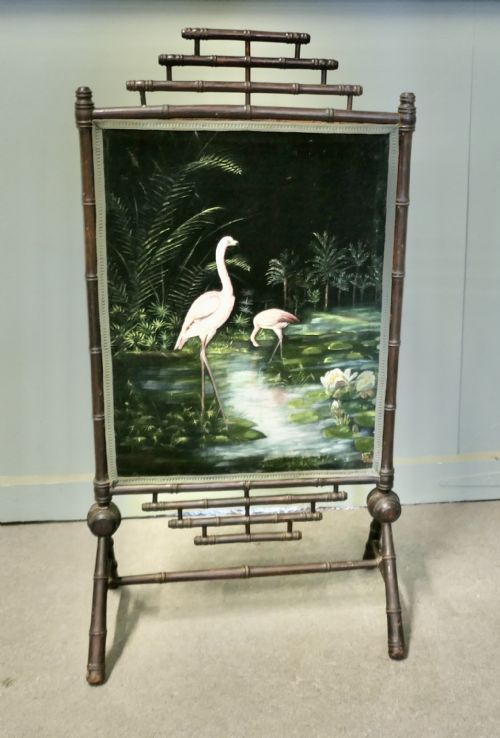
Flamingos occasionally join the traditional cranes and exotic birds painted across these lacquered surfaces.
Distinctions in quality
Quality rests upon the depth and precision of the carved detail, the stability of the wood hinges and frames, and the richness of the applied lacquer and inlay. Superior execution shows in the intricate rendering of figures, birds, and foliage using bone, mother-of-pearl, or gold leaf.
The sophistication of the design - whether an eighteenth-century Coromandel piece or a finely painted Victorian Chinoiserie dressing screen - dictates the distinction between standard decorative items and exceptional collector examples.
The Oriental Lacquer Screen Glossary
- Coromandel lacquer
- A Chinese incised lacquer technique where the design is carved into a built-up ground and filled with colours or gold. This method creates a textured relief effect across multi-fold screens.
- Chinoiserie
- European artistic styles reflecting Chinese motifs and decorative patterns, popular in Regency and Victorian periods. It frequently manifests on black lacquer furniture and screens.
- Shibayama
- Japanese decorative work utilising inlaid materials like ivory, shell, and bone to form intricate pictorial subjects. It appears frequently on fine table screens.
- Pole screen
- A freestanding fireplace screen featuring an adjustable vertical panel mounted on a pole and tripod base. Regency examples protected faces from hearth heat.
- Bantam work
- An English term historically applied to certain types of incised Chinese export lacquer. It describes low-relief polychrome carving on a dark ground.
Oriental Lacquer Screen: Frequently Asked Questions
How do I use a folding screen?
Folding screens work well to divide large rooms, create private dressing areas, or stand flat against a wall as large-scale art. Their multi-fold construction allows them to angle according to the space available.
Position them away from direct heat sources and strong sunlight to protect the lacquer finish and delicate inlaid elements over time.
What is the difference between Chinese and Japanese screens?
Chinese screens in this selection often feature deep-incised Coromandel lacquer, bold folding room dividers, and heavy hardwood construction with stone or mother-of-pearl inlay. They lean towards architectural division and narrative pictorial scenes.
Japanese pieces frequently incorporate delicate Shibayama bone work, textile panels, or finely painted motifs on folding and tabletop formats. Both traditions utilise lacquer grounds but express distinct regional artistry.
How do I care for lacquer surfaces?
Dust surfaces gently with a soft, dry microfibre cloth to prevent scratching the polished lacquer. Avoid commercial chemical polishes, abrasive cleaners, and excess moisture.
Maintain a stable indoor humidity level to safeguard the underlying wood and prevent any movement in the inlaid bone, mother-of-pearl, or gold leaf details.
Can I mount a screen on the wall?
Certain items in this category are manufactured as wall art, framed panels, or plaques specifically intended for hanging. Freestanding folding screens, however, are heavy and engineered for floor placement on their hinges.
Attempting to wall-mount a multi-fold heavy room divider requires specialist professional fixings and structural support to bear the weight safely.