
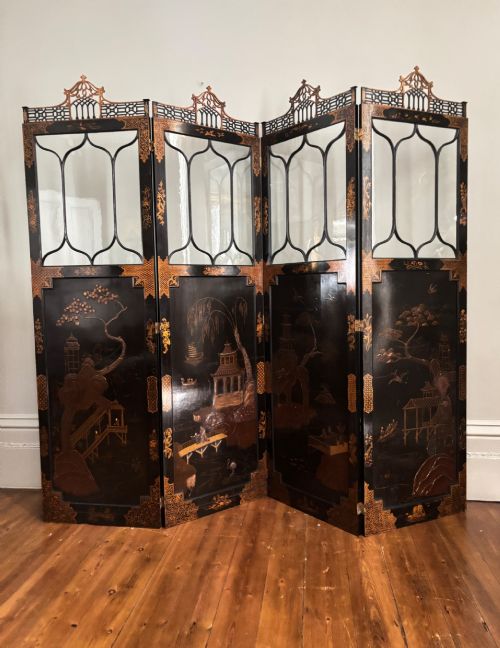
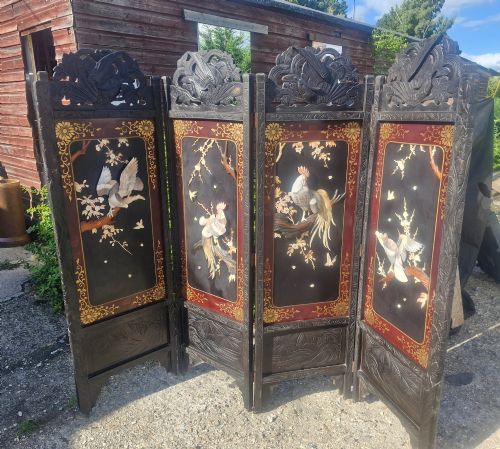
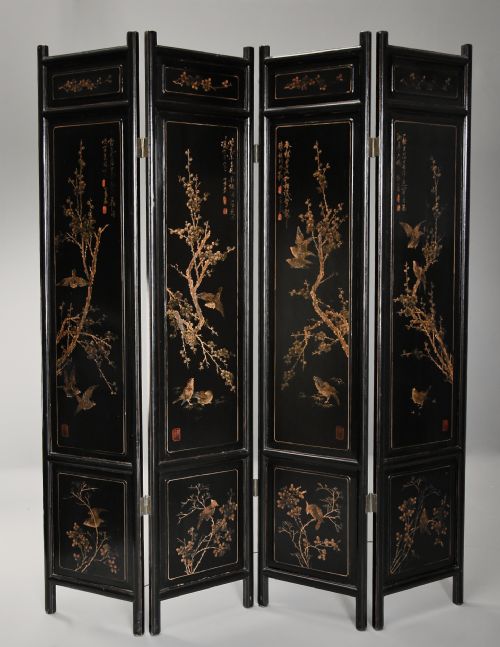
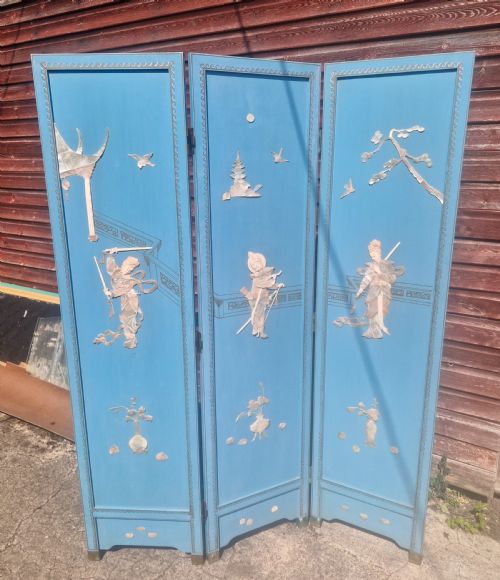
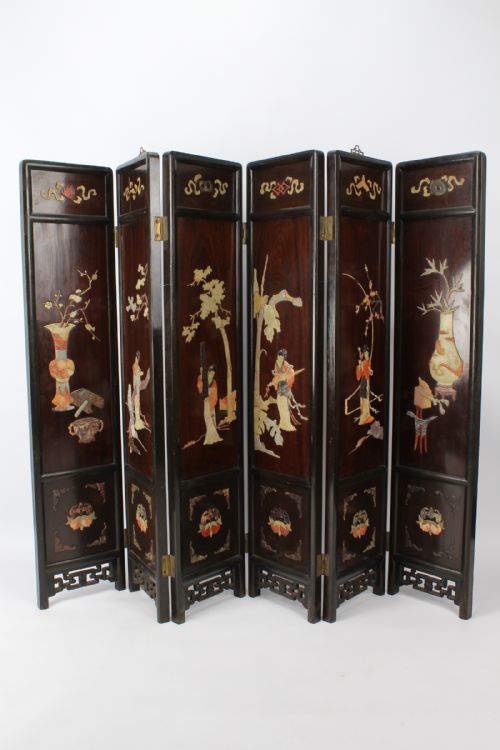


Asian Lacquer Folding Divider
An asian lacquer folding divider brings depth and architectural division to a room, using layered resins and detailed panels to shape interior space.
Asian Lacquer Folding Divider
An asian lacquer folding divider acts as a room divider or freestanding screen, separating living areas while adding distinct texture and visual weight to an interior. These pieces use multiple hinged panels to fold flat or angle across a floor plan.
The selection ranges from tall four-leaf and six-panel configurations to smaller dressing screens and fire screens. Most examples date from the nineteenth century through the mid-twentieth century, showing influences from Chinese export, Japanese Meiji, and Chinoiserie styles.
Materials and construction methods
Carved and layered lacquer applied to a wooden or hardwood core forms the structural foundation of these screens. Makers built up deep coats of resin before carving intricate designs directly into the surface.
Many panels incorporate applied elements such as carved bone, hardstone, and painted details to create contrasting textures against the dark lacquer ground. Brass hinges and fittings join the individual leaves together to allow smooth articulation.
The listings span from the nineteenth century through the 1950s, utilising lacquer, hardwood, bone, and brass across various panel counts.
Distinctions in quality and execution
The depth and precision of the carved lacquer define the upper tier of these dividers. Superior pieces exhibit crisp relief work and complex pictorial scenes rather than flat painted decoration.
The integration of precious inlays like bone and hardstone separates finer panels from simpler decorative versions. The weight of the timber core and the solidity of the joining hinges also indicate the grade of manufacture.
The Asian Lacquer Folding Divider Glossary
- Lacquer
- A durable resin finish applied in successive coats to wood and polished to a smooth sheen. It forms the protective and decorative surface characteristic of these screens.
- Coromandel
- A type of Chinese incised lacquer where the design is cut into the dark ground and filled with colours or left natural. It is frequently seen on heavy multi-fold screens.
- Chinoiserie
- A European artistic style reflecting Chinese motifs and techniques. It appears on screens made for Western export markets during the nineteenth and twentieth centuries.
- Meiji
- A Japanese historical period spanning the late nineteenth and early twentieth centuries. Pieces from this era often feature detailed painted decoration and carved bone inlays.
- Hardstone
- Dense minerals such as jade, agate, or soapstone carved into decorative motifs. These are mounted onto the lacquer surface to create relief imagery.
Asian Lacquer Folding Divider: Frequently Asked Questions
How do I use a folding screen in a room?
These screens work well to divide large spaces, create dressing areas, or act as a decorative backdrop against a plain wall. Their hinged panels let you adjust the angle to fit the proportions of your floor plan.
Position the divider away from direct heat sources and strong sunlight to protect the lacquer finish and wooden core over time.
What is the difference between Chinese and Japanese screens?
Chinese screens in this category frequently use incised coromandel lacquer or applied hardstone and bone figures on dark grounds. Japanese examples often showcase painted pictorial scenes, textile panels, or intricate carved bone details.
Both traditions utilise folding panel construction but employ distinct regional motifs and finishing techniques.
How should I clean lacquered wood?
Dust the panels regularly with a soft, dry cloth to prevent dirt accumulation on the carved surfaces. Avoid using harsh chemical sprays, abrasive cleaners, or excess water on the lacquer.
Conditioning the wood and lacquer requires minimal intervention, maintaining the original surface integrity without stripping the aged patina.
How do I date an antique screen?
Dating relies on examining the construction of the wooden frame, the style of the brass hinges, and the specific decorative motifs used. Nineteenth-century pieces often display heavier timber cores and deeper hand-carved relief work.
Mid-twentieth-century examples tend to show lighter construction methods and different export markings or simpler applied decoration.