



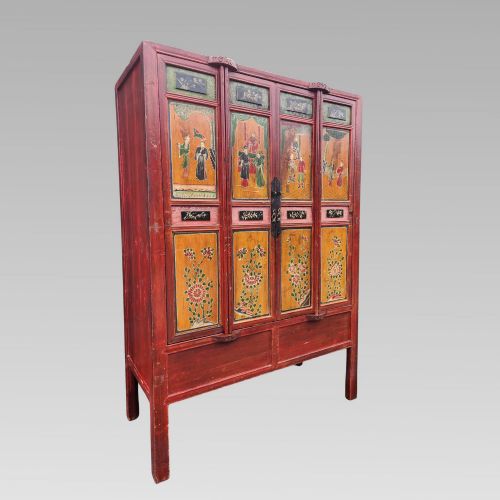


Oriental Lacquer Armoire
An oriental lacquer armoire brings deep red or black surfaces and intricate painted decoration into a room, offering striking presence and generous storage.
Oriental Lacquer Armoire
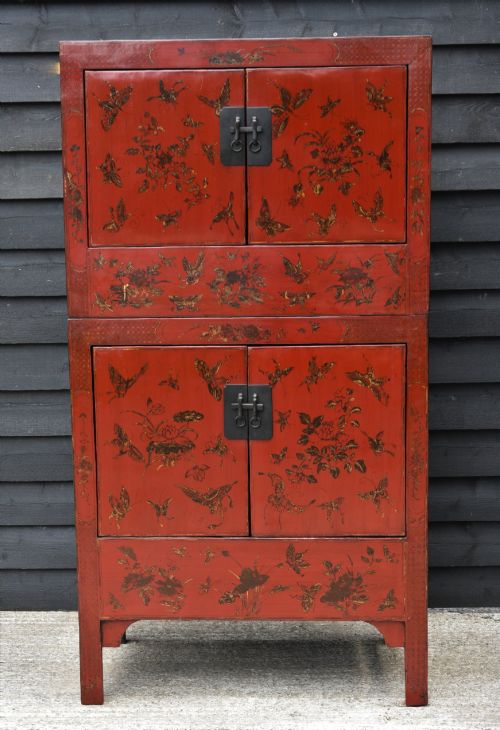
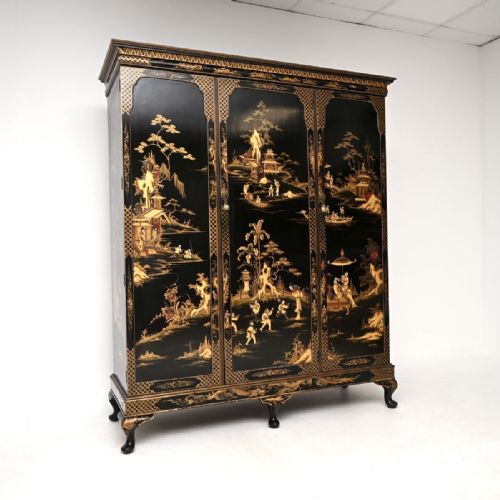
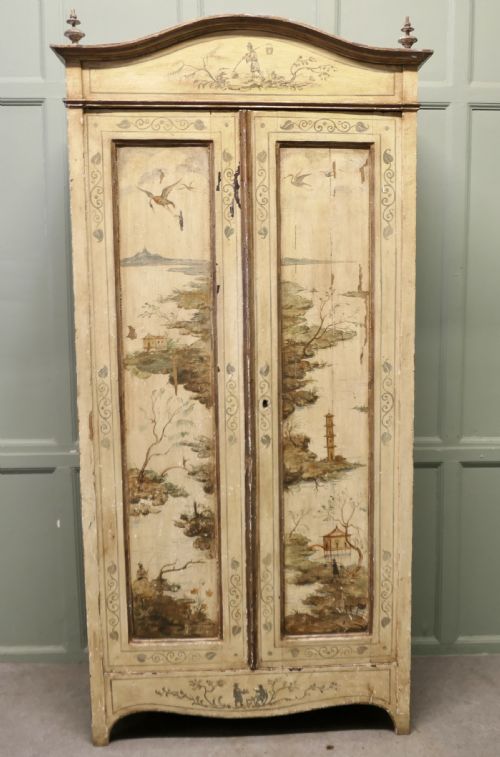
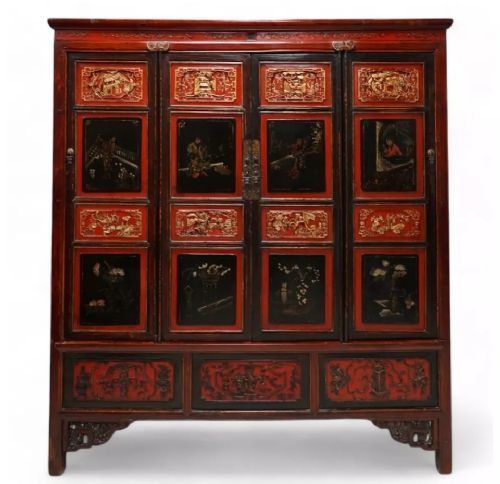
An oriental lacquer armoire encompasses substantial storage furniture finished with traditional lacquer, bringing together marriage cabinets, cupboards, and wardrobes from the nineteenth century. Buyers searching for an oriental lacquer armoire typically encounter large Chinese red lacquer marriage cabinets alongside British Chinoiserie interpretations made around nineteen hundred.
The form centres on tall, double-door cupboards designed originally for domestic storage or ceremonial marriage use. Elm and other woods provide the structural carcase, while the exterior displays layers of coloured lacquer often enriched with gold leaf or painted outdoor scenes.
Materials and construction methods
The construction relies on sturdy timbers such as elm and general lacquered wood, built to support multiple layers of resin and pigment. Artisans applied successive coats of lacquer, sanding each layer smooth before adding surface decoration.
Metalwork plays a key role, with brass hardware such as hinges and circular plates securing the doors. Details include painted motifs, inlaid elements, and applied gold leaf depicting traditional scenes.
Oriental Lacquer Armoire Retail Price Guide 2026
Typical asking prices for oriental lacquer armoire among the pieces listed under this phrase on Sellingantiques today, from the lower quarter to the upper quarter. They describe what is for sale here now, not the wider market.
Materials recorded across the inventory include brass, gold leaf, elm, and painted wood applied to traditional cabinet forms.
Judging quality and execution
Quality reveals itself in the depth of the lacquer finish and the precision of the painted or inlaid decoration. Pieces decorated with detailed outdoor scenes or rich gold leaf demonstrate greater artisan skill.
The integrity of the underlying wood carcase and the original brass hardware dictate the overall standard. European interpretations by established makers like Hille for Harrods sit alongside traditional Chinese workshop pieces, each judged by the crispness of the Chinoiserie detailing.
Hille for Harrods
The Oriental Lacquer Armoire Glossary
- Chinoiserie
- European artistic style reflecting Chinese motifs and decorative techniques. This style appears frequently on nineteenth-century wardrobes and cupboards.
- Marriage cabinet
- Large traditional Chinese cabinet presented to a bride. These pieces form a major part of the available armoires.
- Lacquer
- Protective and decorative coating derived from tree sap. It provides the smooth, glossy surface characteristic of these cabinets.
- Elm
- Hardwood commonly used for the structural framework of Chinese cabinets. It offers the necessary strength for large storage furniture.
Oriental Lacquer Armoire: Frequently Asked Questions
What is an oriental lacquer armoire used for?
These large cabinets serve as statement storage pieces in modern living spaces. They provide deep interior shelving or hanging space while concealing everyday items behind decorative doors.
Their striking red or black finishes also make them focal points in a hallway, bedroom, or reception room.
How do I date a nineteenth-century lacquer cabinet?
Dating relies on examining the construction methods, timber choice, and wear patterns on the lacquer surface. Nineteenth-century examples often utilise elm frameworks paired with traditional brass hardware.
English Chinoiserie pieces from around nineteen hundred reflect European cabinet-making standards combined with oriental decorative styles.
Are these cabinets made of solid wood?
The structural carcase is built from solid timber such as elm or general lacquered wood. This solid foundation supports the heavy layers of lacquer applied to the exterior.
Joinery techniques varied between traditional Chinese workshops and British makers, but all required stable timber to prevent movement in the finish.
How do I care for antique lacquer furniture?
Keep the cabinet away from direct sunlight and steady heat sources to protect the delicate lacquer surface. Dust gently with a soft, dry cloth without applying modern chemical polishes.
Maintaining stable room humidity prevents the timber beneath from expanding and stressing the historic finish.