



Oriental Guardian Lion Sculpture
These oriental guardian lion sculpture pieces bring protective temple symbolism and traditional craftsmanship into a room.
Oriental Guardian Lion Sculpture
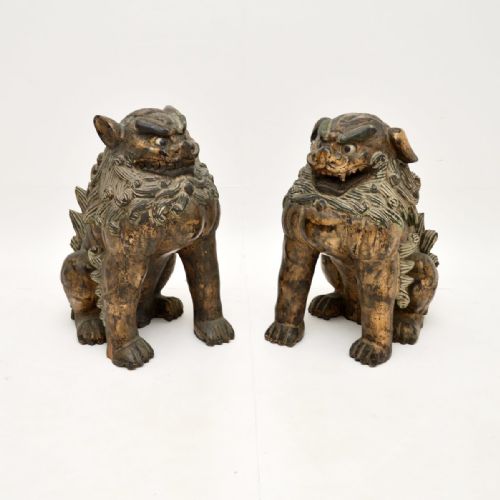
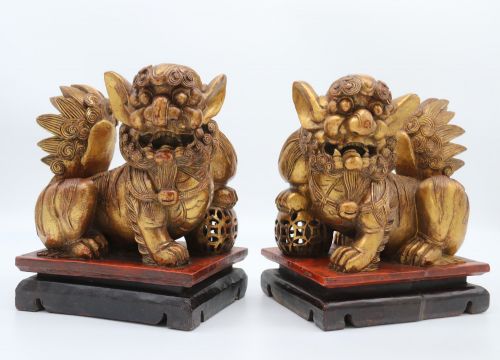
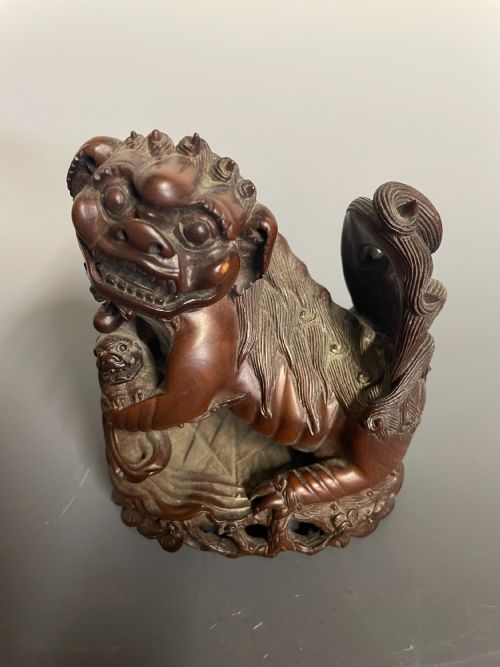
An oriental guardian lion sculpture represents traditional mythical protector beasts, commonly known as foo dogs, shishi, or karashishi, originating from Asian artistic traditions. They take the form of sculpted pairs or single figures designed to guard spaces, often depicted with one paw resting on a ball or a cub.
The selections available here span from the eighteenth century through the early twentieth century, encompassing Chinese, Japanese, Tibetan, and Burmese examples. These pieces function as temple guards, desk seals, and decorative figures rather than purely modern ornaments.
Buyers will encounter figures formed as freestanding statues, incense burners, and architectural temple carvings. Materials range widely across these historical pieces, showing both paired sets and individual representations.
How oriental guardian lion sculpture works were made
Carvers shaped these guardian figures from organic materials including boxwood, root wood, soapstone, and general carved timber, sometimes applying gilt and lacquer finishes. Woodcarvings utilise traditional grain manipulation to define the muscular forms and curling manes of the beasts.
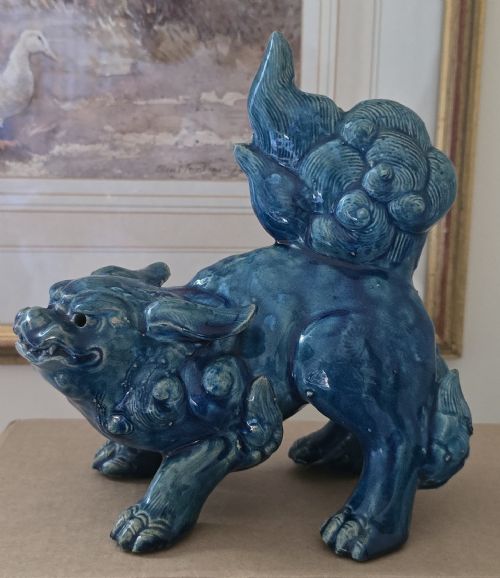
Metalworkers cast sturdy examples in bronze, brass, and cast iron, creating substantial temple lions that often carry considerable weight. Ceramicists produced porcelain, earthenware, and pottery variants, applying turquoise glazes, enamel colours, and detailed firing techniques during the Edo-Meiji and Qing periods.
Oriental Guardian Lion Sculpture Retail Price Guide 2026
Typical asking prices for oriental guardian lion sculpture among the pieces listed under this phrase on Sellingantiques today, from the lower quarter to the upper quarter. They describe what is for sale here now, not the wider market.
The selection includes pieces originating across the eighteenth, nineteenth, and early twentieth centuries.
What varies in quality in oriental guardian lion sculpture
The refinement of the carving or casting determines the visual strength of the piece, separating rigid commercial output from animated temple-grade artistry. Expressive facial details, deep undercut manes, and balanced proportions reveal the skill of the original maker.
The preservation of original surface treatments - such as multi-layered lacquer, surface gilding, or controlled ceramic glazes - dictates the historical integrity of each item. Complete pairs matching in size and posture command greater presence than single mismatched figures.
The Oriental Guardian Lion Sculpture Glossary
- Foo dog
- A Western term for Chinese guardian lions, which are actually stylised lions rather than dogs. They traditionally stand outside imperial tombs, temples, and government offices.
- Shishi
- The Japanese term for a stone or metal lion, often integrated into Buddhist art and temple architecture. These figures share roots with Chinese guardian lion iconography.
- Karashishi
- Translated as Chinese lion, this Japanese variant depicts the mythical beast with swirling fur and dynamic postures. They frequently appear in porcelain and earthenware.
- Boxwood
- A dense, pale hardwood prized by carvers for holding minute detail without splintering. It develops a warm patina through handling over centuries.
- Soapstone
- A soft, talc-based stone easily worked into intricate desk seals and small sculptures. Its smooth surface accepts fine incision work readily.
Oriental Guardian Lion Sculpture: Frequently Asked Questions
Where should an oriental guardian lion sculpture be placed?
Traditional placement involved flanking entrances, doorways, or gateways to ward off negative influences. In domestic settings, they sit well on mantelpieces, sideboards, or desks as focal decorative objects.
Pairs are traditionally arranged with the male on the right and the female on the left, looking outward to protect the space they inhabit.
How do I tell Chinese foo dogs from Japanese shishi?
Chinese foo dogs, or temple guards, often display robust stone or carved wood construction with formal Qing Dynasty or earlier stylistic conventions. Japanese shishi and karashishi frequently appear in refined Hirado or Kutani porcelain and Bizen pottery.
Japanese examples from the Meiji period often emphasise expressive, swirling mane details and distinct regional ceramic glazing techniques.
Are these guardian lions always found in pairs?
Many listings present matched pairs designed to sit symmetrically, representing yin and yang energies. Single sculptures also appear frequently, originating from individual temple guards, incense burners, or desk seals.
Single figures possess their own standalone sculptural presence, while pairs offer balanced symmetry for larger display areas.
What materials were used for antique guardian lions?
Artisans utilised a wide variety of materials depending on the region and period of creation. Common mediums include cast bronze, brass, iron, carved woods, soapstone, and enamelled porcelain.
Surface treatments such as gilt, lacquer, and turquoise glazes add distinct colour and texture to the underlying material.