
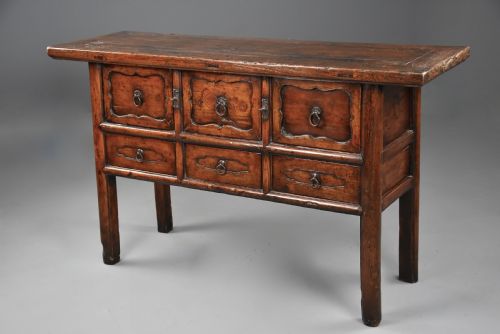
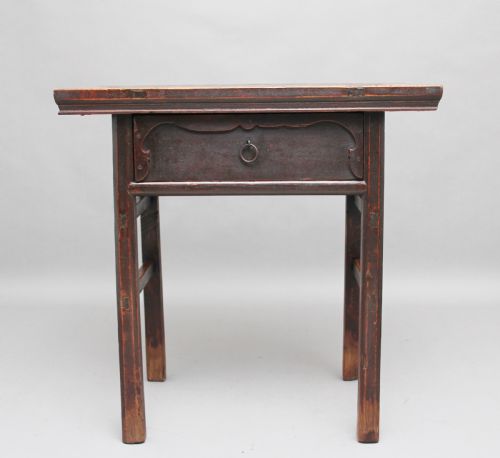


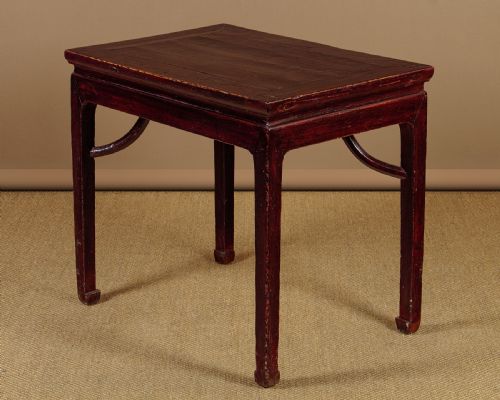


Oriental Elm Console Table
An oriental elm console table brings architectural timber and subtle grain into a room, offering a grounding surface shaped by traditional Chinese craftsmanship.
Oriental Elm Console Table
When searching for an oriental elm console table, collectors encounter pieces spanning the eighteenth to the early twentieth century, primarily rooted in the Qing Dynasty and Chinese provincial traditions. These forms range from traditional altar tables and writing desks to small sideboards, side tables, and trestle tables.
The version most commonly met on this page is the nineteenth-century Chinese elm side table or altar table, often constructed with a plank top and straightforward joinery. These tables function well as narrow surface units in hallways or living spaces, displaying the characteristic warm tones of domestic hardwood.
Provincial variations show distinct regional character, incorporating simple aprons, drawer configurations, or demi-lune shapes. Makers built these tables for everyday utility, resulting in sturdy forms that balance functional storage with understated aesthetic presence.
Judging Quality in Provincial Furniture
Quality in these tables rests primarily on the depth of the patina, the integrity of the original timber grain, and the crispness of any carved detailing on the aprons or legs. Tables that retain their original brass or iron hardware without excessive replacement sit higher in the range.
Proportion and structural balance also dictate worth, as sturdier framing and clean joinery differentiate utilitarian workshop output from refined scholarly pieces. The presence of secondary elements like red lacquer or integrated drawers adds complexity that marks out superior examples.
Some tables retain traces of ancient red lacquer hiding beneath layers of household polish, whispering of long-forgotten domestic shrines.
The Oriental Elm Console Table Glossary
- Altar table
- A long, narrow table traditionally used for ritual displays, featuring upturned flange ends and high relief or pierced carving on the apron.
- Demi-lune
- A half-moon shaped table designed to stand flat against a wall, frequently found as matched pairs in traditional room layouts.
- Patina
- The deep sheen and surface texture developed on wood over decades of handling, cleaning, and exposure to light.
- Plank-top
- A tabletop constructed from solid boards joined edge-to-edge, characteristic of heavy provincial tables.
- Trestle table
- A table design where the top is supported by distinct side assemblies rather than four independent corner legs.
Oriental Elm Console Table: Frequently Asked Questions
What is an altar table?
An altar table is a long, narrow form originally designed for ceremonial use in Chinese homes and temples. These tables are distinguished by their balanced proportions and often feature subtle upward flanges at the short ends.
Today, their narrow depth makes them ideal as console surfaces behind sofas or in hallways. They provide display space without crowding narrow residential areas.
How do I date these tables?
Dating relies on assessing the timber grain, the method of joinery, and the degree of wear on the feet and edges. Nineteenth-century examples often display deep patination and hand-forged iron or brass fittings.
Stylistic markers tied to the Qing Dynasty or provincial workshops also offer chronological clues. Comparing construction details against verified period pieces helps establish an approximate decade.
Where should I place a console table?
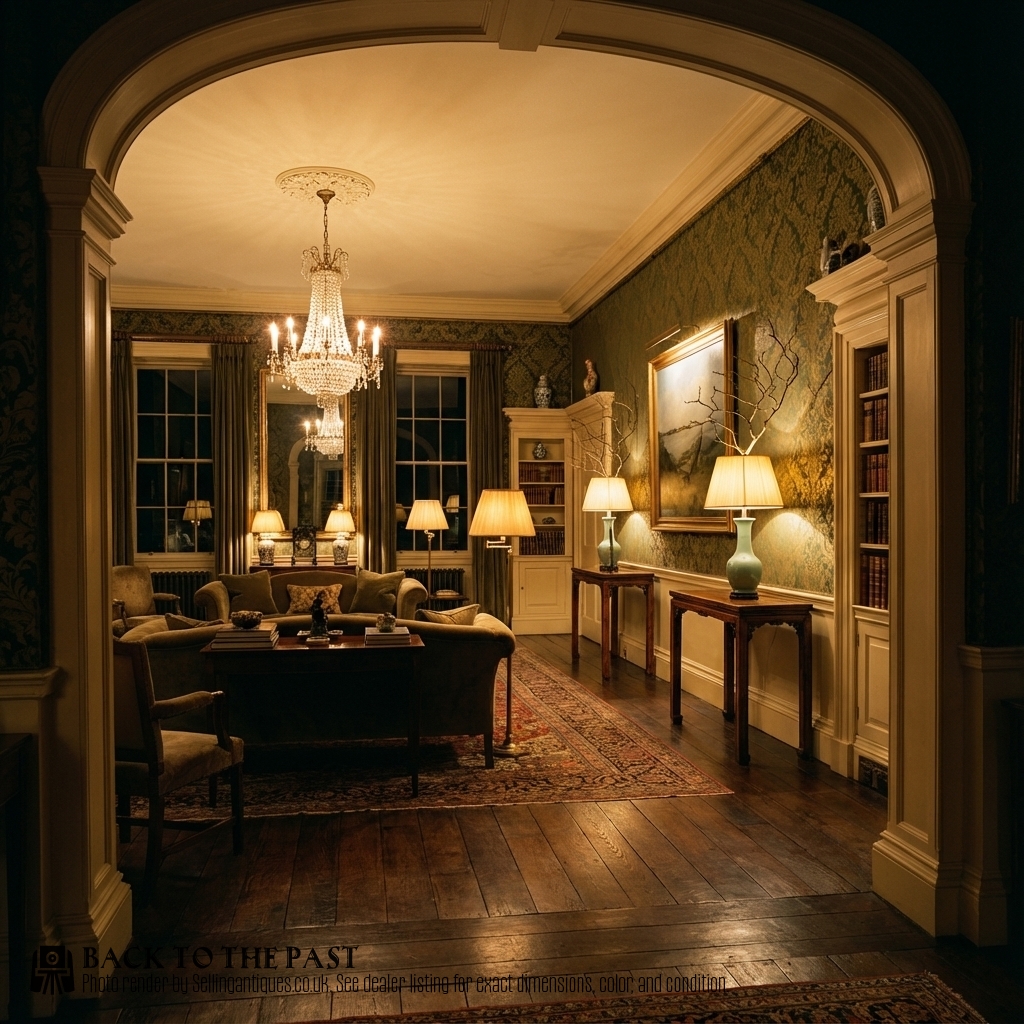
These tables suit hallways, entryways, and living rooms where a shallow surface is required for lamps or decorative objects. Their restrained profiles allow them to anchor a wall without dominating the room.
Pairing a console table with a simple textile or ceramic piece highlights the natural elm grain. They also function well as writing desks or sideboards in dining spaces.
What is locust wood elm?
Locust wood elm refers to a specific regional variety of elm timber utilised by provincial Chinese cabinetmakers. It yields a dense, durable surface with pronounced grain patterns.
This variety responds well to waxing and develops a rich finish over time. It contributes to the rugged structural integrity seen in nineteenth-century sideboards and desks.