


Oriental Cobalt Vase Lamp
An oriental cobalt vase lamp brings rich indigo pattern and warm ambient light into a room.
Oriental Cobalt Vase Lamp
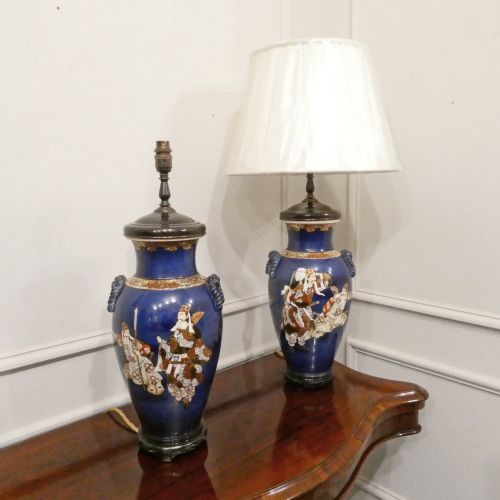
An oriental cobalt vase lamp combines a traditional ceramic vessel with modern electric lighting for domestic use. When searching for an oriental cobalt vase lamp, buyers encounter table lamps formed from nineteenth-century vessels.
The selections on this page focus on table lamps utilising porcelain bodies decorated in blue and white or similar palettes. These pieces span Chinese and Japanese origins, including Qing dynasty styles and Japanese Meiji period examples.
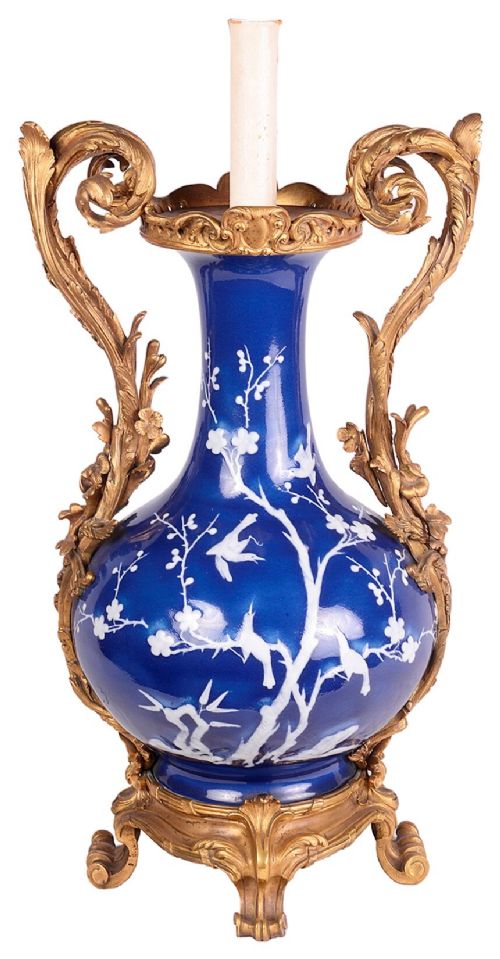
Forms include prunus blossom motifs, Imari designs, and cloisonné enamelling mounted as functional lighting. Buyers frequently find individual pieces or balanced pairs suited for interior placement.
How they were made
The foundational vessels utilise ceramic porcelain or cloisonne enamel, shaped and fired before receiving hand-painted cobalt decoration. Artisans applied cobalt pigments beneath a transparent glaze to achieve the characteristic deep blue tones seen on Chinese blue and white wares.
Japanese Meiji and Imari examples incorporate layered enamel work and distinctive glazing techniques. Mountings of brass, gilt bronze, and wood provide stable bases and secure fittings for the lamp components.
Prunus blossom vases capture winter blooms in permanent cobalt, defying the seasonal chill with enduring porcelain petals.
What varies in quality
Quality rests upon the precision of the ceramic painting and the integrity of the underlying porcelain body. Finer vessels display crisp detail in motifs such as prunus blossoms and traditional figures, executed with steady brushwork.
The execution of metal mounts and the integration of the vase with the lighting hardware affect the overall cohesion of the piece. Cloisonné examples rely on the neatness of the wirework separating the enamel fields.
The Oriental Cobalt Vase Lamp Glossary
- Cloisonne enamel
- A metalwork technique where fine wires are soldered to a base to form compartments filled with enamel paste and fired. This creates intricate coloured patterns across the surface of the vase.
- Imari
- A style of Japanese porcelain featuring a distinct palette of underglaze blue, iron red, and gilt highlights. These wares were widely exported during the Meiji period.
- Famille Verte
- A ceramic palette dominated by green enamels, complemented by blue, yellow, and aubergine hues. The style originated in China during the Qing dynasty.
- Meiji Period
- The era in Japanese history spanning from eighteen sixty-eight to nineteen twelve, noted for significant artistic production for export. Works from this time often display meticulous craftsmanship.
- Prunus blossom
- A decorative motif depicting the flowering plum tree, symbolic of endurance and renewal in East Asian art. It appears frequently on blue and white porcelain.
Oriental Cobalt Vase Lamp: Frequently Asked Questions
Are these lamps wired for modern use?
The pieces listed function as modern table lamps adapted from historic vessels. They are ready for placement within contemporary interiors.
Electrical fittings are integrated into the ceramic or metal mounts to provide functional illumination while preserving the antique body.
How do I identify Chinese and Japanese pieces?
Distinguishing origin relies on observing the decorative motifs, colour palettes, and potting techniques. Chinese blue and white wares often feature floral or landscape scenes rendered in deep cobalt.
Japanese Meiji and Imari pieces frequently incorporate iron red and gilt alongside cobalt, reflecting distinct regional aesthetic traditions.
Do these lamps come in pairs?
Some listings offer matched pairs of lamps, while others comprise individual vessels. Pairs provide symmetrical lighting options for sideboards or mantelpieces.
Single lamps serve well as accent pieces on smaller tables or desks.
What is cloisonne enamel?
Cloisonne involves creating patterns with fine metal wires affixed to a solid metal base. The resulting cells are filled with coloured enamel and fired at high temperatures.
This technique produces a textured, durable surface with rich decorative detail.