



Oriental Cloisonne Urns
Oriental cloisonne urns bring heavy metal and vibrant enamel together in decorative vessels that ground a room with colour and texture.
Oriental Cloisonne Urns
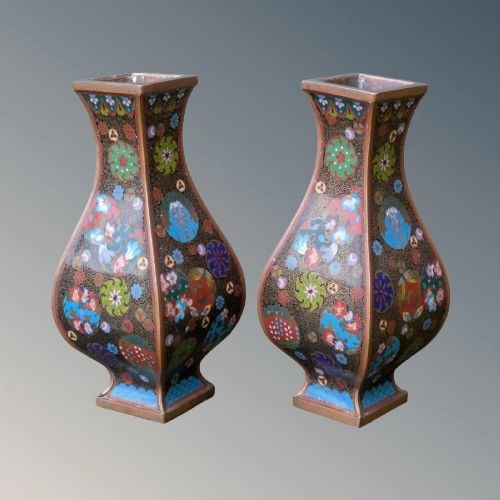
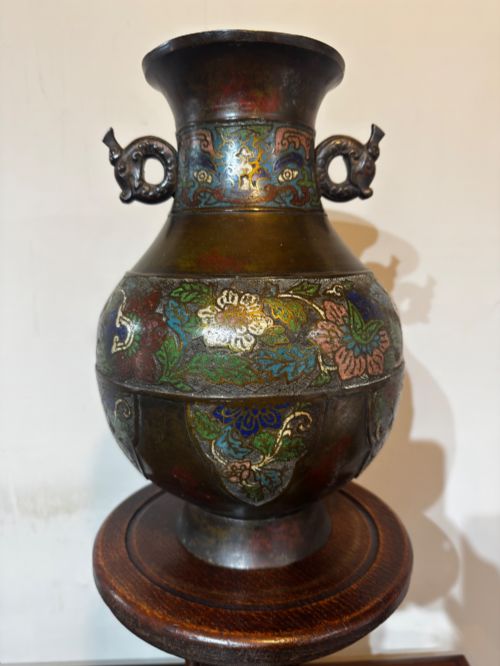
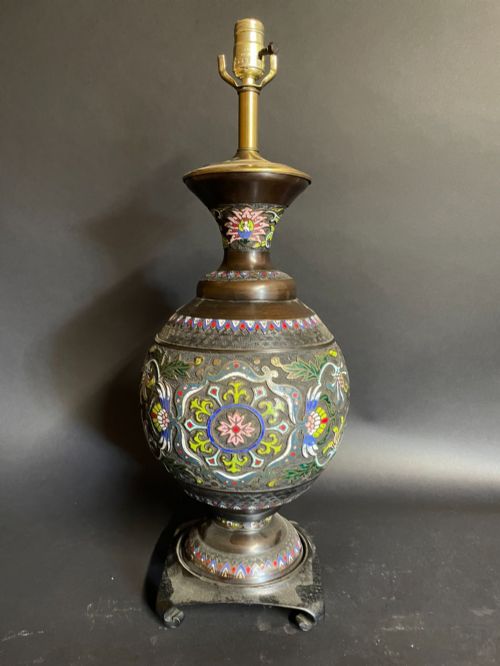
Oriental cloisonne urns encompass a range of decorative vessels, ginger jars, and jardiniere forms originating from Chinese and Japanese workshops. Buyers searching for oriental cloisonne urns encounter heavy bronze, brass, and copper bodies finished with intricate enamel work.
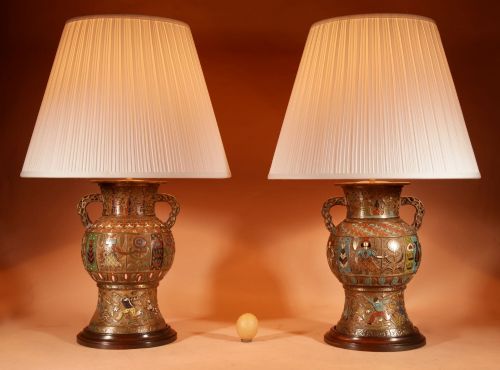
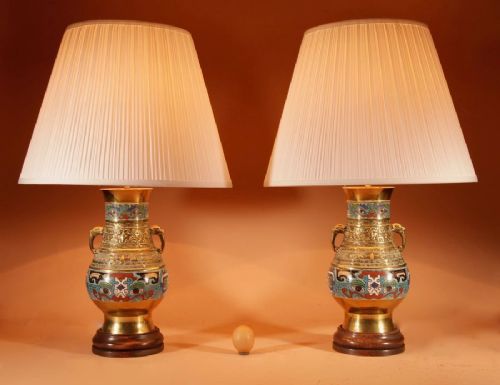
The pieces available span the nineteenth and early twentieth centuries, including Victorian and Edwardian interpretations alongside pieces attributed to the Meiji period and Qing dynasty. Vases and converted lamp bases dominate the forms found in these listings.
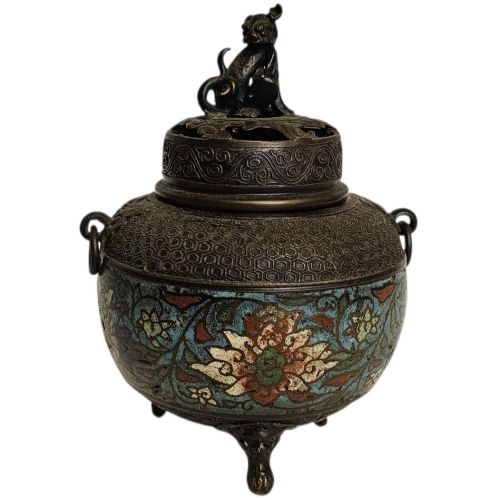
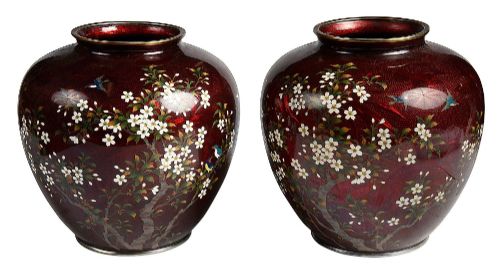
Japanese examples frequently display birds, dragons, and floral motifs using wired cloisonne or champleve techniques. Chinese pieces range from archaic-style vessels to large palace vases and jardiniere bowls on stands.
Making the vessels
Craftsmen built these vessels from hammered or cast bronze, brass, or copper foundations. Thin metal wires were soldered onto the metal surface to create raised partitions, known as cloisons, which outline the design.
The compartments formed by these wires were filled with coloured enamel paste and fired in a kiln. Once cooled, the surface was ground and polished until the metal wires and the hardened enamel rested in a smooth plane.
Listings feature pieces spanning the nineteenth and twentieth centuries, predominantly utilising bronze, brass, and copper materials.
Judging quality
Quality rests on the crispness of the wirework and the density of the enamel fill. Superior vessels show uniform wire lines without gaps or distortion in the geometric and pictorial patterns.
The weight of the bronze or brass body contributes to the overall substance of the piece. Better examples maintain smooth, polished enamel surfaces free from pitting or extensive fire cracks.
The Oriental Cloisonne Urns Glossary
- Cloisonne
- Enamelwork in which enamel paste is applied within the compartments of a metal wire framework soldered to a metal base.
- Champleve
- An enamelling technique where troughs or cells are hollowed out of a thick metal plate to hold the enamel, rather than soldering wires on top.
- Censer
- A vessel designed for burning incense, often supported on tripod feet with a pierced lid for smoke release.
- Jardiniere
- A large decorative pot or bowl used to hold growing plants or flower arrangements.
- Meiji period
- A historical Japanese era spanning from 1868 to 1912, noted for detailed metalwork and enamel production.
Oriental Cloisonne Urns: Frequently Asked Questions
How do I clean my cloisonne?
Dust the surface gently with a soft dry cloth to prevent accumulation in the wire channels.
Avoid using harsh chemical cleaners or abrasive cloths that can scratch the polished enamel and dull the metal wires.
Are these pieces waterproof?
Many older metal and enamel vessels develop micro-fractures in the enamel or base during their lifetime.
Fill them with caution or place a liner inside if you intend to use them for fresh flowers.
How do I distinguish Chinese from Japanese work?
Japanese pieces from the Meiji period often feature naturalistic subjects like birds and dragons against smooth, dark grounds.
Chinese items frequently lean towards archaic vessel shapes, geometric borders, and turquoise-ground enamel.
Can I convert a vase into a lamp?
Wiring a vase requires careful planning to preserve the structural integrity of the antique metal body.
Consult a professional restorer to ensure any electrical fittings are attached without damaging the bronze or enamel.