



Oriental Carved Wood Holder
These oriental carved wood holder pieces bring intricate traditional craftsmanship to desks and studies, offering both decorative presence and practical utility.
Oriental Carved Wood Holder
An oriental carved wood holder encompasses desk accessories and smoking ensembles originating from Chinese and Japanese traditions across the Victorian and nineteenth-century periods. These items range from brush pots and card cases to reading stands and smoking accessories created for scholarly or domestic use.
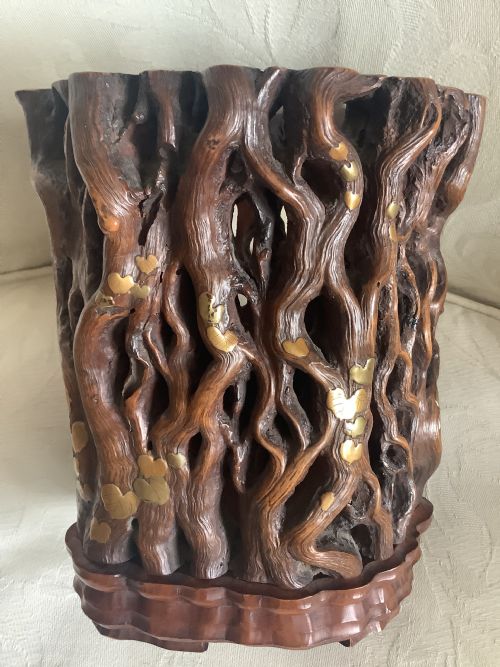
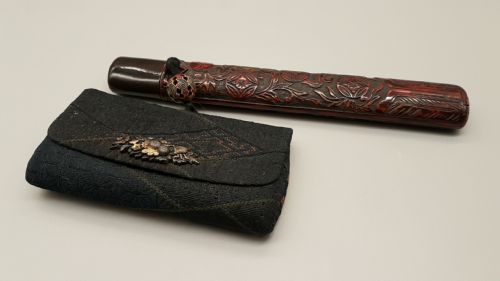
The selections on this page appear in various regional forms, including Chinese Qing dynasty hardwood brush pots and Cantonese carved sandalwood card cases. Japanese Meiji period examples also emerge, such as tobacco boxes and figural pipe holders alongside folding book pedestals.
Scholarly pieces dominate the selection, reflecting the traditional pursuits of East Asian literati through forms like brush pots and reading stands. These functional objects served the scholar's desk before finding a place in Western Victorian interiors.
How they were made
Artisans utilised dense hardwoods and sandalwood to construct these items, allowing for deep and intricate relief carving. Surfaces often display figural garden scenes, dragons, or scholars' motifs sculpted directly into the timber.
Alternative materials occasionally complemented the wood, incorporating brass, metal fittings, or silk pouches in complex smoking ensembles. These subsidiary elements required specialised metalwork and textile integration to match the carved wooden components.
Oriental Carved Wood Holder Retail Price Guide 2026
Typical asking prices for oriental carved wood holder among the pieces listed under this phrase on Sellingantiques today, from the lower quarter to the upper quarter. They describe what is for sale here now, not the wider market.
What varies in quality
Depth and clarity of the carving separate standard items from superior examples, with finer pieces showing crisp relief work in figures and foliage. The distinction lies in the patience of the artisan and the sharpness retained in complex backgrounds.
Patina and wood selection also govern quality, where well-maintained hardwood displays a deep natural sheen rather than a flat surface. Superior items retain their structural integrity across intricate joints, such as those found on folding stands.
The Oriental Carved Wood Holder Glossary
- Brush pot
- A cylindrical vessel traditionally used in East Asian scholar studios to hold writing brushes upright. These containers are frequently carved from single blocks of hardwood.
- Patina
- The surface sheen and coloration developed by timber through age and handling. A good patina indicates decades of careful preservation.
- Meiji
- A period in Japanese history spanning from eighteen sixty-eight to nineteen twelve. Items from this era often showcase highly detailed narrative carvings.
- Qing dynasty
- The final imperial dynasty of China, lasting from sixteen forty-four to nineteen twelve. Pieces from this era often employ traditional scholarly motifs and dense hardwoods.
Oriental Carved Wood Holder: Frequently Asked Questions
What is an oriental carved wood holder used for?
These pieces served various traditional functions, primarily organising scholar's brushes, carrying visiting cards, or housing smoking materials. Many items originate from scholarly desks or personal accessories.
Today, they adapt easily to modern interiors as desk tidies, decorative containers, or small display objects. Their intricate carvings make them suitable for mantels and side tables.
How do I identify a nineteenth-century piece?
Nineteenth-century items often exhibit the dense hardwoods and deep relief carving characteristic of Qing dynasty and Meiji period workshops. Tool marks and natural wear patterns assist in confirming their age.
Construction methods also provide clues, as older pieces rely on traditional joinery without modern adhesives. Examining the timber shrinkage and surface patina reveals further chronological indicators.
Where were these carved wood items made?
The pieces originate primarily from China and Japan, reflecting the distinct artistic traditions of the Qing dynasty and the Meiji period. Chinese workshops specialised in hardwood brush pots and Cantonese sandalwood card cases.
Japanese makers produced intricate smoking accessories and figural holders. Export pieces were often created specifically for Western markets during the Victorian era.
How should I care for carved wood?
Carved wooden items require stable indoor humidity to prevent the timber from splitting or warping over time. Dusting with a soft brush helps clear intricate recesses without damaging the surface.
Avoid placing these pieces in direct sunlight or near heat sources, which can dry out the natural wood. Minimal handling preserves the historic patina developed over generations.