

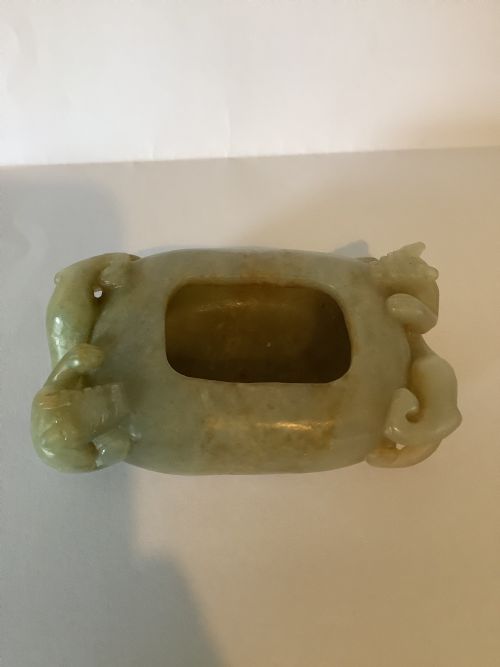


Chinese Carved Brush Pot
A Chinese carved brush pot brings scholarly calm to a desk, holding tools within natural bamboo, dense hardwood or soapstone carved by Qing dynasty hands.
Chinese Carved Brush Pot
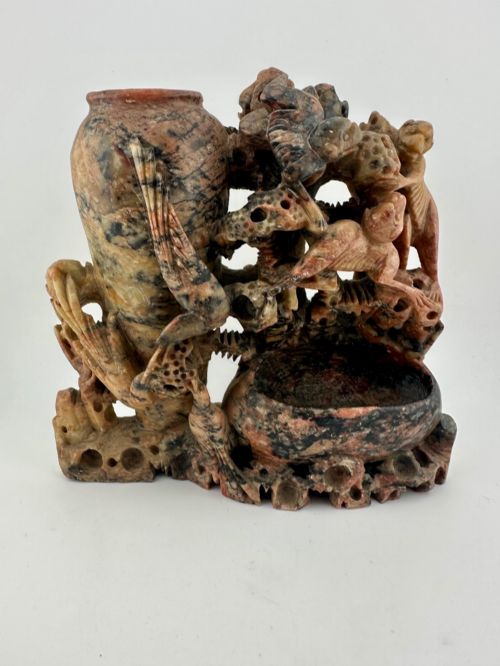
A Chinese carved brush pot is a desk accessory created for the scholar's studio, originating from periods spanning the nineteenth century and the Republic period. These cylindrical vessels held writing brushes and served as contemplative objects for literati who valued refined materials.
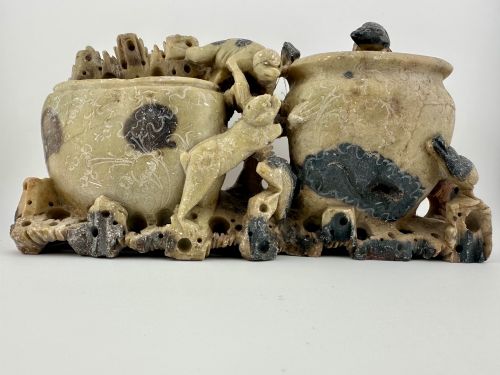
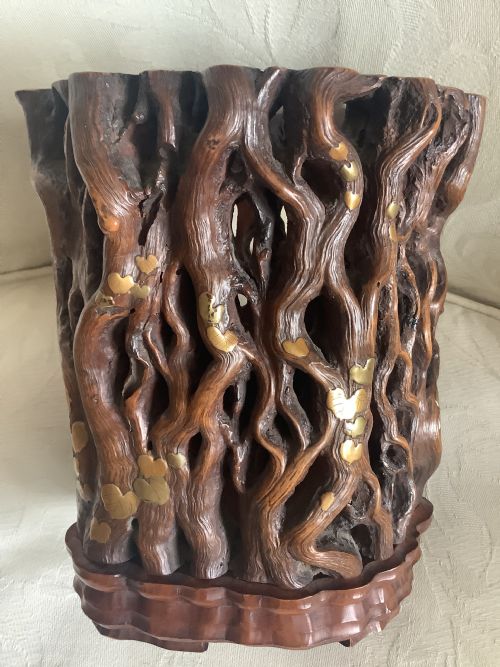
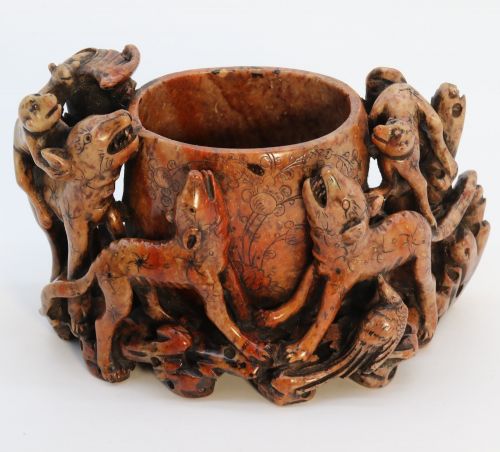
The versions most commonly met on this page are carved from bamboo or hardwood, often featuring deep relief work depicting figures, landscapes or natural motifs. Soapstone and jade examples also appear, alongside related scholar's desk items such as brush washers and lidded boxes.
The form remained consistent to fulfil a practical function within the traditional scholar's studio, yet makers varied the depth of relief and the complexity of the surrounding narrative scenes. Collectors encounter single vessels and matched pairs dating across the late nineteenth and early twentieth centuries.
How they were made
Natural organic materials such as bamboo and dense hardwoods form the foundation of these vessels, selected for their grain and stability. Carvers utilised gouges and knives to cut deeply into the material, exploiting the natural nodes of bamboo and the dense heartwood of timber.
Mineral materials including soapstone and jade were shaped through abrasion and intricate carving techniques, resulting in smooth surfaces or detailed figural groupings. Artisans followed established Qing Dynasty design traditions, working the exterior walls while leaving interiors smooth and functional.
Chinese Carved Brush Pot Retail Price Guide 2026
Typical asking prices for chinese carved brush pot among the pieces listed under this phrase on Sellingantiques today, from the lower quarter to the upper quarter. They describe what is for sale here now, not the wider market.
Some bamboo brush pots cleverly incorporate the natural hollow node of the plant to form an integrated, watertight base.
What varies in quality
The depth and precision of the carving separate standard examples from superior pieces, particularly where figures and natural elements emerge with crisp undercut details. Superior works display a harmonious balance between the natural shape of the bamboo or timber and the narrative scenes wrapped around the cylinder.
Material selection dictates the upper tier of the range, with well-figured hardwood, unblemished jade, or deeply patinated bamboo commanding greater attention. The crispness of the finishing work around complex scholar's studio motifs determines the overall success of the carving.
The Chinese Carved Brush Pot Glossary
- Brush pot
- A cylindrical desk vessel designed to hold writing brushes in a scholar's studio. This core form provides the canvas for intricate carving.
- Brush washer
- A small basin used for cleaning ink brushes during the process of calligraphy and painting. These companions to the brush pot share the same materials and carving styles.
- Scholar's studio
- The traditional workspace of the educated elite in China, where reading, writing and painting took place. Objects made for this environment reflect refined literary tastes.
- Qing Dynasty
- The imperial dynasty ruling China from sixteen forty-four to nineteen twelve, encompassing the primary manufacturing periods for these carved wooden and bamboo works.
- Republic Period
- The era in China following the imperial dynasty, lasting from nineteen twelve to nineteen forty-nine. Pieces from this time continue earlier scholar's studio traditions.
Chinese Carved Brush Pot: Frequently Asked Questions
What were Chinese carved brush pots used for?
These vessels held ink brushes upright on the scholar's desk for daily calligraphy and painting.
They also functioned as contemplative art objects that displayed the owner's literary taste and appreciation for fine craftsmanship.
How do I care for a bamboo brush pot?
Keep the vessel away from direct sunlight and dramatic changes in humidity to prevent the natural material from splitting.
An occasional application of neutral wax helps nourish aged bamboo and hardwood surfaces without altering their patina.
How can I tell nineteenth century pieces apart?
Nineteenth century examples typically display deeper undercutting in the carving and a richer, darker patina developed through handling over generations.
Examination of the interior and base reveals tool marks and wear patterns consistent with traditional workshop methods of the period.
Are soapstone and jade brush pots rare?
Mineral materials appear less frequently than bamboo or hardwood among surviving scholar's desk items on the market.
Carved soapstone and jade examples generally represent specialised workshop production intended for high-ranking scholars.