


Oriental Carved Wood Figurine
An oriental carved wood figurine brings centuries of expressive human and animal form into a room through the careful discipline of the chisel.
Oriental Carved Wood Figurine
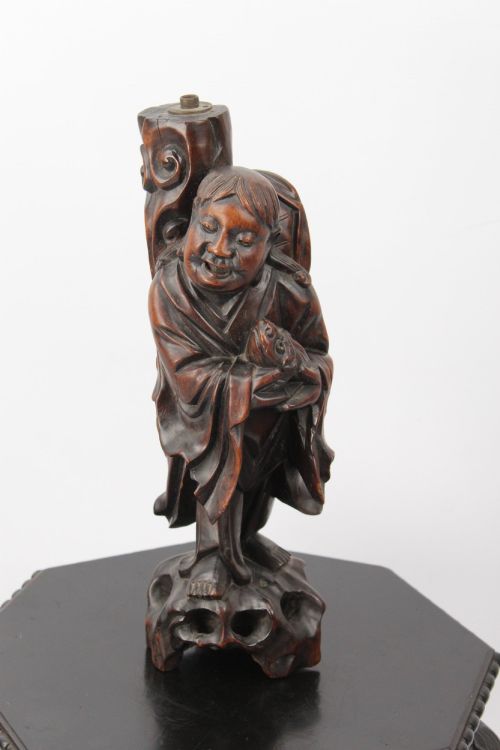
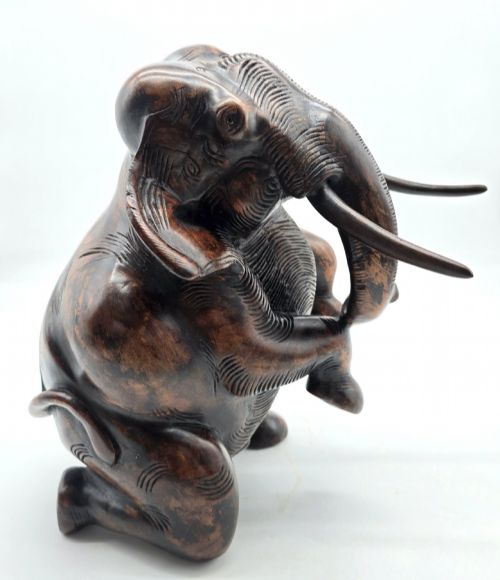
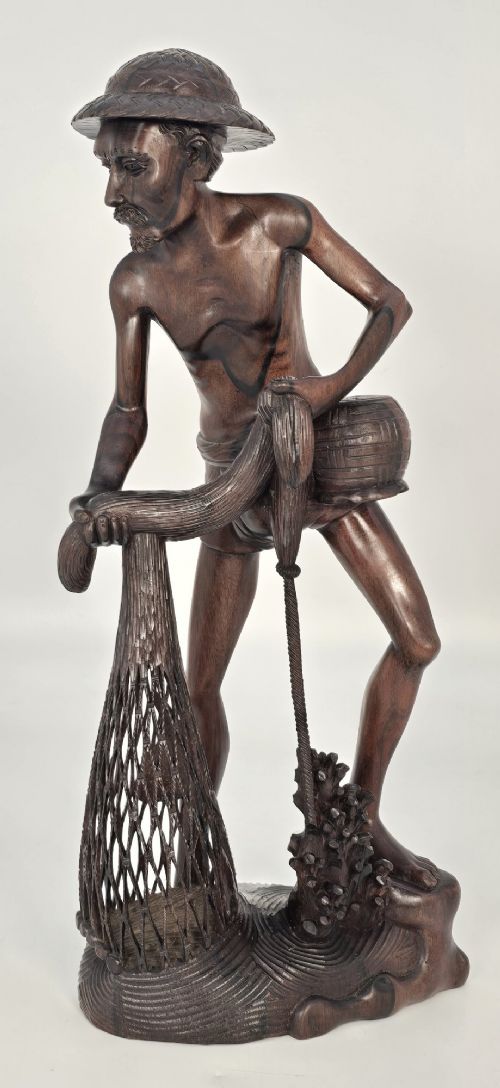
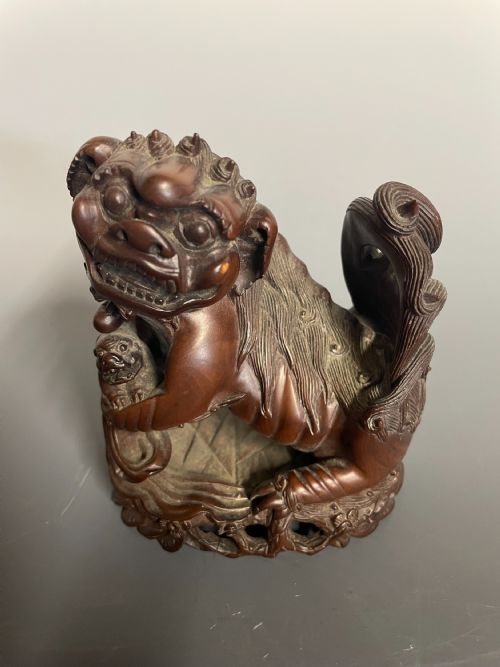
When you search for an oriental carved wood figurine, you encounter sculptural works originating predominantly from China and Japan during the nineteenth and early twentieth centuries. The selection here leans heavily towards hardwood and boxwood depictions of fishermen, deities, scholars, and animals such as water buffaloes and tigers.
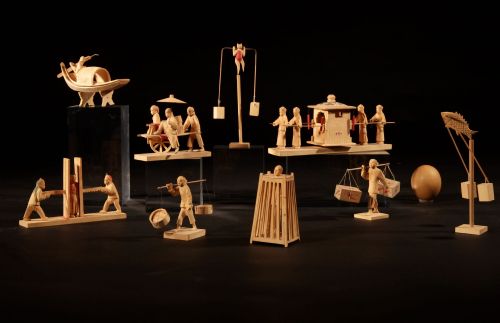
The objects range from miniature okimono and bamboo carvings to large ceremonial figures and root wood studies. Chinese Qing dynasty pieces and Japanese Meiji period works form the core of the items encountered on this page.
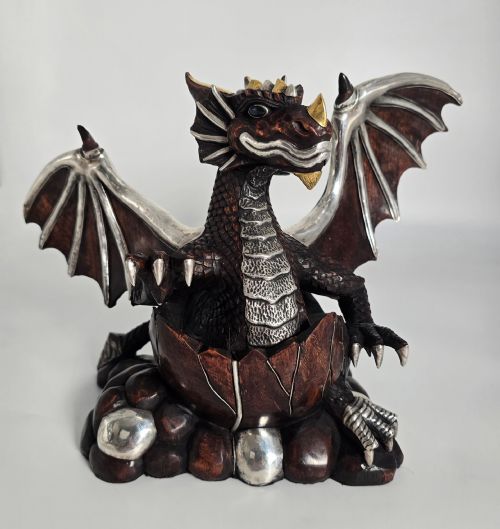
Makers utilised traditional regional attire and iconography to denote specific figures, including Daoist immortals, figures from daily life, and mythical creatures. Each piece captures a distinct narrative moment, whether through a fisherman with a trap or a deity of wealth.
Measures of quality
The distinction between ordinary and superior pieces rests upon the anatomical precision of the hands, face, and drapery folds. Master carvers exploited the natural grain and knots of boxwood or root wood to give vitality to the subject rather than merely reproducing a standard pattern.
Depth of undercut work and the crispness of facial expressions separate standard decorative carvings from exceptional sculptural works. A superior figure maintains proportional balance and dynamic movement whether viewed from the front or the reverse.
Chinese Qing dynasty and Japanese Meiji period pieces dominate the sculptural forms available on this page.
The Oriental Carved Wood Figurine Glossary
- Okimono
- A Japanese ornamental carving designed for display on a shelf or in a tokonoma alcove. These sculptures typically depict figures, animals, or historical scenes from the Meiji period.
- Boxwood
- A dense, pale hardwood prized by carvers for its fine grain and lack of prominent growth rings. It permits extremely sharp detail without splintering.
- Root wood
- Timber sourced from the root system of a tree, chosen for its twisted and irregular natural shapes. Carvers incorporated these organic contours into the final sculptural design.
Oriental Carved Wood Figurine: Frequently Asked Questions
What is an okimono?
An okimono is a Japanese freestanding display carving intended for interior decoration. These objects emerged as a major art form during the Meiji period.
Craftsmen created them in wood, ivory, and bronze to represent deities, animals, and everyday labourers with high realism.
How do I care for wooden carvings?
Wood sculptures require stable indoor humidity levels to prevent timber shrinkage and splitting. Keep them away from direct sunlight and direct heat sources.
Dust the surface gently with a soft, dry brush rather than applying liquid polishes that can build up in recessed carved areas.
How are Chinese and Japanese styles distinguished?
Chinese carvings often emphasise narrative symbolism, deities, and deeply undercut hardwood foliage or rockwork. Qing dynasty pieces frequently display formal robes and cultural iconography.
Japanese Meiji period carvings tend toward observed naturalism in animals and character studies of individuals engaged in daily tasks.
What is root wood carving?
Root wood carving is a traditional technique where the artisan incorporates the natural twists, knots, and hollows of a tree root into the sculpture. The original growth of the timber dictates the posture of the figure.
This method highlights the dialogue between the natural grain of the wood and the intervention of the carver's tool.