


Oriental Carved Wood Coffer
An oriental carved wood coffer brings aromatic timber and deep relief carving into a room, offering practical storage with distinct regional character.
Oriental Carved Wood Coffer
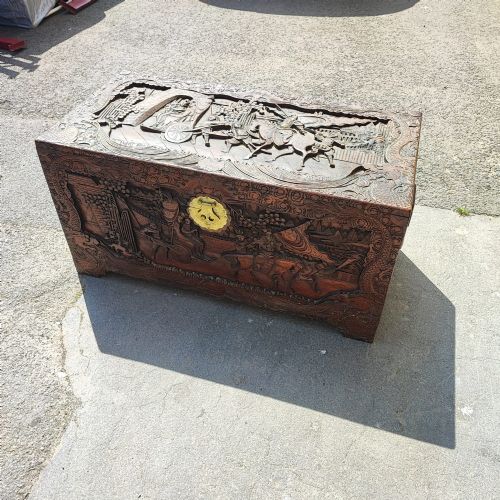
When you search for an oriental carved wood coffer, you encounter heavy storage chests primarily constructed from aromatic camphor wood or dense hardwoods. These pieces date across the nineteenth and early twentieth centuries, spanning periods from the Qing dynasty through to art deco revivals. The vast majority of examples you meet on this page take the form of blanket boxes, luggage trunks, and storage chests featuring traditional Chinese or Anglo-Indian export carving.
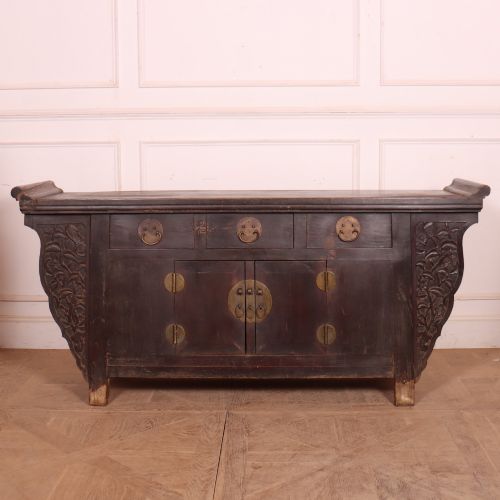
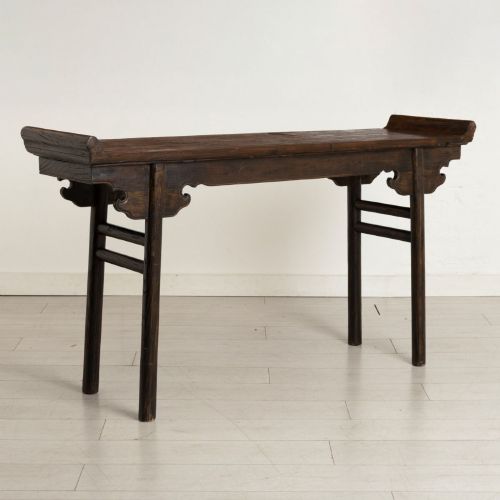
Beyond standard blanket boxes, the selection includes related forms such as brass-bound travel chests, lacquer trunks, and occasional hybrid pieces adapted for modern domestic use. While the core inventory focuses on chests, related furniture like hall benches and altar tables occasionally shares the page due to overlapping decorative motifs and regional origins. Most surviving examples rely on camphor wood for its insect-repellent properties, making these chests as practical today as they were for historical maritime travel.
Materials and Construction
Makers relied heavily on camphor wood, elm, and rosewood, selected for their stability and grain quality when subjected to deep relief carving. Artisans frequently incorporated brass mountings, locks, and corner straps to reinforce structural joints and protect corners during long-distance transit. Surface finishes ranged from natural polished timber to applied red lacquer and specialised limed oak treatments seen in later iterations.
Joinery techniques prioritised durability, often employing tongue-and-groove methods to allow solid timber to expand and contract with humidity changes. Carvers worked directly onto the thick panels of the trunk, executing intricate floral, figural, or maritime motifs by hand before assembling the main body of the coffer.
Listings feature camphor wood, elm, and rosewood alongside brass fittings, spanning the seventeenth to the twentieth centuries.
Assessing Quality and Execution
Quality reveals itself primarily in the depth, crispness, and spatial arrangement of the carved relief on the exterior panels. Superior pieces display undercut carving where details stand clear of the background, whereas lesser examples rely on shallow, machine-influenced incisions that lack dimension. The weight and choice of secondary timbers inside the box, alongside the original condition of brass hinges and handles, further distinguish fine workshop output from standard export items.
The integrity of the timber carcass and the preservation of original surface finishes dictate the standing of a piece within the range. Coffers that retain their natural aromatic qualities, tight lid alignments, and undisturbed patination from nineteenth-century use command greater appreciation than those with replaced hardware or heavily sanded surfaces.
The Oriental Carved Wood Coffer Glossary
- Camphor Wood
- A resilient, aromatic timber prized for furniture making because its natural scent deters insects. It forms the primary material for the majority of traditional storage chests.
- Qing Dynasty
- The final imperial dynasty of China, spanning from sixteen forty-four to nineteen twelve. Pieces associated with this period often display traditional regional carving styles.
- Anglo-Indian
- A descriptive term for furniture made in India under British colonial rule, combining local craftsmanship with European forms. These items frequently feature distinct brass inlay and dense hardwoods.
- Altar Table
- A traditional long, narrow table originating from Chinese domestic and temple architecture. They are characterised by upturned flange ends and sturdy wooden joinery.
- Chinoiserie
- The European interpretation and imitation of Chinese artistic traditions and motifs, popular in decorative arts and furniture design during various historical periods.
Oriental Carved Wood Coffer: Frequently Asked Questions
What is an oriental carved wood coffer?
An oriental carved wood coffer is a heavy storage chest, typically made from camphor wood, featuring hand-carved exterior panels depicting traditional motifs. These boxes were originally used for household storage and maritime transport.
Today, they serve as decorative blanket boxes, coffee tables, or prominent storage furniture in domestic interiors.
How do I identify the period of a chest?
Dating relies on examining the style of the carving, the choice of secondary woods, and the type of metal hardware applied. Nineteenth-century examples often feature deeper, more naturalistic relief work compared to later twentieth-century iterations.
Constructive details like hand-cut dovetails and patination accumulated over decades also provide clear indicators of age.
Are these chests made of solid wood?
Most traditional coffers on this page are constructed from solid timber planks, most notably camphor wood or elm. This solid construction was necessary to support the deep relief carving executed on the front and lid.
Using solid wood also ensured the natural aromatic properties of the timber remained active throughout the interior of the box.
How should I care for a camphor wood chest?
Keep the wood conditioned with appropriate natural waxes and avoid placing the chest in direct sunlight or near sudden heat sources. Extreme temperature shifts can cause solid timber panels to split or warp.
Regular dusting with a dry cloth preserves the fine details of the hand-carved relief work without damaging the surface patination.