
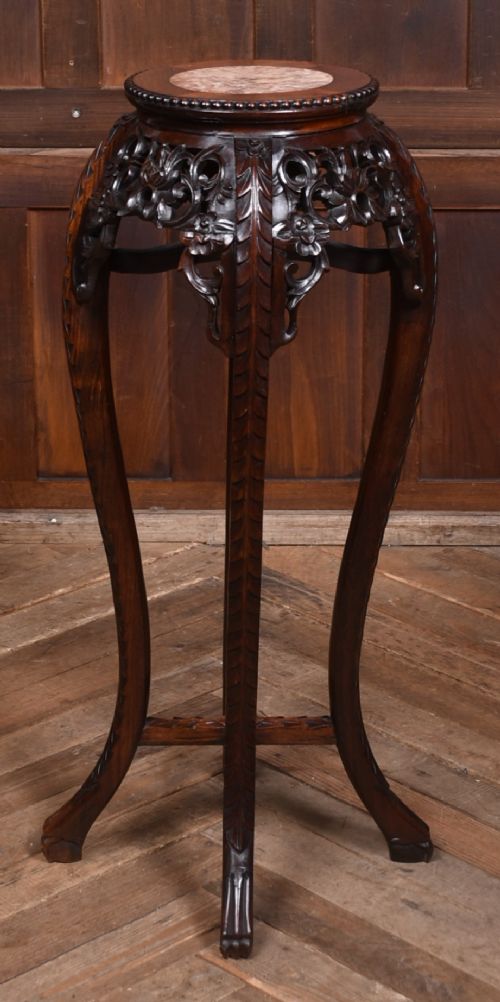


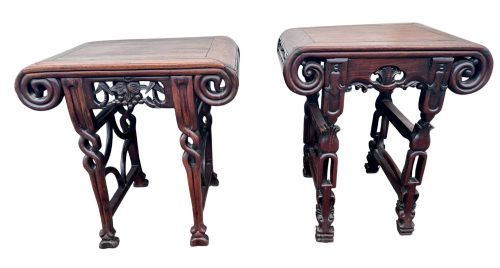


Oriental Carved Display Pedestal
An oriental carved display pedestal provides a sturdy, decorative platform for plants, vases, and urns within traditional interiors.
Oriental Carved Display Pedestal
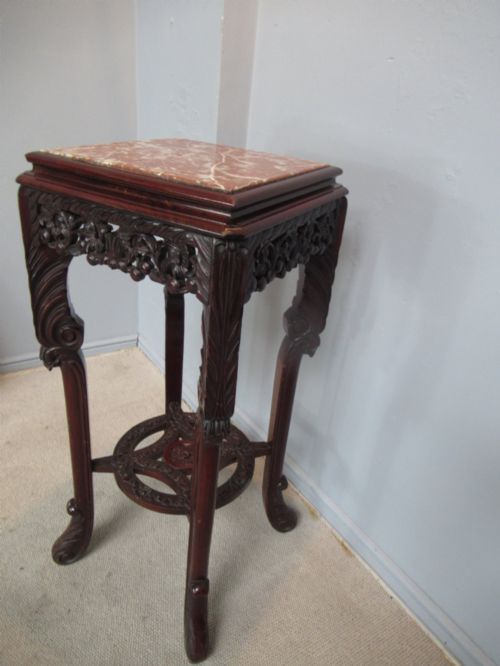
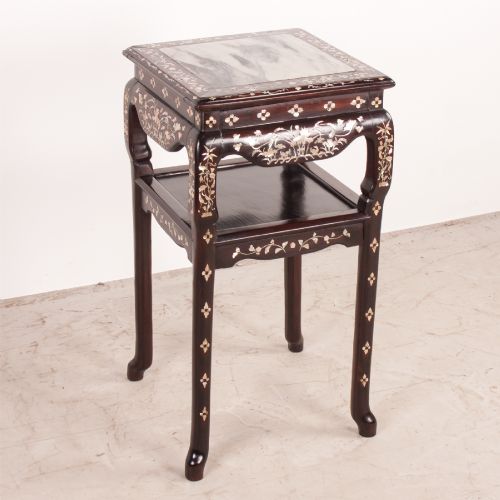
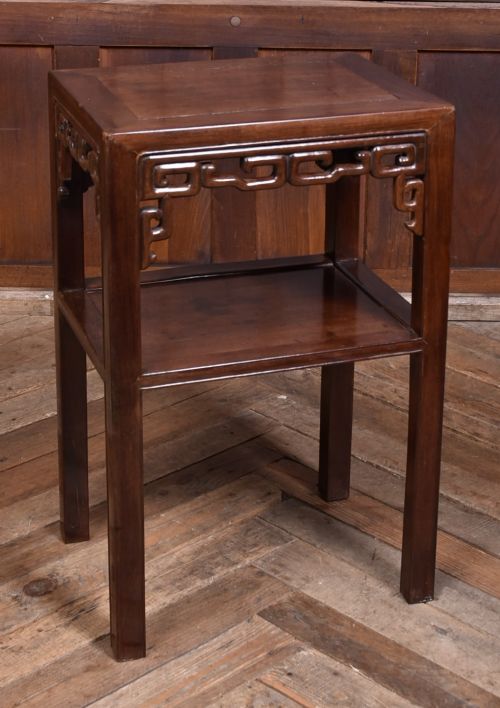
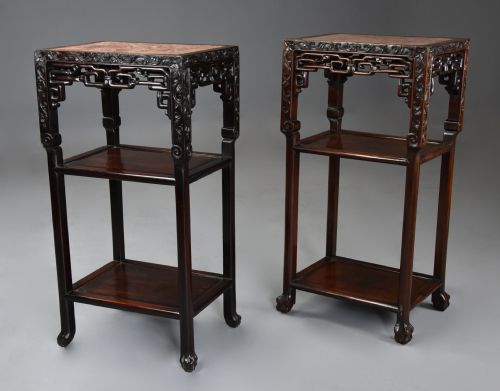
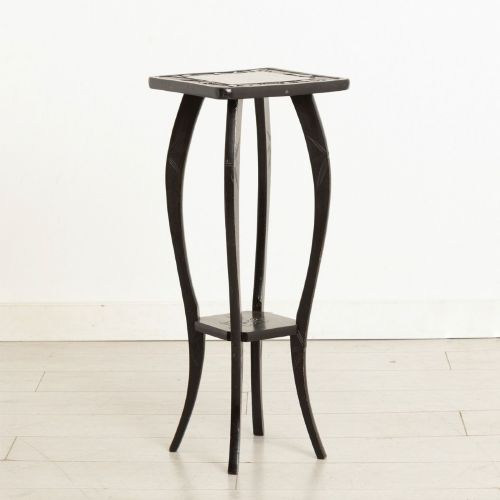
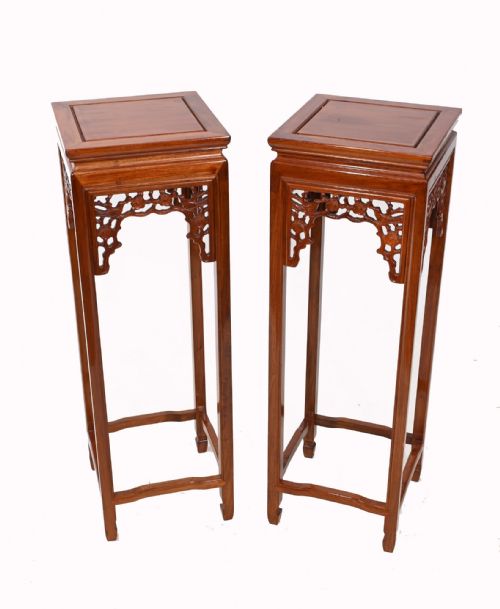
When you search for an oriental carved display pedestal, you encounter a specialised form of furniture designed to elevate decorative objects such as jardiniere bowls, porcelain vases, and bonsai trees. These pieces appear most frequently as plant stands, side tables, and vase stands originating from nineteenth-century Chinese and Japanese workshops.
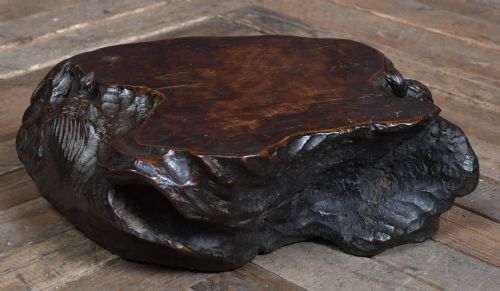
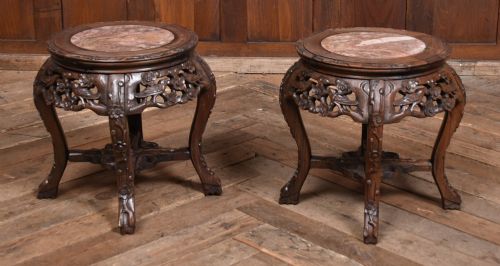
The selection ranges from low bonsai stands to tall freestanding pedestals suitable for heavy urns. Many examples incorporate round or rectangular marble inserts designed to withstand moisture from plants while adding a cool, contrasting surface to the dark timber frames.
Materials and construction
Cabinetmakers utilised dense exotic hardwoods including rosewood, padouk, and hongmu, which possessed the structural strength required for heavily pierced and undercut carving without splitting. These heavy timbers were joined using traditional framing techniques that allowed the dense wood to expand and contract naturally with seasonal humidity changes.
Insets of rouge or white marble were fitted precisely into circular and rectangular channels atop the timber frames. Surface finishes ranged from polished natural grain showing the deep red and brown tones of the hardwood to black ebonised coatings and lacquered painted decoration.
Listings feature items dated from the Victorian era through the early twentieth century, spanning 1860 to 1920.
Judging the range
The distinction between standard utility stands and superior examples lies primarily in the depth, crispness, and complexity of the hand carving. Finer pieces exhibit deeply undercut foliage, dragons, or figures standing completely free from the background timber, whereas lesser examples rely on shallow surface incisions.
Material selection also dictates standing; heavier, highly figured rosewood and hongmu combined with flawless marble inserts command greater visual presence than simpler softwoods or plain ebonised timber.
Liberty of London
The Oriental Carved Display Pedestal Glossary
- Hongmu
- A dense, heavy Chinese hardwood prized for its deep red-brown colour and suitability for intricate carving. This timber forms the primary structure of many fine nineteenth-century display stands.
- Jardiniere stand
- A tall piece of furniture specifically designed to support a large ceramic flower pot or plant bowl. These stands frequently feature inset marble tops to protect the wood from water damage.
- Padouk
- A heavy tropical hardwood with a characteristic reddish hue commonly utilised in Chinese export furniture. It provides a stable base for heavily carved plant stands.
- Chinoiserie
- European artistic style reflecting Chinese artistic influences, often applied to lacquered furniture and decorative objects. This style appears alongside genuine Chinese export pieces from the period.
Oriental Carved Display Pedestal: Frequently Asked Questions
How were these stands used originally?
Households utilised these pedestals to showcase prized porcelain vases, bronze vessels, and potted plants such as bonsai trees. Elevating the items placed them at optimal viewing height.
The marble tops provided a practical, waterproof surface specifically suited for holding damp plant pots without staining the surrounding woodwork.
Where should I place a pedestal?
Display pedestals suit corners, entrance halls, or flanking larger furniture items where a vertical accent is required. They anchor trailing plants or large ceramic vessels effectively.
Ensure the floor surface is even, as heavy hardwood and marble stands require stable placement to remain entirely secure.
How do I identify nineteenth-century pieces?
Nineteenth-century stands display hand-carved joinery, dense exotic hardwoods like rosewood or hongmu, and heavy natural marble inserts. Tool marks and patination across the timber indicate age.
Later reproductions often utilise lighter modern timbers and machine-cut details that lack the depth and weight of nineteenth-century examples.