






Oriental Bronze Desk Lamp
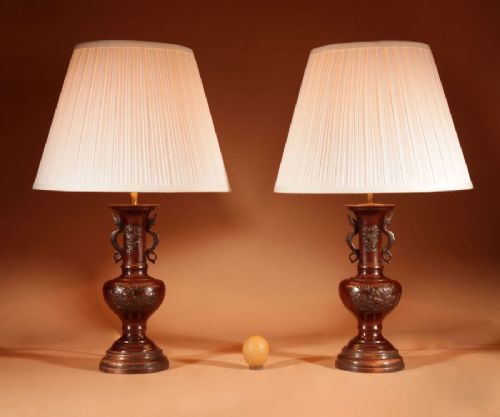
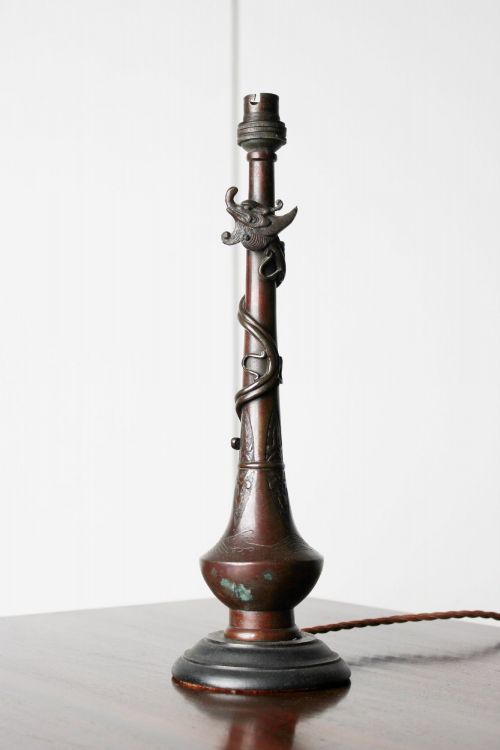
These oriental bronze desk lamp examples bring sculptural weight and historical interest to a study, blending eastern ornamentation with period lighting.
Oriental Bronze Desk Lamp
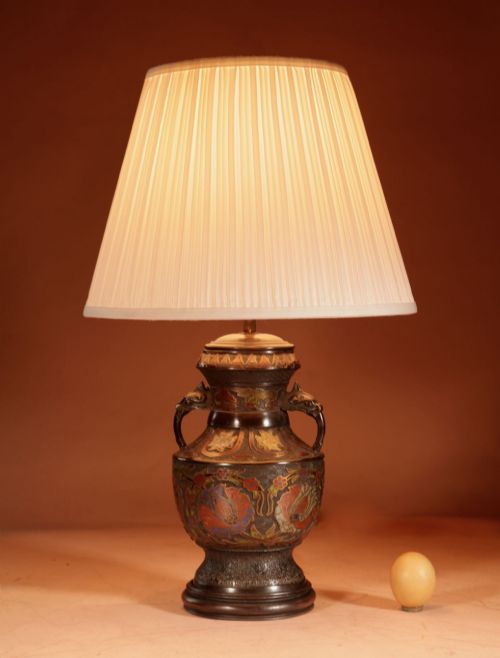
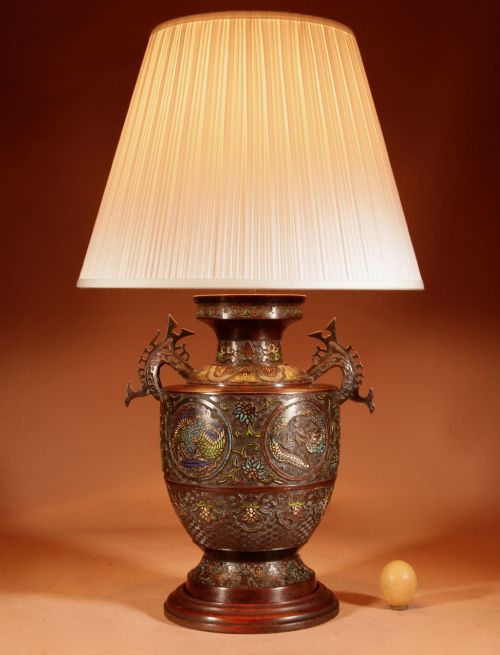
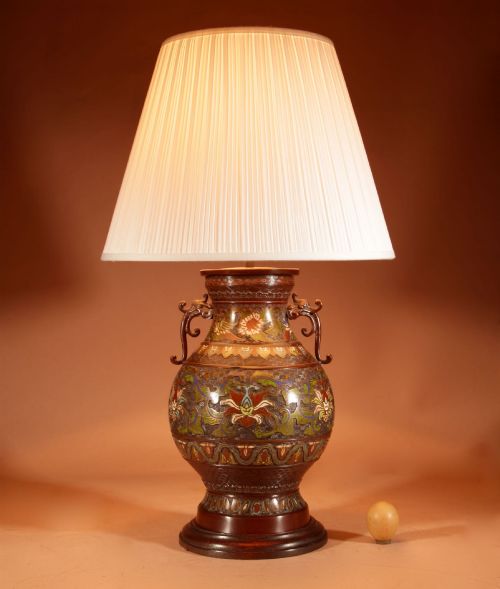
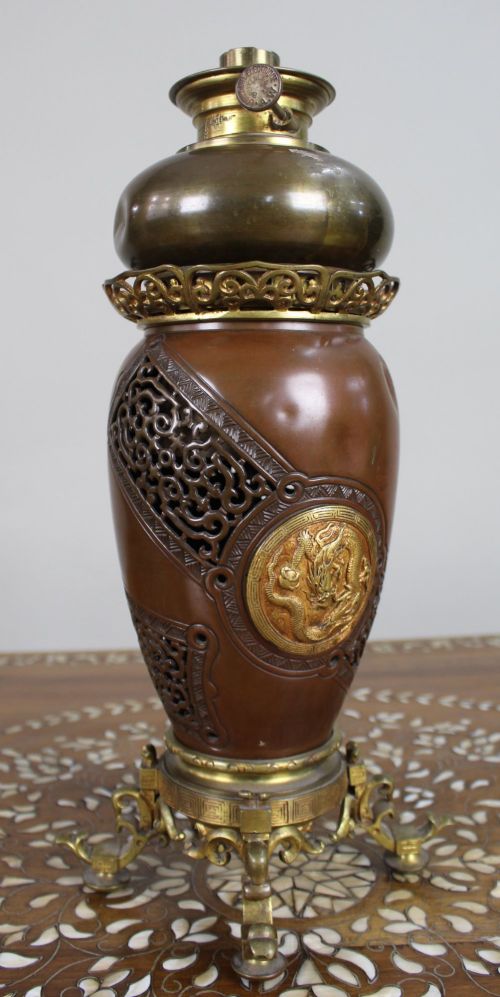
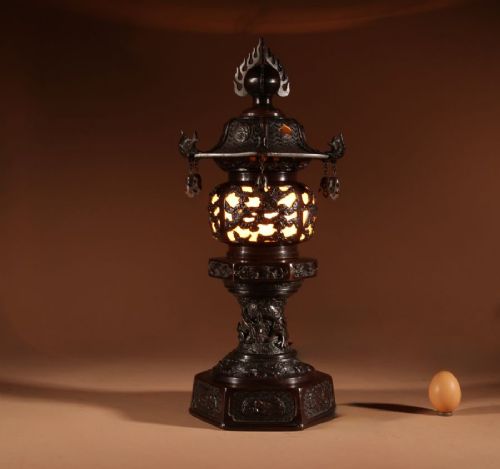
An oriental bronze desk lamp draws upon artistic traditions from China and Japan, taking the form of figural table lamps, converted vases, and lantern structures. The search phrase covers pieces cast in bronze, brass, and gilt bronze, often incorporating panels of champlevé and cloisonné enamel.
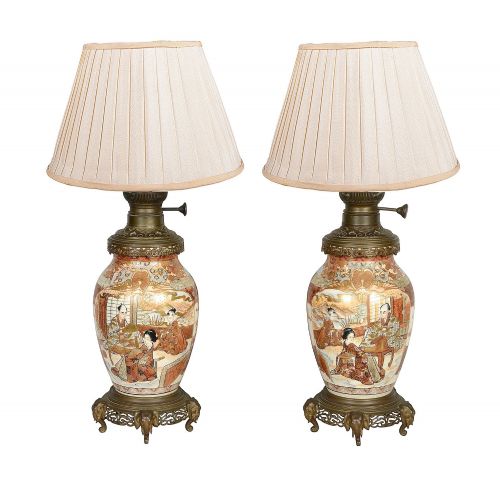
Most examples originate from the nineteenth and early twentieth centuries, spanning the Victorian, Edwardian, and Meiji periods. Makers frequently utilised older porcelain vessels, such as Satsuma and Celadon wares, mounting them with metal components to create functional lighting.
Buyers encounter single lights alongside matched pairs, ranging in scale from modest desk proportions to large decorative table lamps. Figures of elephants and dragons frequently anchor the sculptural bases of these pieces.
Materials and construction
The primary construction relies on bronze and brass casting, frequently finished with patination or fire gilding to create ormolu mounts. Artisans combined these heavy metal frames with ceramic bodies, including porcelain and earthenware vases.
Surface decoration often incorporates intricate enamel work such as cloisonné and champlevé, alongside hand-painted ceramic glazes. Many surviving examples show later adaptations where wiring has been threaded through antique vases and bronze figures.
Oriental Bronze Desk Lamp Retail Price Guide 2026
Typical asking prices for oriental bronze desk lamp among the pieces listed under this phrase on Sellingantiques today, from the lower quarter to the upper quarter. They describe what is for sale here now, not the wider market.
Elephants feature as sculptural supports on heavy bronze table lamps, standing ready to illuminate the room.
Assessing quality in execution
Quality rests in the crispness of the bronze casting and the precision of the surface chasing, particularly on figural details like dragons and elephants. Finer pieces demonstrate careful integration between the metal mounts and the ceramic or enamel body.
The sophistication of the enamel work and the richness of the original patination separate standard production from superior examples. Consistency in matched pairs and the retention of original mounting components further elevate the status of a piece.
The Oriental Bronze Desk Lamp Glossary
- Champlevé
- An enamelling technique where troughs are dug into the bronze surface and filled with vitreous enamel before firing. This method creates bold coloured patterns against the metal background.
- Cloisonné
- A technique where thin metal wire is soldered to a bronze base to form compartments, which are then filled with enamel paste. The piece is fired and polished to a smooth finish.
- Ormolu
- Gilded bronze mounts applied to furniture, porcelain, and lamps during the eighteenth and nineteenth centuries. The process involves the application of a mercury and gold amalgam.
- Meiji Period
- The era in Japanese history lasting from eighteen sixty-eight to nineteen twelve, characterised by extensive trade with the West. Many decorative bronzes and Satsuma ceramics date from this period.
- Celadon
- A term for ceramics featuring a pale green jade-like glaze originating in China. These vessels were frequently mounted as lamps in the nineteenth century.
Oriental Bronze Desk Lamp: Frequently Asked Questions
How do I date an oriental bronze lamp?
Dating relies on stylistic markers within the bronze casting, the nature of the enamel work, and the period of any integrated ceramic vase. Nineteenth-century examples often display Victorian or Meiji stylistic traits.
Hardware components, wiring methods, and the type of patination also provide clues to the age of the assembly, though many vases were converted long after their original manufacture.
Are these lamps safe for modern use?
Most antique lamps require inspection and potential rewiring by a qualified electrician to meet modern safety standards. The fragile nature of antique porcelain and enamel bodies means care is needed during any electrical restoration.
Retaining original mounting brackets while updating the internal wiring allows the lamp to function safely without compromising its historic integrity.
What is the difference between Chinese and Japanese pieces?
Chinese pieces often reflect archaistic forms, famille rose palettes, and dynastic motifs such as dragons and floral arrangements. Japanese items from the Meiji period frequently showcase naturalistic animal figures and distinct cloisonné patterns.
Stylistic overlap occurred due to Western export demands, leading European makers to produce items in a general Chinese taste.
How should I clean a bronze and enamel lamp?
Dusting with a soft, dry cloth is the safest method for maintaining both bronze surfaces and delicate enamel or ceramic sections. Aggressive metal polishes must be avoided to preserve the original patination.
Moisture should be kept away from fabric components and older wiring channels during any routine maintenance.