





Oriental Bamboo Table
An oriental bamboo table brings lightweight utility and distinct cross-cultural charm to a room, spanning Victorian bamboo frames and Chinese export hardwoods.
Oriental Bamboo Table
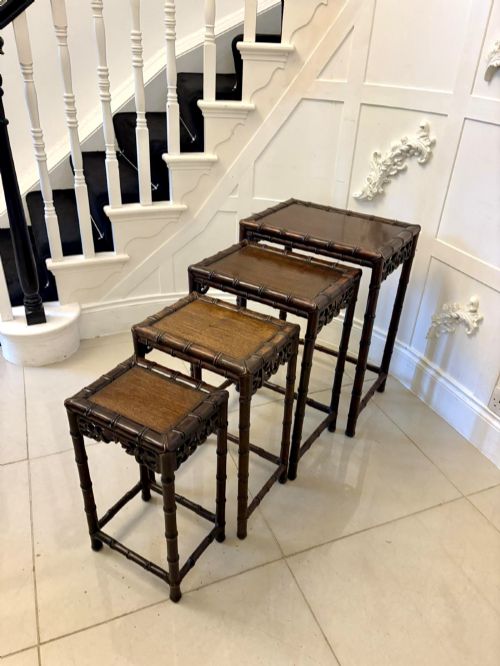
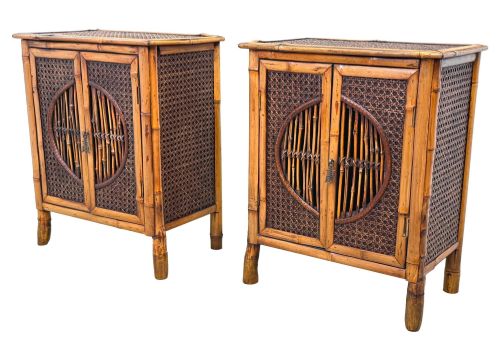
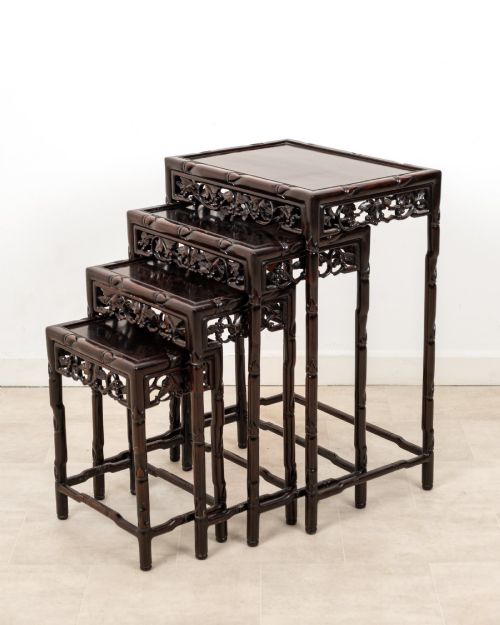
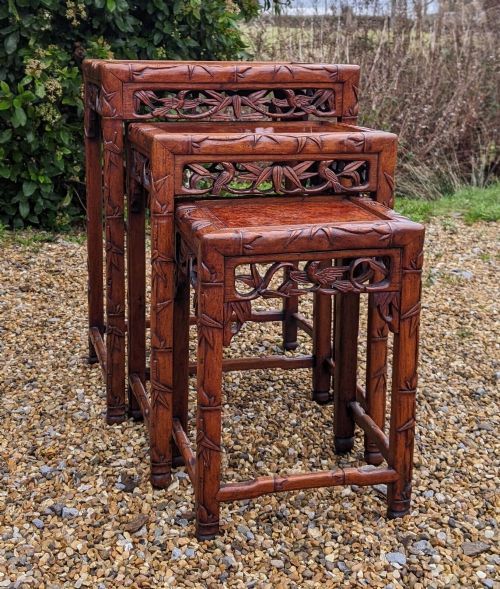
An oriental bamboo table encompasses a variety of occasional furniture forms designed for display and utility, frequently appearing as nests of tables, side tables, and plant stands. These pieces bridge British domestic tastes of the nineteenth century and traditional Chinese export craftsmanship.
The most common iterations on this page include nested sets of four tables and two-tier side tables featuring lacquered panels or marble inserts. Makers utilised natural bamboo, tiger bamboo, and dense oriental hardwoods to construct versatile furniture suited to Victorian parlours and Aesthetic interiors.
How they were made
Craftsmen built these tables using sturdy natural bamboo poles, often steamed and bent to form frames, alongside traditional hardwoods like hongmu and huanghuali. Joinery methods relied on precise pegging and binding to secure the lightweight structures.
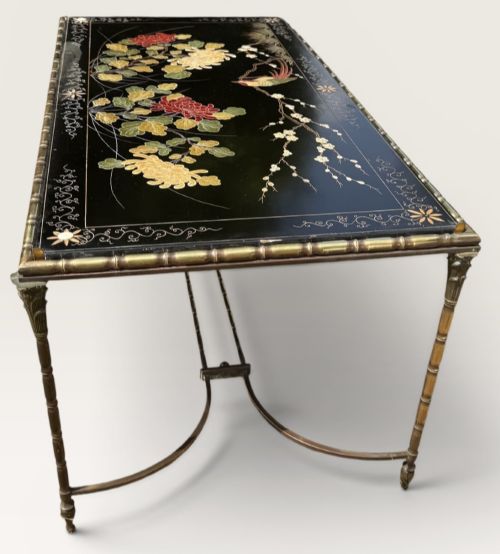
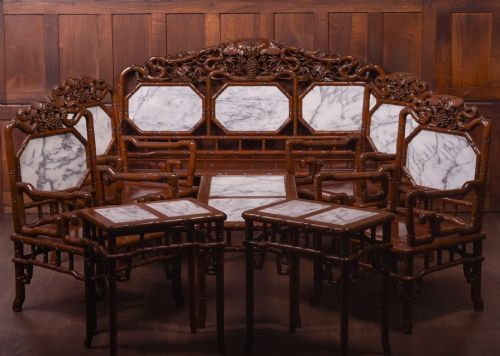
Surfaces frequently showcase intricate lacquerwork, japanning, or hand-carved details depicting Chinese motifs. Marble slabs and brass elements were integrated into heavier hardwood stands and plant holders to provide stable display surfaces.
Oriental Bamboo Table Retail Price Guide 2026
Typical asking prices for oriental bamboo table among the pieces listed under this phrase on Sellingantiques today, from the lower quarter to the upper quarter. They describe what is for sale here now, not the wider market.
Listings span the nineteenth century through the 1930s, featuring materials from natural bamboo and rosewood to marble and brass.
What varies in quality
Quality rests in the integrity of the structural framing and the crispness of the surface decoration, whether hand-carved hardwood or applied lacquer. Finer examples exhibit tight joints in bamboo stems and rich, undisturbed grain on rosewood and huanghuali tops.
The finesse of the decorative panels distinguishes standard production from superior work. Pieces featuring intact hand-painted japanning, inlaid marble without hairline cracks, or clever folding mechanisms demonstrate higher levels of original workshop skill.
Maison Bagues
The Oriental Bamboo Table Glossary
- Hongmu
- A dense, dark oriental hardwood prized for traditional Chinese furniture construction. It provides exceptional weight and durability to tables and stands.
- Japanning
- A European imitation of East Asian lacquerwork achieved through successive coats of varnish and heat curing. It creates a glossy, dark surface often embellished with gilt motifs.
- Aesthetic Movement
- A late nineteenth-century design ethos that rejected heavy Victorian ornamentation in favour of simplified forms and Japanese-inspired artistic motifs. Bamboo furniture became a staple of this style.
- Qing Dynasty
- The final imperial dynasty of China, spanning from the seventeenth to the early twentieth century. Many export pieces on the market date from the latter half of this period.
- Quartetto
- A traditional term for a set of four nesting tables designed to fit neatly beneath one another. They gained immense popularity in British homes during the Victorian era.
Oriental Bamboo Table: Frequently Asked Questions
What is an oriental bamboo table?
An oriental bamboo table is a piece of occasional furniture combining British aesthetic bamboo framing with Chinese export influences, typically taking the form of a side table, plant stand, or nest of tables.
These items range from Victorian tiger bamboo frames with lacquered panels to traditional Chinese carved hardwood tables designed for export.
How do I style an oriental bamboo table?
These tables function well as flexible surfaces for lamps, plants, or decorative objects, easily moved around a living room or parlour due to their lightweight construction.
Nesting tables allow for space-saving storage, whilst console and altar tables serve as focal points against walls in a hallway or reception room.
Are these tables sturdy?
Natural bamboo frames offer surprising resilience through flexible construction, though their lightweight nature means they suit decorative use and moderate daily tasks rather than heavy loads.
Hardwood versions, such as those made from hongmu or huanghuali, provide substantial weight and rigidity comparable to standard European furniture.
How do I date a bamboo or hardwood table?
Dating relies on stylistic clues such as Aesthetic Movement design markers, Victorian construction techniques, and Qing Dynasty carving patterns recorded across the nineteenth and early twentieth centuries.
Materials also help establish age, with certain lacquered surfaces and specific hardwood species pointing directly to late nineteenth-century import trends.