




Oriental Accent Cabinet
These pieces sold as an oriental accent cabinet bring decorative richness and compact utility into a room.
Oriental Accent Cabinet
When you search for an oriental accent cabinet, you encounter miniature table top cupboards, small chests and low side tables that combine practical storage with decorative presence. These items originate from the nineteenth and early twentieth centuries, drawing on Chinese Qing styles, export traditions and European Japonisme or Aesthetic interpretations.
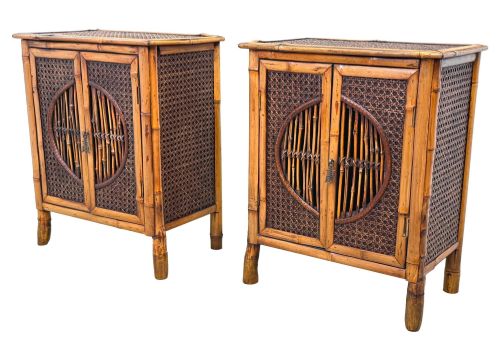
The most frequent examples on this page are compact forms such as table top bamboo cupboards and low occasional tables designed for display rather than heavy storage. They bridge the gap between furniture and decorative object, offering distinct silhouettes for corners and small spaces.
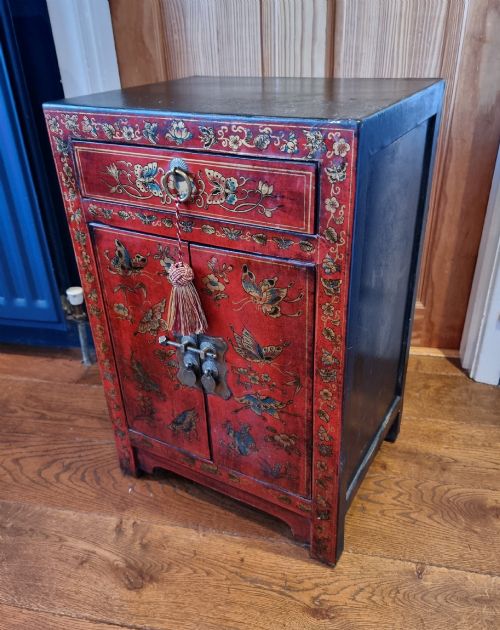
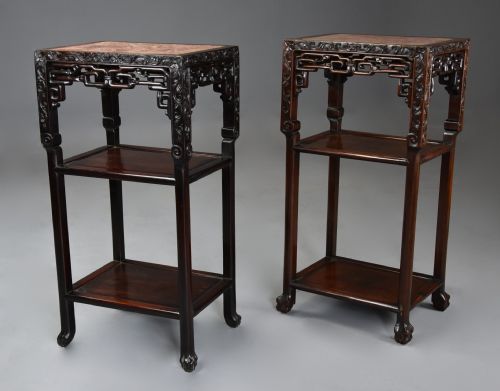
Makers and workshops of the period utilised varied regional traditions, producing freestanding pot stands, two-tier lamp tables and red chinoiserie cupboards. Each piece reflects either direct Eastern craftsmanship or Western nineteenth-century fascination with Asian design motifs.
How they were made
Construction relies heavily on dense timbers such as hardwood, rosewood, Hongmu and elm, frequently shaped into rigid frames for small cupboards and pedestals. Joinery is traditional and precise, supporting intricate surface additions without sacrificing structural integrity.
Makers incorporated contrasting elements such as marble inserts, brass fittings, mother-of-pearl inlay and bamboo stalks. Caned and rattan panels appear alongside red lacquered finishes and hand-carved details to create texture and visual depth.
Oriental Accent Cabinet Retail Price Guide 2026
Typical asking prices for oriental accent cabinet among the pieces listed under this phrase on Sellingantiques today, from the lower quarter to the upper quarter. They describe what is for sale here now, not the wider market.
Materials recorded across the inventory include hardwood, marble, brass, bamboo, cane, rattan, metal and rosewood.
What varies in quality
Quality rests in the crispness of the carving and the stability of the timber used for the frame. Dense hardwoods and well-fitted marble or inlay work indicate higher execution than softer secondary woods.
The refinement of decorative surfaces, from mother-of-pearl placement to the tightness of bamboo joints, distinguishes finer studio or workshop pieces from standard commercial production.
Gabriel Viardot
The Oriental Accent Cabinet Glossary
- Chinoiserie
- European interpretation and imitation of Chinese artistic traditions. This decorative style flourished during the eighteenth and nineteenth centuries.
- Japonisme
- Western fascination with Japanese art and aesthetics during the late nineteenth century. It heavily influenced European furniture makers and designers.
- Hongmu
- A category of dense, dark Asian hardwoods prized for cabinetmaking. It translates literally to red wood.
- Aesthetic Movement
- A late nineteenth-century British movement emphasising art for art's sake. It promoted asymmetrical designs and Japanese-inspired motifs.
Oriental Accent Cabinet: Frequently Asked Questions
What is an oriental accent cabinet used for?
These compact pieces serve as display surfaces for lamps, plants and small collections while offering modest storage within enclosed cupboards. They add focal points to hallways, living rooms and bedrooms without dominating the floor plan.
Their varied heights and multi-tiered designs allow them to function flexibly as lamp tables, pedestals or decorative accents in both traditional and modern interiors.
How do I identify a nineteenth-century piece?
Nineteenth-century examples show distinct joinery methods, natural material ageing and specific stylistic crossovers like the Aesthetic Movement or early export designs. Examining the underside and interior timber helps confirm the period.
Makers of this era utilised traditional hardwoods, bamboo and hand-applied finishes that differ noticeably from later mass-produced replicas.
Are bamboo cabinets fragile?
Bamboo and cane pieces are surprisingly resilient when constructed with traditional joinery, though they require sensible placement away from extreme humidity and direct heat sources. Regular dusting with a soft cloth keeps the natural material conditioned.
While intended for light everyday use, these items function best as display furniture rather than heavy utility storage.
What distinguishes Chinoiserie from Qing pieces?
Qing pieces originate from Chinese workshops under dynastic rule, reflecting authentic regional forms, native timbers and traditional carving techniques. They embody Eastern aesthetic standards of the period.
Chinoiserie describes Western interpretations created in Europe, applying Asian-inspired motifs and lacquered finishes through Western cabinetmaking traditions.