



Orange Turkish Rug
An orange turkish rug brings deep warmth and historical pattern to a room through traditional regional weaving.
Orange Turkish Rug
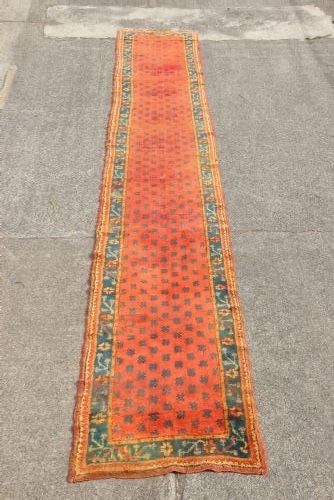
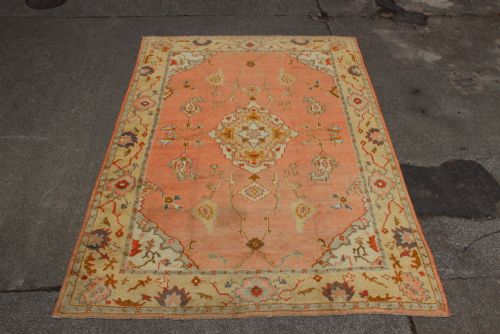
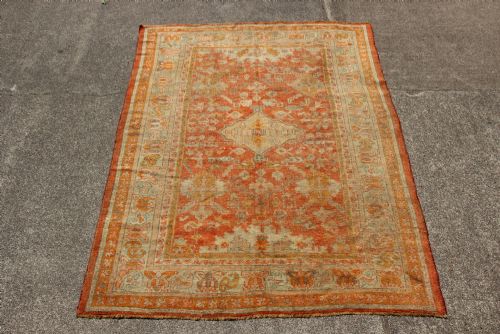
An orange turkish rug encompasses large carpets, room-size pieces, and long narrow runners originating from Anatolian workshops and villages. These floor coverings span the late nineteenth century into the early twentieth century, taking forms such as prayer rugs, kelims, and expansive carpets.
The dominant varieties on this page include large Oushak carpets and regional village pieces featuring traditional motifs. Buyers frequently encounter formats ranging from expansive room-scale carpets to elongated runners designed for hallways.
How they were made
These textiles utilise natural materials recorded as wool and cotton, forming the pile, foundation warp, and weft. Weavers knotted and bound these fibres by hand on traditional vertical looms across Anatolian regions.
Regional workshops and villages employed traditional dyeing methods to achieve the characteristic orange, faded, and ivory tones seen across Oushak, Ghiordes, Milas, and Kurdish pieces.
Orange Turkish Rug Retail Price Guide 2026
Typical asking prices for orange turkish rug among the pieces listed under this phrase on Sellingantiques today, from the lower quarter to the upper quarter. They describe what is for sale here now, not the wider market.
The documented production periods span the nineteenth century through to the 1920s.
What varies in quality
Quality separates through the fineness of the knotting, the balance of the field design, and the integrity of the borders such as star patterns. Large Oushak carpets demonstrate sophisticated scale, while village rugs show direct, local expression in their execution.
The handling of colour variation, such as faded fields and vegetable dye subtlety, dictates visual depth. Pieces maintaining strong structural foundations alongside harmonious wear represent the upper tier of these textiles.
The Orange Turkish Rug Glossary
- Kelim
- A flat-woven carpet or rug produced without a pile, utilising traditional slit-tapestry techniques. These pieces offer lightweight versatility for floors and walls.
- Oushak
- A celebrated tradition of carpet weaving originating from the town of Usak in western Anatolia. These carpets are known for their luminous wool and large-scale floral or geometric designs.
- Prayer rug
- A small rug featuring a mihrab or arch design indicating the direction of prayer. These textiles were woven for personal devotion in various Anatolian provinces.
- Warp
- The vertical threads stretched tightly on the loom that form the structural foundation of the rug. The exposed ends often terminate in visible fringes.
- Weft
- The horizontal threads passed through the warp threads to hold the knots securely in place. Together with the warp, it forms the grid of the textile.
Orange Turkish Rug: Frequently Asked Questions
Where should I place an orange turkish rug?
These rugs suit high-traffic hallways as narrow runners or anchor living spaces when chosen in large carpet formats. Their warm tones complement natural wood flooring and traditional interiors.
Ensure you use a quality underlay to protect the historic cotton and wool foundation from excessive friction against hard floors.
How do I clean an antique rug?
Professional specialist cleaning is essential for antique textiles to protect natural wool pile and traditional vegetable dyes. Avoid standard domestic detergents or immersion washing.
Gentle surface vacuuming without a rotating brush helps remove embedded dust while preserving the delicate weave of the rug.
What is an Oushak carpet?
Oushak carpets originate from western Anatolia and are renowned for softer colour palettes and expansive, looser floral motifs. They often feature generous proportions suitable for large reception rooms.
These carpets utilise high-grade local wool that accepts natural dyes with a distinctive, glowing quality.
How do I identify village rugs?
Village rugs from regions such as Milas or Malatya display more geometric, direct designs woven by individual makers rather than urban workshops. They often include specific regional motifs like star borders.
These pieces tend to be smaller in scale, reflecting domestic production rather than large commercial output.
Are these rugs genuinely antique?
The pieces listed date from the nineteenth century up to the early twentieth century, encompassing periods such as 1880, 1890, 1900, and 1920. Materials and construction methods reflect this historical production.
Examining the wear patterns, wool quality, and structural foundations helps confirm their age and traditional origins.