

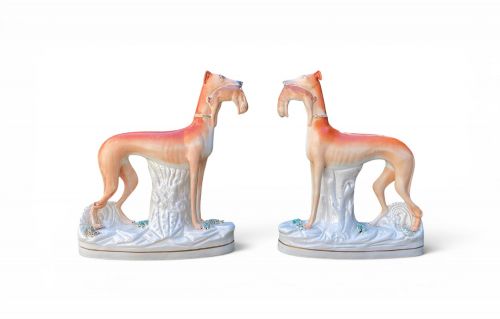
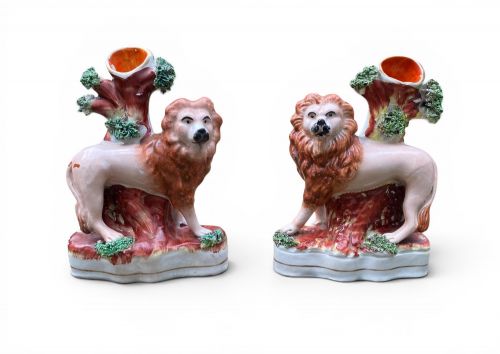


Orange Ceramic Figurine
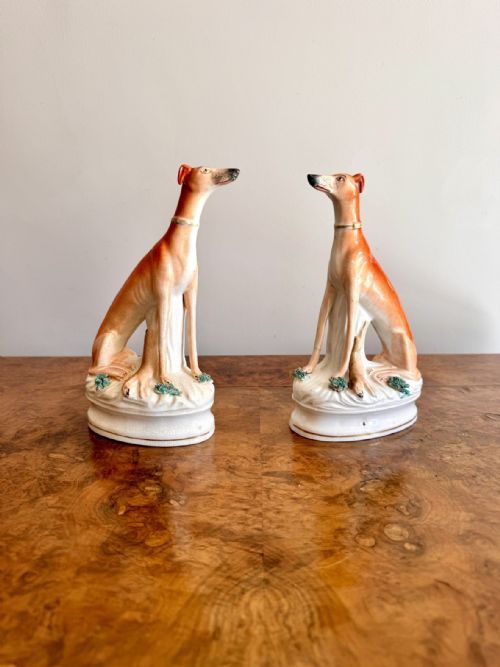
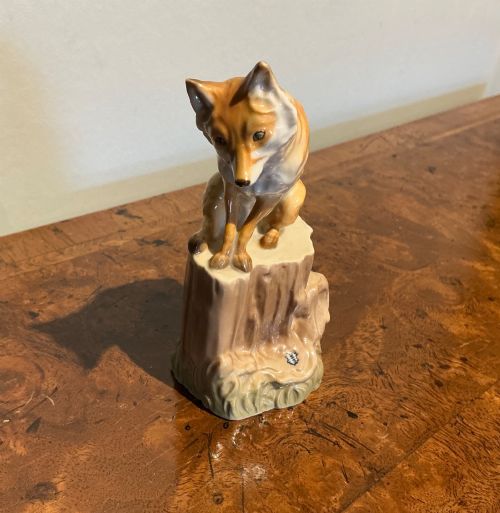
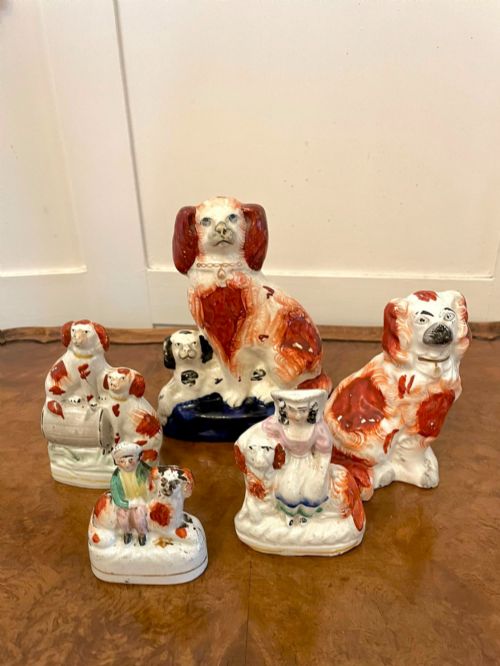
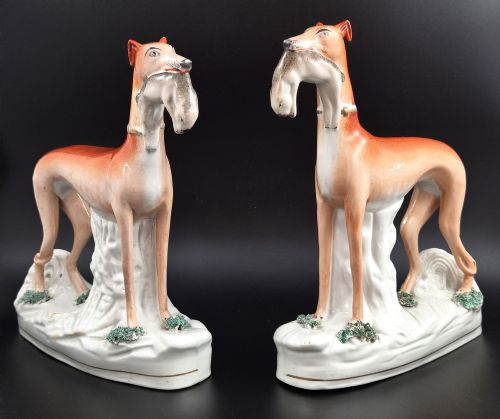
These orange ceramic figurine examples bring character to a room through expressive animal studies and figural groups shaped across the nineteenth and twentieth centuries.
Orange Ceramic Figurine
An orange ceramic figurine spans several distinct eras and traditions, most notably Victorian Staffordshire pottery and twentieth-century European porcelain. When you search for an orange ceramic figurine, you encounter sculptural animals, bookends, and spill vases produced by regional potteries and continental factories.
The nineteenth-century pieces lean heavily towards Staffordshire dogs, greyhounds, lions, and spill vases depicting deer. These earthenware figures served as decorative mantel ornaments in homes across Britain.
Twentieth-century examples shift towards Art Deco porcelain novelty items, powder bowls, and perfume bottles from the nineteen-thirties. These later forms utilise brighter glazes and geometric influences distinct from earlier Victorian modelling.
Materials and methods
The pieces rely on ceramic bases shaped from earthenware or porcelain, finished with lead glaze or enamel paint. Potters cast or hand-modelled the figures before applying the surface colours.
Makers used enamel paint over glazes to introduce detail to the faces, coats, and eyes of the animals and human figures. Kiln firing fixed these colours permanently to the ceramic body.
Orange Ceramic Figurine Retail Price Guide 2026
Typical asking prices for orange ceramic figurine among the pieces listed under this phrase on Sellingantiques today, from the lower quarter to the upper quarter. They describe what is for sale here now, not the wider market.
The listings include earthenware and porcelain pieces spanning the eighteenth, nineteenth, and twentieth centuries, featuring animal and figural forms.
Quality factors in sculptural ceramics
The consistency of the glaze and the preservation of the enamel paint over the ceramic body indicate how well a piece survived handling and display through the centuries.
Thomas Parr·Royal Bayreuth·Meissen·Nymphenburg
The Orange Ceramic Figurine Glossary
- Spill vase
- A hollow ceramic holder designed to hold wooden spills for lighting pipes or fires. These vessels often incorporate animal figures alongside the receptacle.
- Earthenware
- A porous pottery body fired at lower temperatures than porcelain. It requires a glaze to become impermeable to liquids.
- Lead glaze
- A glossy coating containing lead oxide applied to pottery before firing. It produces a smooth, shiny finish on early earthenware figures.
- Porcelain
- A fine, vitrified ceramic material made from clay containing kaolin. It fires at high temperatures to create a dense, white body.
Orange Ceramic Figurine: Frequently Asked Questions
What periods do these figurines cover?
The pieces span from the mid-eighteenth century through the Victorian era and into the Art Deco period of the nineteen-thirties. Most examples date from the nineteenth century.
Victorian Staffordshire and continental porcelain factories represent the main periods found in these selections.
How were spill vases used?
Spill vases held thin wood shavings used to transfer a flame from a hearth fire to a candle or pipe. They sat on mantelpieces as functional ornaments.
The attached animal figures made them decorative items when not in active use.
Are these figures purely decorative?
Many served as mantel ornaments, bookends, or paired chimney pieces in nineteenth-century parlours. Others functioned as perfume bottles or powder bowls.
Their primary role was to display taste and charm within domestic interiors.
How do earthenware and porcelain differ?
Earthenware is a porous pottery body fired at lower temperatures, commonly found in nineteenth-century Staffordshire figures. Porcelain is denser and vitrified at higher temperatures.
Porcelain allowed continental makers to achieve finer, more delicate modelling details.