

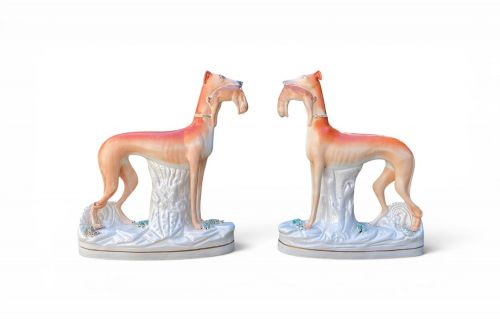


Orange Ceramic Dog Figurines
These orange ceramic dog figurines bring character and period charm to a mantelpiece, offering a glimpse into nineteenth-century and earlier domestic display.
Orange Ceramic Dog Figurines
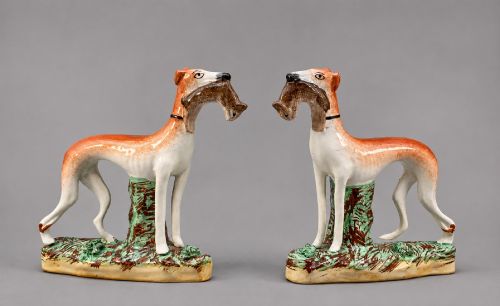
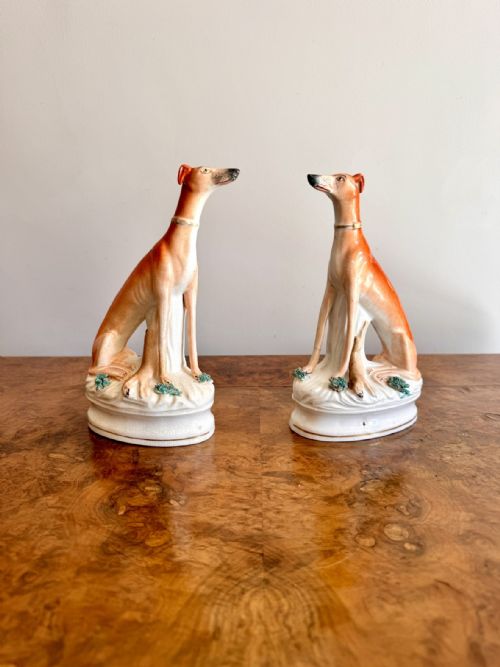
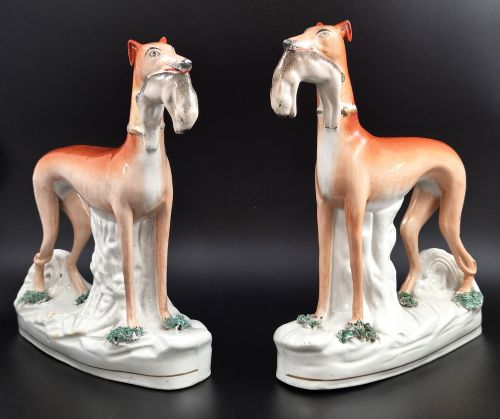
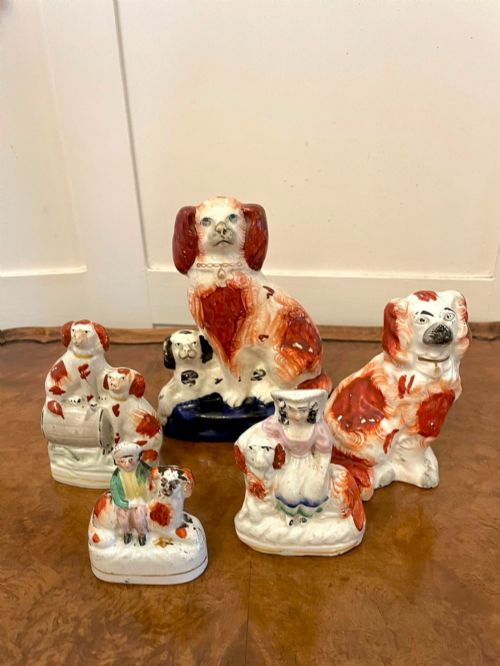
When you search for orange ceramic dog figurines, you encounter a selection spanning the eighteenth and nineteenth centuries, alongside twentieth-century examples. The most common forms on this page are Staffordshire pottery greyhounds and spaniels, alongside Chinese export porcelain figures and Art Deco trinket boxes.
The selection includes decorative figures and paired ornaments originating from English and Chinese kilns. Pieces range from Victorian hunting dogs with game to singular greyhound figures and small boxes featuring a puppy dog.
The objects serve primarily as decorative ornaments and figurines, reflecting domestic tastes across periods such as the Victorian era and the Qianlong period. Buyers encounter both single figures and pairs designed for mantel display.
Materials and construction
Makers utilised earthenware, ceramic, and porcelain as the foundational bodies for these figures, shaping them through traditional pottery and moulding techniques. Lead glaze, enamel, and enamel paint provide the surface colouration and finish, sometimes accented with gold leaf.
The manufacturing process combined moulded ceramic forms with hand-painted details in enamel and glaze. Artisans applied lead glazes to achieve the characteristic glossy surfaces seen across nineteenth-century Staffordshire works and earlier Chinese porcelain.
Orange Ceramic Dog Figurines Retail Price Guide 2026
Typical asking prices for orange ceramic dog figurines among the pieces listed under this phrase on Sellingantiques today, from the lower quarter to the upper quarter. They describe what is for sale here now, not the wider market.
Listings feature periods spanning from the eighteenth-century Qianlong period through the Victorian era up to Art Deco 1930s pieces.
Assessing quality in ceramic canines
Quality rests in the precision of the modelling and the crispness of the enamel painting, which distinguish finely rendered Staffordshire greyhounds from simpler productions. The application of glaze and the retention of delicate details, such as game or hares, separate standard decorative items from finer works.
Provenance and period integrity define the upper tier of the range, particularly with eighteenth-century Chinese porcelain or documented nineteenth-century Staffordshire makers. The sophistication of the form and the survival of original surface finishes dictate the standing of each piece.
Thomas Parr
The Orange Ceramic Dog Figurines Glossary
- Staffordshire pottery
- Earthenware figures produced in the Staffordshire potteries of England. These works include greyhounds, spaniels, and hunting dogs characteristic of the nineteenth century.
- Earthenware
- A porous ceramic material fired at lower temperatures, commonly used for traditional Staffordshire dog figurines. It requires a glaze to become impermeable to liquids.
- Lead glaze
- A glossy coating containing lead oxide applied to pottery before firing. It provides a smooth, protective finish that enhances the underlying enamel paint.
- Chinese Export
- Porcelain manufactured in China specifically for the Western market. These pieces often date to earlier periods like the eighteenth century.
- Art Deco
- A design style prominent in the nineteen-thirties characterised by streamlined forms. Items from this era include trinket boxes featuring figures alongside animals.
Orange Ceramic Dog Figurines: Frequently Asked Questions
What are Staffordshire dog figurines?
Staffordshire dog figurines are ceramic ornaments shaped as spaniels, greyhounds, and hunting dogs, produced in English potteries during the nineteenth century.
They were modelled to decorate domestic mantelpieces and tables, often created in opposing pairs to sit at either side of a fireplace.
How were these ceramic dogs used?
These figures served as decorative ornaments within nineteenth-century homes, reflecting the owners' tastes for animals and sporting subjects.
Some pieces, such as Art Deco trinket boxes, combined decorative animal figures with functional storage for small personal items.
How do I identify Victorian pieces?
Victorian pieces often display characteristic Staffordshire pottery techniques, featuring moulded earthenware bodies finished with enamel paint and lead glaze.
Subjects commonly include greyhounds with hares or pairs of spaniels reflecting the domestic aesthetic of the mid-to-late nineteenth century.
Are these figures glazed?
Most of these ceramic and earthenware figures feature a protective glaze, often a lead glaze that creates a glossy surface over the body.
Enamel paint is typically applied over or under the glaze to provide the coloured details of the dogs and their accessories.