



Ceramic Hunting Hound Ornaments
Ceramic hunting hound ornaments bring the character of the traditional English sporting estate straight to the mantelpiece with enduring charm.
Ceramic Hunting Hound Ornaments
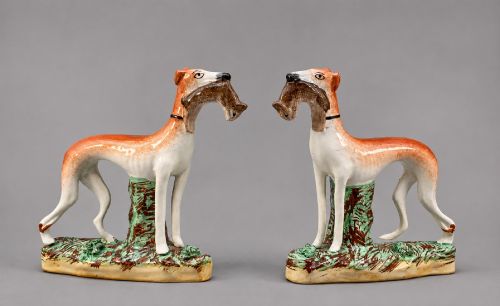
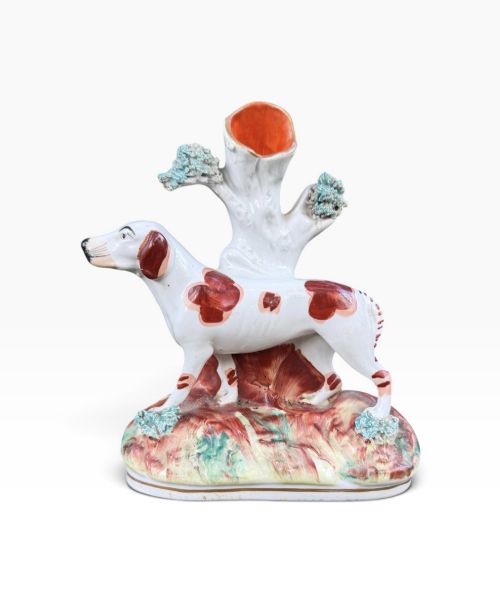
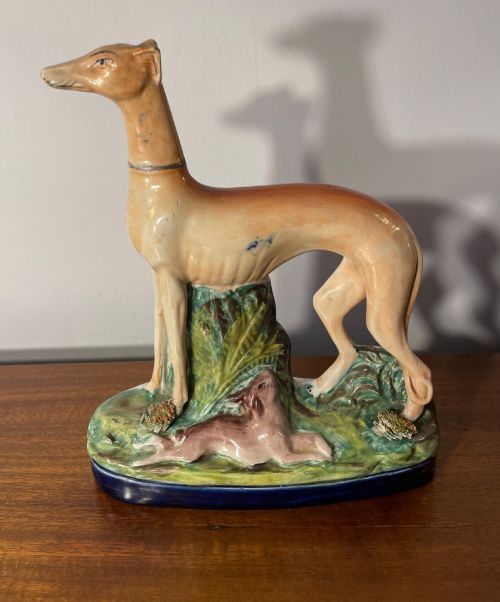
When you search for ceramic hunting hound ornaments, you encounter a selection of figures depicting pointers, setters, greyhounds, and hounds alongside game or hares. The pieces appearing here predominantly trace back to the nineteenth century, including Victorian and Edwardian examples from Staffordshire and continental factories.
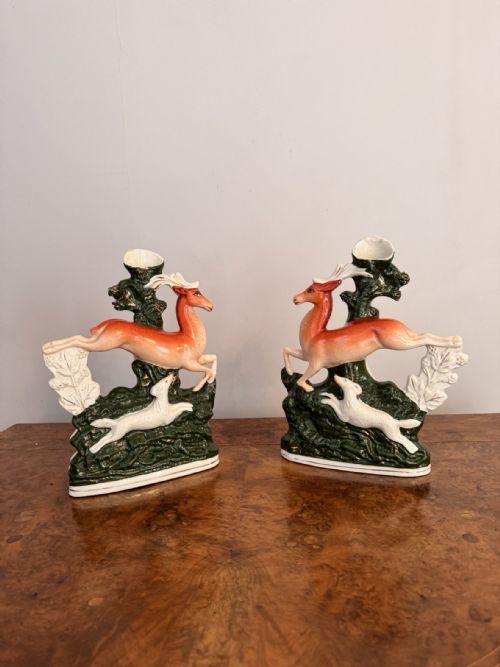
Makers produced these figurines in various configurations, ranging from single seated dogs to imposing pairs and functional spill vases. They capture canine forms associated with rural pursuits, reflecting the decorative tastes of past centuries.
How they were made
Potters utilised earthenware and porcelain bodies, shaping them into detailed animal forms through traditional moulding techniques. Lead glazes and enamel paints were then applied to surface details, giving coats, collars, and game realistic colouration.
Factories such as Thomas Parr and Enoch Wood employed skilled modellers and painters to finish these pieces before firing. The resulting glazed earthenware combined durability with intricate decorative appeal.
Ceramic Hunting Hound Ornaments Retail Price Guide 2026
Typical asking prices for ceramic hunting hound ornaments among the pieces listed under this phrase on Sellingantiques today, from the lower quarter to the upper quarter. They describe what is for sale here now, not the wider market.
Several hounds proudly guard their ceramic hares for eternity.
What varies in quality
The scale and ambition of the composition also separate ordinary shelf ornaments from substantial pairs or complex spill vases. Taller, heavier figures with integrated wildlife elements generally command greater attention from collectors.
Thomas Parr factory·Enoch Wood factory·Royal Dux
The Ceramic Hunting Hound Ornaments Glossary
- Earthenware
- A porous pottery body fired at lower temperatures, commonly used for nineteenth-century figures before being glazed. It forms the foundation of most Staffordshire animal ornaments.
- Spill Vase
- A hollow vertical vessel incorporated into a figurine designed to hold wooden matches for lighting candles or fires. These practical additions often depict tree trunks or rocks beside the hound.
- Lead Glaze
- A glossy coating containing lead oxide applied to pottery to seal the porous clay and impart a shiny finish. It creates the characteristic sheen seen on Victorian Staffordshire dogs.
- Enamel Paint
- Vitreous pigments applied over the glaze and fired at a lower temperature to add permanent colour details. It allowed potters to render spots, collars, and game with precision.
Ceramic Hunting Hound Ornaments: Frequently Asked Questions
What periods do these hounds come from?
The available ornaments largely date from the nineteenth century, encompassing the Georgian era through the Victorian period and into the early twentieth century. Staffordshire potteries produced the majority of these pieces during the height of their popularity.
Later continental examples from factories like Royal Dux also appear, showing the evolution of figurine design into the Edwardian age.
How were spill vase hounds used?
Spill vases combined ornamental appeal with a practical household function by holding slender wooden spills or matches. Placed on mantelpieces, they kept fire-lighting materials close at hand.
The hound or deer stood beside a hollow cylindrical holder, blending utility with sporting themes.
Are these figures glazed?
Yes, almost all examples feature a protective glaze over the clay body to give them a smooth, reflective surface. Lead glazes were standard for nineteenth-century Staffordshire wares.
This finish protected the enamel paint underneath and made the ornaments easier to clean.
How do I distinguish pairs from single pieces?
Many nineteenth-century Staffordshire dogs were modelled as symmetrical facing pairs to flank a fireplace or mirror. Single figures also exist, often depicting a hound standing alone or interacting with game.
Pairs generally show mirrored postures rather than identical moulds.