


Orange Blue China Set
These orange blue china set pieces bring vibrant Imari palettes and Chinoiserie patterns to the table, offering a striking display of historic ceramic artistry.
Orange Blue China Set
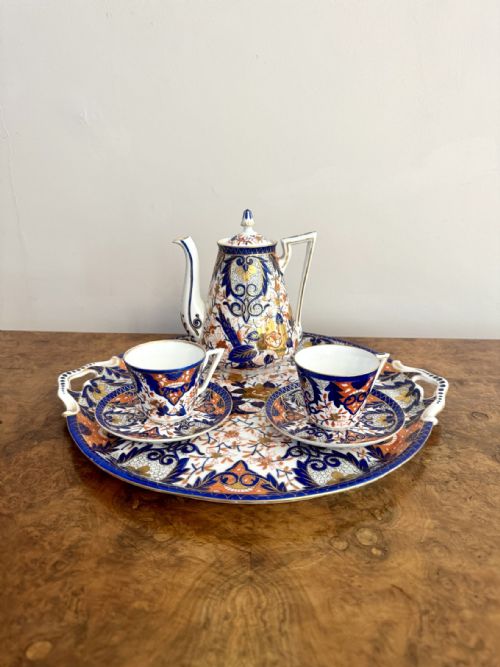
An orange blue china set encompasses coordinated groups of ceramics, ranging from afternoon tea services and coffee sets to collections of decorative plates, jugs, bowls, and vases. These assemblies showcase rich patterns derived from Victorian Imari, Japanese Imari, and Regency Chinoiserie aesthetics.
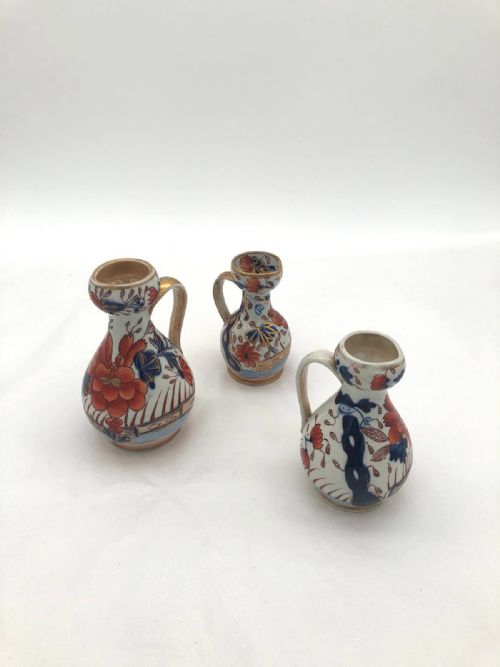
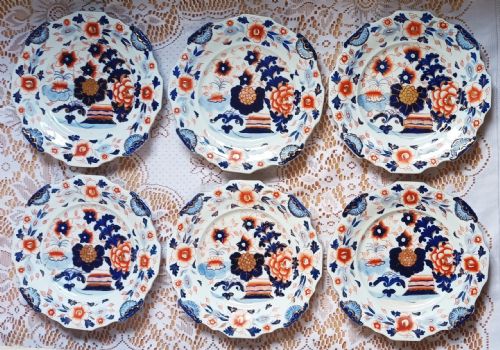
Buyers encountering this selection will most frequently find nineteenth-century ironstone and porcelain pieces alongside Japanese imports and English bone china. Forms vary from octagonal jugs and dessert plates to miniature bowls and shaped dishes produced across the Victorian, Georgian, and Regency eras.
Materials and manufacture
Potters utilised durable ironstone, porcelain, and bone china as the primary ceramic bodies for these services, shaping them into plates, jugs, and hollowware. These robust bases were suited to everyday dining or decorative display in domestic interiors.
Decoration relied on hand-applied enamel colours, glaze, and gold leaf or gilt highlights. Artisans combined deep blue pigments with vibrant orange and red tones, often incorporating traditional transfer printing or hand-painting techniques to achieve the characteristic Imari and Chinoiserie motifs.
Materials represented across the catalogue include enamel, ceramic, ironstone, porcelain, bone china, gold leaf, glaze, and gilt.
Assessing quality and execution
Quality in these ceramics rests on the crispness of the underglaze blue and the precision of the overglaze orange enamel and gold leaf application. Superior examples display carefully aligned patterns and richly layered pigments that retain their depth across every piece in a service.
The sophistication of the moulded body and the consistency of the glaze distinguish finer production runs from standard utilitarian wares. Well-executed pieces maintain uniformity in weight and form, whether shaped as octagonal jugs or delicate dessert plates.
Mason s Ironstone·Davenport·Wedgwood·Minton
The Orange Blue China Set Glossary
- Ironstone
- A dense, durable type of ceramic patented in the nineteenth century to rival true porcelain. It provided a robust body for heavily patterned tableware.
- Imari
- A style of Japanese and European export ceramic defined by a distinctive palette of underglaze blue, iron red, and gilt. It heavily influenced nineteenth-century English tableware design.
- Chinoiserie
- European artistic style reflecting Chinese motifs and decorative themes. It frequently appeared on Regency and Victorian tea wares and plates.
- Bone china
- A soft-paste porcelain incorporating animal bone ash, producing a strong, slightly translucent body. It allowed makers to fashion thinner, more refined cups and saucers.
- Gilt
- A thin layer of gold applied to the surface of ceramics for ornamentation. It accentuates rims, handles, and painted borders.
Orange Blue China Set: Frequently Asked Questions
What is an orange blue china set?
An orange blue china set refers to coordinated collections of plates, jugs, tea services, and vases decorated in contrasting cobalt blue and fiery orange tones. These groupings typically draw inspiration from Japanese Imari or English Chinoiserie traditions.
Such wares were produced in ceramic, ironstone, and porcelain during the nineteenth and early twentieth centuries by notable English potteries and Japanese workshops.
How were these tea services used?
Afternoon tea services and coffee sets were utilised for formal entertaining and domestic hospitality in Victorian and Georgian households. Cups, saucers, and serving bowls formed cohesive displays for hosting guests.
In addition to functional dining use, many plates and shaped dishes served decorative roles on walls or sideboards within period interiors.
How do I care for antique china?
Antique ceramics require gentle hand washing in lukewarm water with mild soap to preserve their delicate enamels and gold leaf highlights. Dishwashers and harsh abrasives should be avoided entirely to prevent surface wear.
When storing or displaying tea services and plates, use padded dividers between stacked items to protect the glazes and edges from chipping.
How do I identify Imari patterns?
Imari patterns are instantly recognised by their strict adherence to a palette combining deep cobalt blue underglaze with vibrant iron orange and metallic gold overglaze. The designs frequently feature floral panels, landscapes, and geometric borders.
This aesthetic originated in Japan before being extensively adopted by European factories like Minton, Mason s, and Davenport during the nineteenth century.