




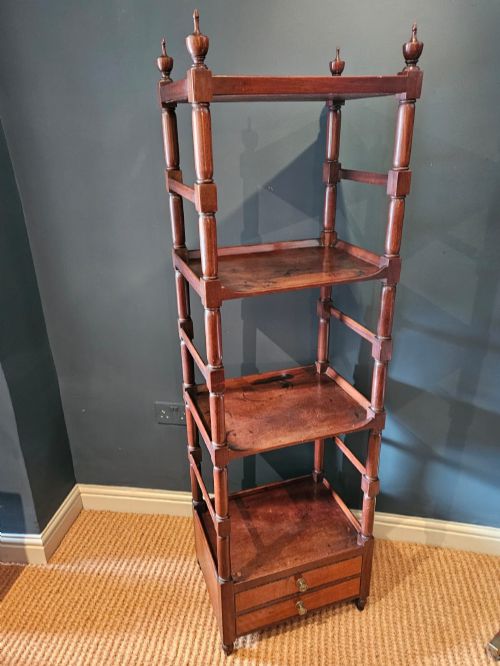
Open Tier Shelving
Open tier shelving offers adaptable display and storage, bringing period character to rooms through tiered timber forms.
Open Tier Shelving
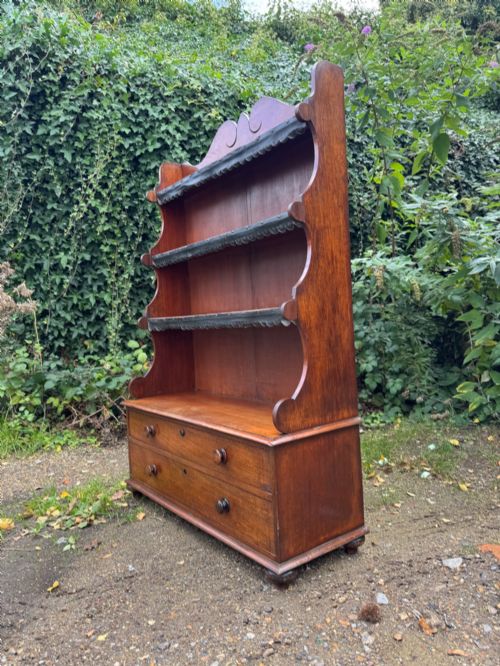
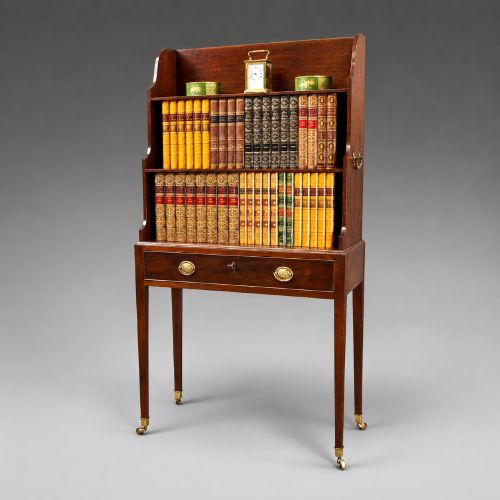
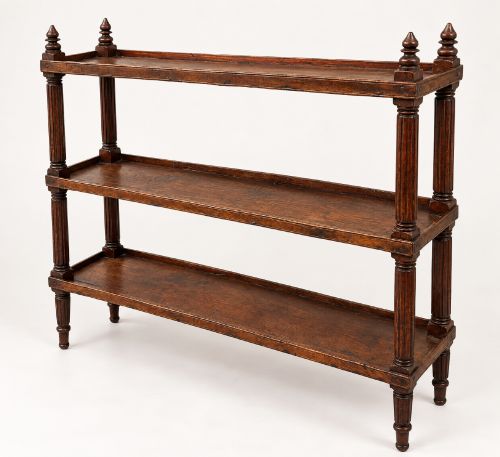
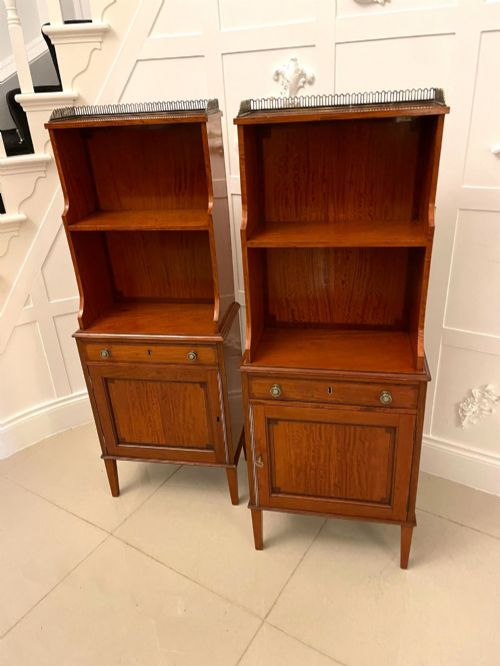
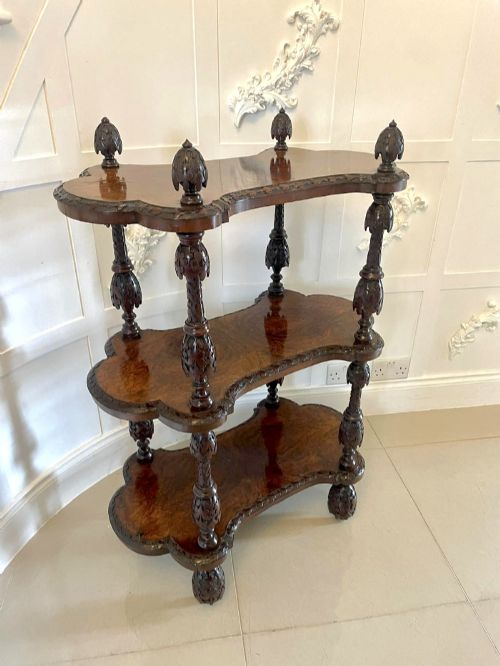
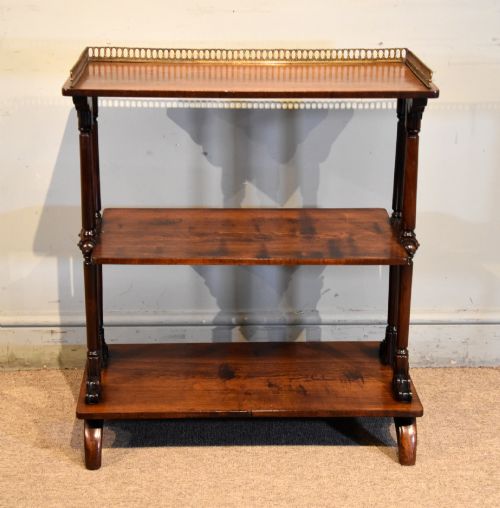
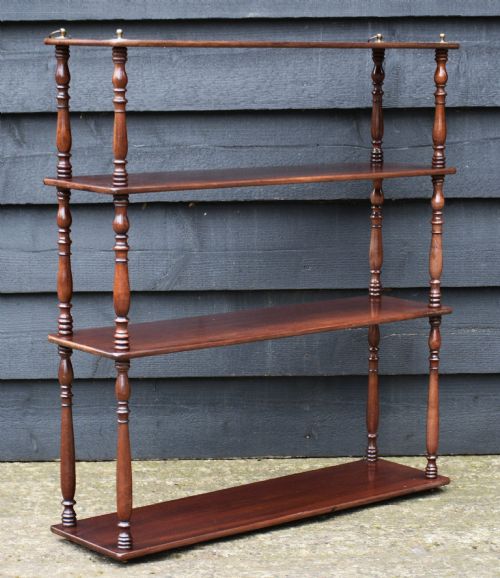
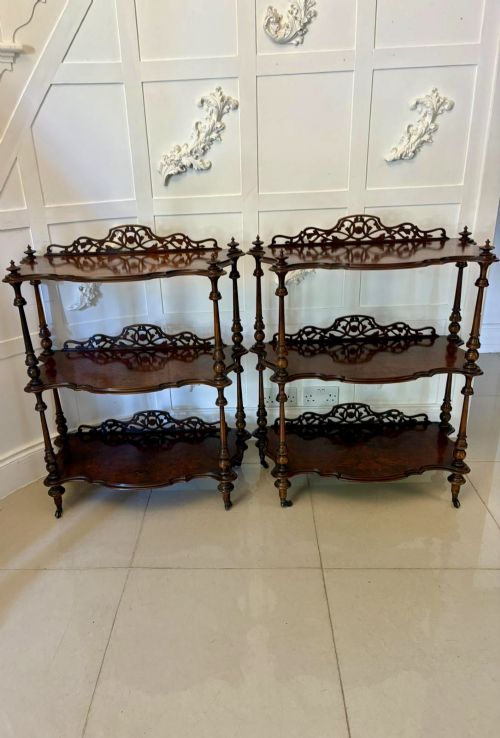
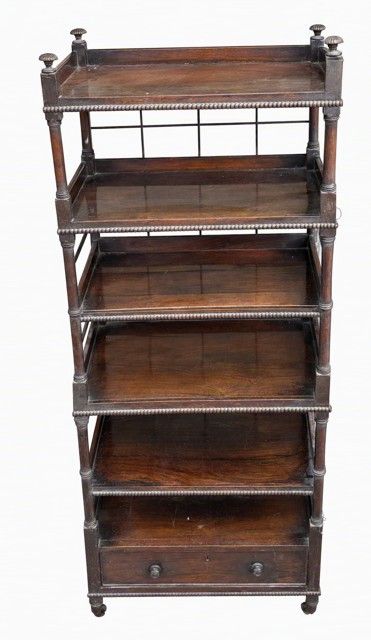
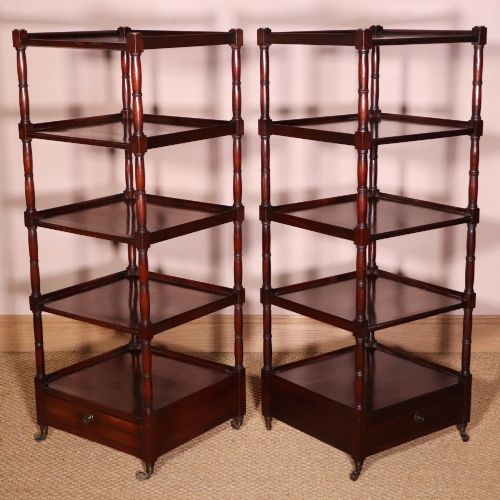
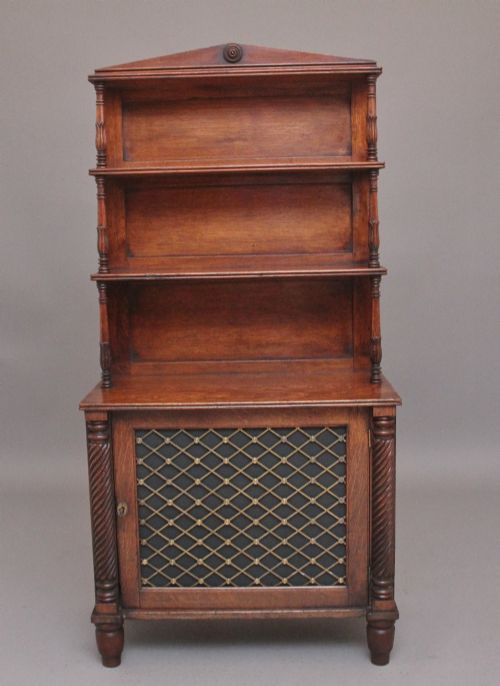
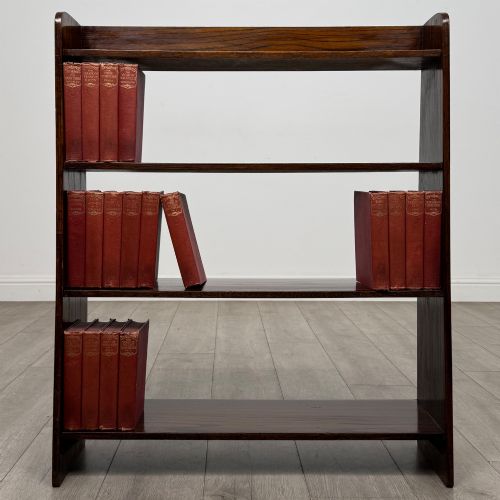
Open tier shelving encompasses diverse forms designed for display and storage, appearing primarily as bookcases, whatnots, etageres, and wall hanging shelves. When you explore open tier shelving on this page, you encounter pieces spanning from the Georgian and Regency eras through the Victorian and Edwardian periods.
The material palette of these pieces relies heavily on timbers such as mahogany, rosewood, walnut, burr walnut, oak, satinwood, and padauk, occasionally augmented by brass galleries or glass elements. Forms range from multi-tiered freestanding whatnots and waterfall bookcases to compact wall shelves and corner units.
Originating largely from British and occasionally continental workshops, these items serve to organise books and display decorative objects without heavy cupboard doors enclosing the space. The selections reflect centuries of cabinetmaking, transitioning from formal Georgian proportions to ornate Victorian carvings and lighter Edwardian designs.
How they were made
Cabinetmakers constructed these pieces using dense hardwoods like mahogany, walnut, and rosewood, often selecting burr veneers or satinwood for decorative grain patterns. Timber frames support multiple tiers via slender pillars, turned legs, or graduated shelves, ensuring structural stability for loaded books and ornaments.
Metalwork and fine joinery detail the construction, notably with brass galleries fitted to tier edges and intricate fretwork or carved mounts applied to walnut and mahogany structures. French polishing or wax finishes completed the surfaces, highlighting the natural figure of the wood across centuries of production.
Open Tier Shelving Retail Price Guide 2026
Typical asking prices for open tier shelving among the pieces listed under this phrase on Sellingantiques today, from the lower quarter to the upper quarter. They describe what is for sale here now, not the wider market.
Early cabinetmakers built these tiered wonders so Victorians had somewhere stable to exhibit their alarming collections of stuffed owls and heavy ceramic jugs.
What varies in quality
The calibre of a piece rests upon the selection of timber figures, such as highly figured burr walnut or richly grained rosewood veneers, matched with the precision of turnery and pierced fretwork. Superior examples demonstrate thoughtful proportion across graduated tiers and integrate robust brass fittings or fine carved details without visual heaviness.
Construction methods distinguish standard production from exhibition pieces, where skilled joinery secures multi-tiered uprights and maintains rigidity across tall bookcases or delicate etageres. The integration of secondary woods and the crispness of edge mouldings further separate utilitarian items from master cabinetmaker output.
Gillows
The Open Tier Shelving Glossary
- Whatnot
- A moveable piece of furniture with multiple tiers used for the display of ornaments, books, or small objects. Originating in the eighteenth century, these open structures became staple items in Victorian drawing rooms.
- Etagere
- A French term for a piece of furniture consisting of a set of open shelves for displaying small articles. These pieces often feature slender uprights and delicate proportions.
- Waterfall bookcase
- A standing set of open shelves where each tier steps back progressively from the one below, following a stepped profile resembling a waterfall. This style gained popularity during the Regency and Georgian periods.
- Gallery
- A raised decorative border, often pierced brass or turned wood, fitted around the edge of a shelf or tabletop to prevent items from sliding off. Galleries add both security and refined detail to open tier designs.
- Padauk
- A heavy tropical hardwood prized for its deep reddish-brown colour and durability, utilised in nineteenth-century cabinetmaking for substantial display furniture.
Open Tier Shelving: Frequently Asked Questions
What is open tier shelving?
Open tier shelving comprises furniture pieces featuring multiple horizontal surfaces without doors, designed for books and display objects. These include whatnots, etageres, and open bookcases.
Such forms allow light to circulate freely around displayed items, making them suitable for parlours, libraries, and drawing rooms across various historical periods.
How were whatnots used historically?
Whatnots served as versatile display stands in nineteenth-century homes for holding books, porcelain, and decorative ornaments. Their multi-tiered design maximised vertical storage space.
Placed in corners or against walls, they provided accessible surfaces for everyday objects while maintaining an open, uncluttered interior aesthetic.
How do I style open tier shelving?
Balancing books with decorative objects across the different tiers creates visual interest without overcrowding the timber structure. Alternating vertical book groupings with horizontal stacks and small sculptures works well.
Allowing empty space around objects highlights the grain of woods like mahogany, walnut, or rosewood and respects the design of the piece.
How can I tell different periods apart?
Georgian and Regency pieces typically exhibit restrained classical proportions, fine mahogany or rosewood timbers, and clean lines. Victorian examples often introduce heavier carvings, burr walnut veneers, and elaborate fretwork.
Edwardian designs tend toward lighter construction, satinwood finishes, and slender pillars, reflecting a shift back to simpler, refined domestic interiors.