




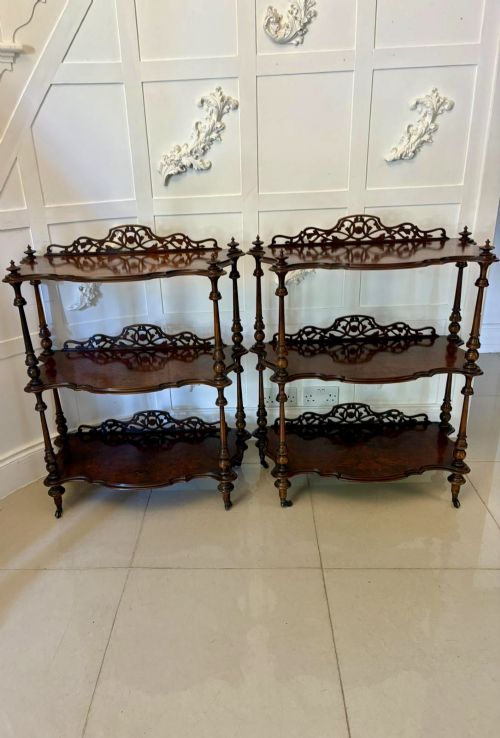
Open Tier Shelf
An open tier shelf provides tiered display space for books and decorative objects, bringing vertical utility and period character to a room.
Open Tier Shelf
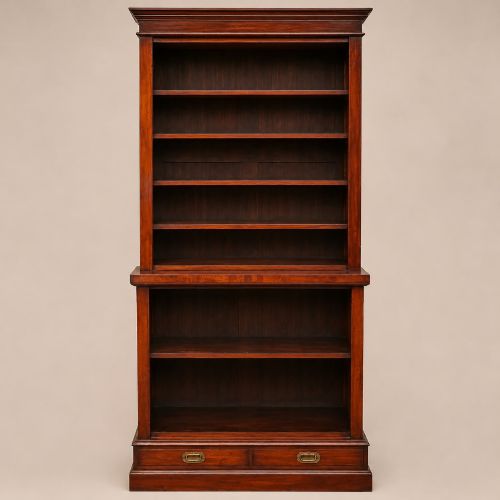
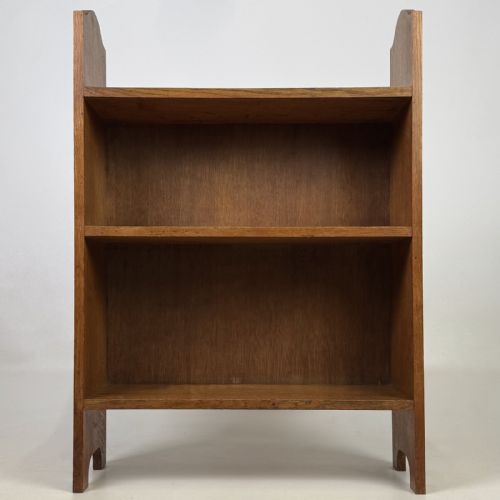
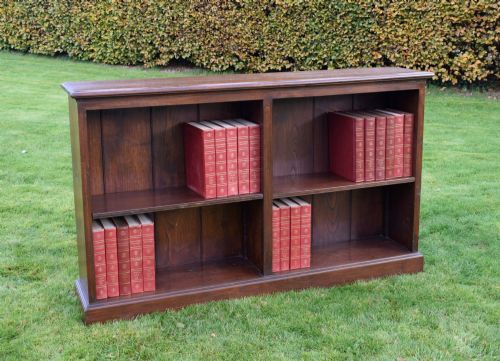
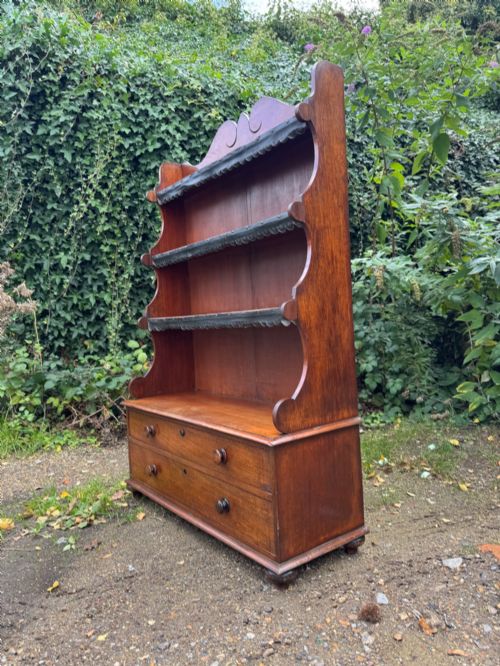
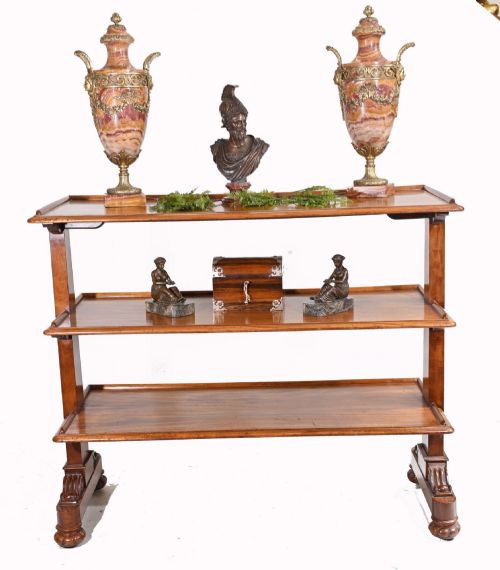
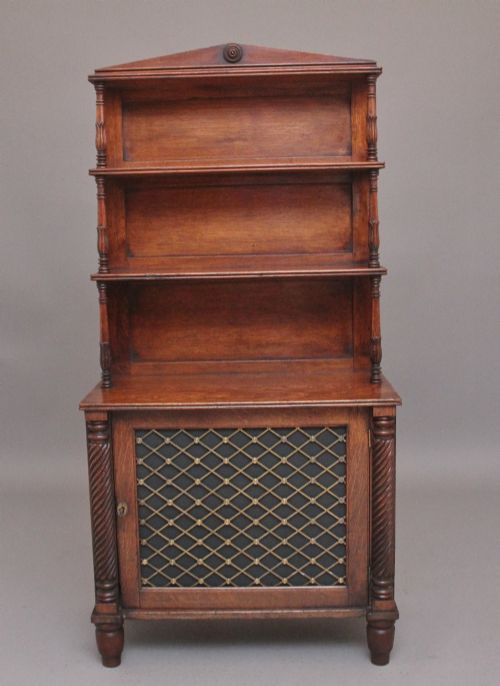
An open tier shelf encompasses freestanding whatnots, etageres, waterfall bookcases, and wall hanging shelves originating from the Georgian, Regency, Victorian, and Edwardian eras. These pieces serve to organise books and display decorative objects across multiple horizontal tiers supported by slender uprights or columns.
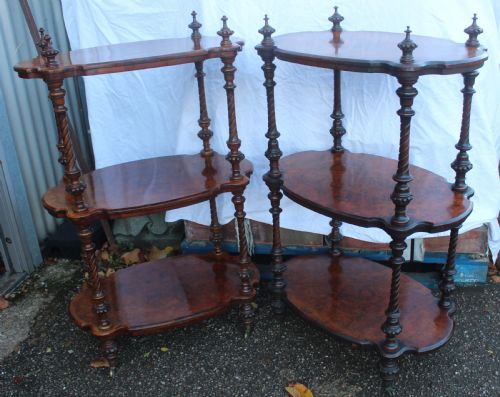
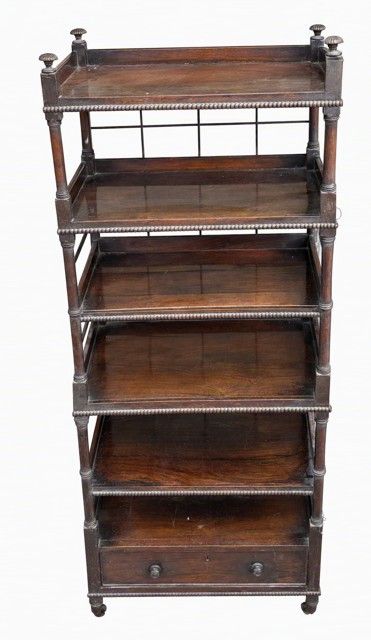
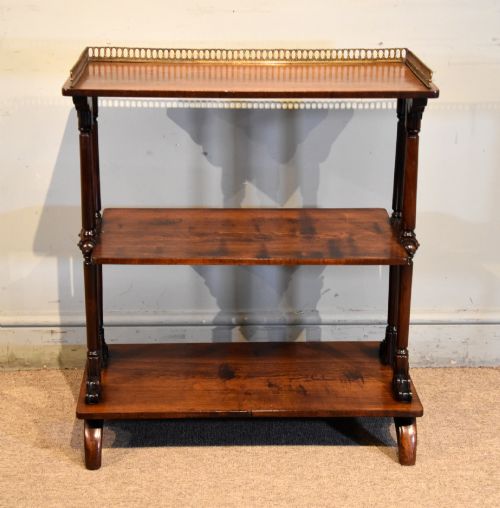
The version most commonly encountered on this page is the Victorian or 19th-century mahogany or walnut whatnot, frequently featuring multiple graduated tiers and sometimes incorporating a brass gallery, small drawers, or turned supports.
Materials and Construction
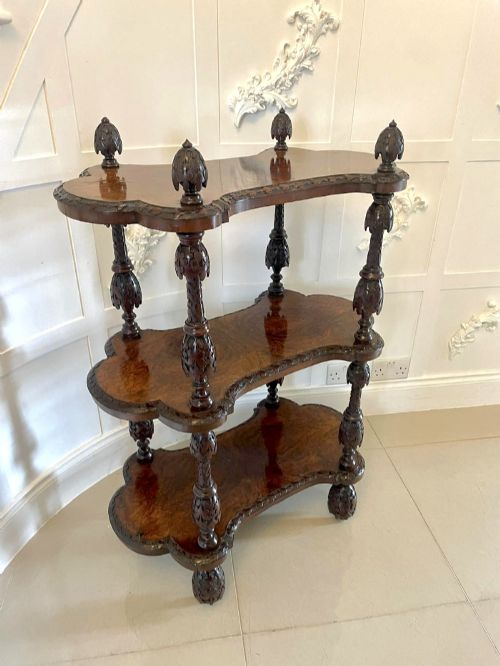
Cabinet makers constructed these tier shelves primarily from dense hardwoods including mahogany, rosewood, walnut, burr walnut, and oak, occasionally selecting exotic woods such as padauk or satinwood. Surfaces frequently display rich grain patterns, particularly on burr walnut or figured mahogany panels.
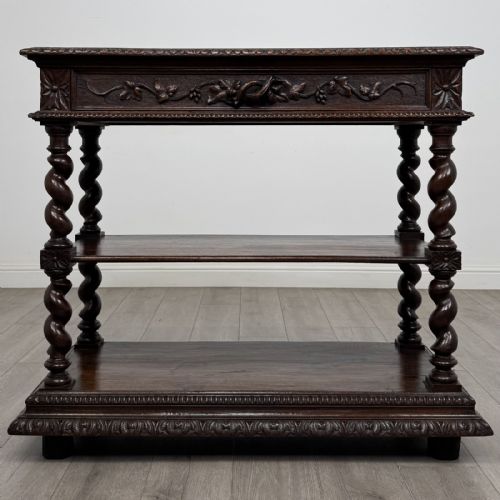
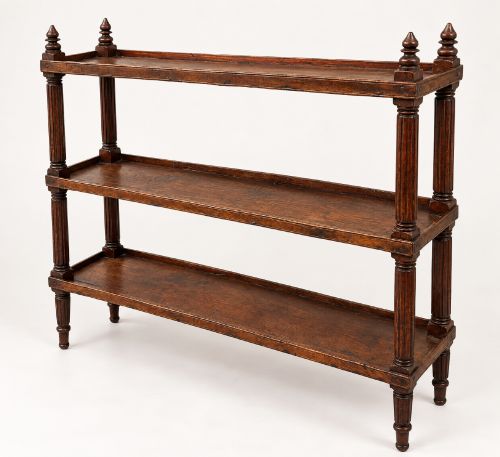
Structural elements include turned uprights, barley twist columns, brass castors, pierced fretwork galleries, and slender pillars supporting horizontal shelves fixed at regular intervals.
Open Tier Shelf Retail Price Guide 2026
Typical asking prices for open tier shelf among the pieces listed under this phrase on Sellingantiques today, from the lower quarter to the upper quarter. They describe what is for sale here now, not the wider market.
Victorian makers occasionally fitted miniature brass galleries to top shelves, ensuring your prized porcelain collection stays put during an energetic waltz.
Standards of Manufacture
Gradations in quality depend upon the selection of timber veneers, the crispness of turned supports or carved fretwork, and the integration of functional additions such as brass galleries, castor feet, or fitted drawers. Examples marked by exhibition quality craftsmanship display superior timber selection and refined decorative detailing.
Proportional harmony and structural stability separate standard utilitarian pieces from more ambitious examples designed with serpentine shaping, multiple tiers, or specialised functions like integrated music stands.
Gillows
The Open Tier Shelf Glossary
- Whatnot
- A piece of furniture consisting of multiple open shelves for displaying small objects, popular in the 19th century. These units stand on legs and often feature turned columns or brass galleries.
- Etagere
- A piece of furniture with a series of open shelves for displaying ornaments. The term is frequently used interchangeably with whatnot or tier shelf.
- Waterfall bookcase
- A standing bookcase with graduated shelves that step back from bottom to top. This profile creates a cascade effect reminiscent of falling water.
- Brass gallery
- A low pierced railing of brass fitted around the edge of a shelf to prevent items from sliding off. Such galleries appear frequently on top tiers of rosewood and walnut whatnots.
- Padauk
- A heavy tropical hardwood with a reddish hue used in cabinet making. Pieces constructed from this material appear in Anglo-Indian furniture forms.
Open Tier Shelf: Frequently Asked Questions
What is an open tier shelf?
An open tier shelf is a multi-level piece of furniture designed for displaying books, ornaments, or collections without enclosed cabinet doors. These items range from floor-standing whatnots and etageres to wall-mounted hanging shelves.
Originating largely across the Georgian, Victorian, and Edwardian periods, they utilise vertical space efficiently while maintaining an open, light appearance in a room.
How were whatnots used historically?
Historically, whatnots served as versatile display and storage units in parlours, drawing rooms, and studies. They held porcelain, small decorative objects, and frequently books or sheet music.
Their open construction made them accessible from all sides when freestanding, allowing owners to exhibit valued possessions in prominent reception spaces.
How do I identify a Victorian whatnot?
Victorian whatnots typically feature multiple open tiers supported by turned wooden columns, barley twist supports, or slender pillars. They appear frequently in rosewood, walnut, or mahogany, sometimes incorporating carved fretwork galleries and brass castors.
Mid to late 19th-century examples often display decorative wood figuring, such as burr walnut veneers, distinguishing them from simpler utilitarian shelving.
Where should I place a tier shelf?
A freestanding tier shelf functions effectively as a room divider, corner display unit, or side table replacement against a wall. Wall-hanging shelves suit smaller spaces where floor area remains at a premium.
These pieces integrate well into living rooms, hallways, and studies for displaying books and collections without dominating the floor plan.