

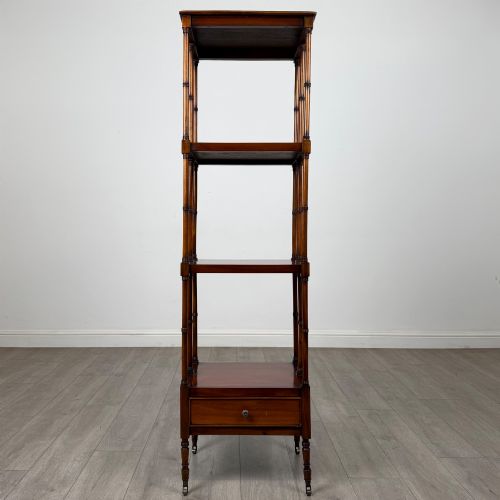
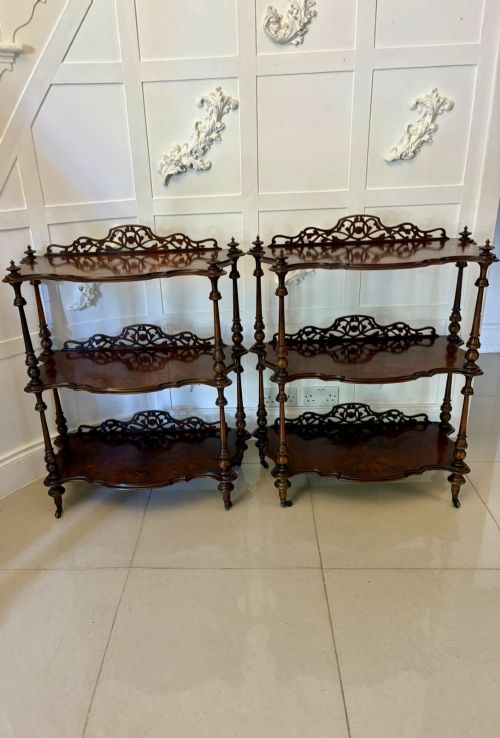
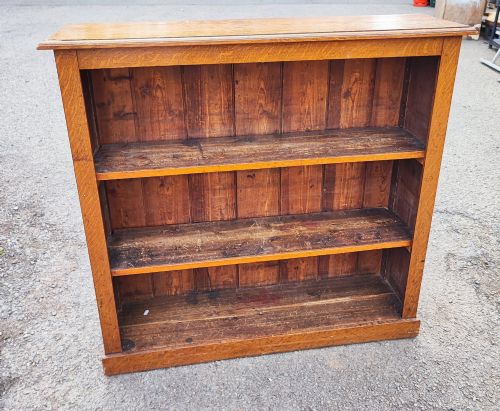
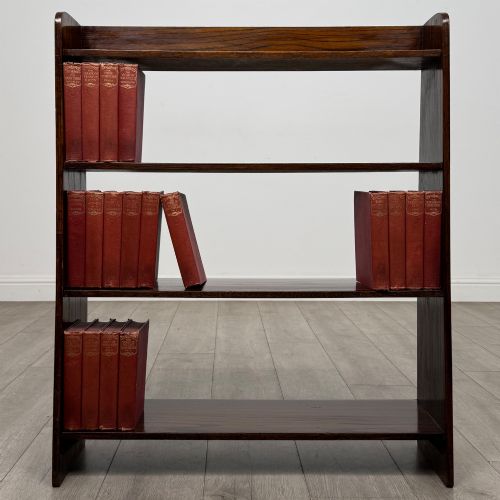
Open Tier Display Shelf
An open tier display shelf brings tiered staging into a room to hold books, brass ornaments and small treasures.
Open Tier Display Shelf
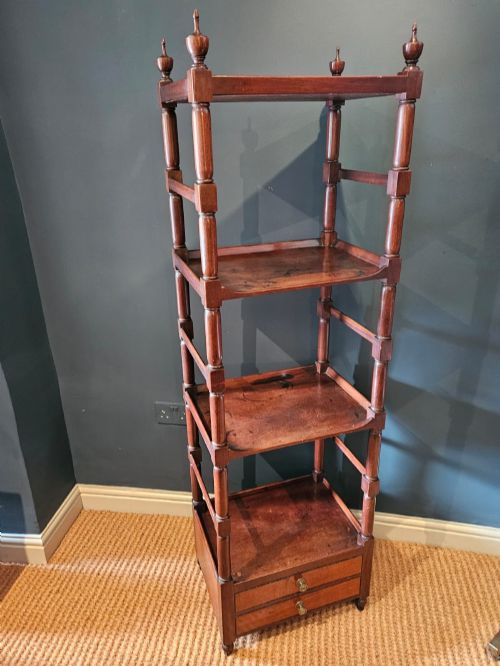
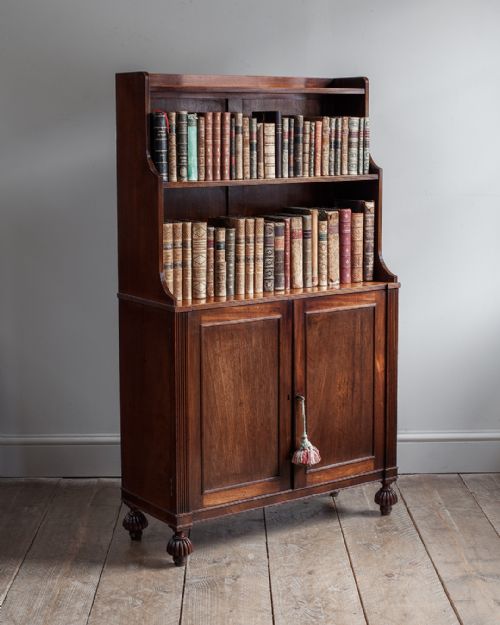
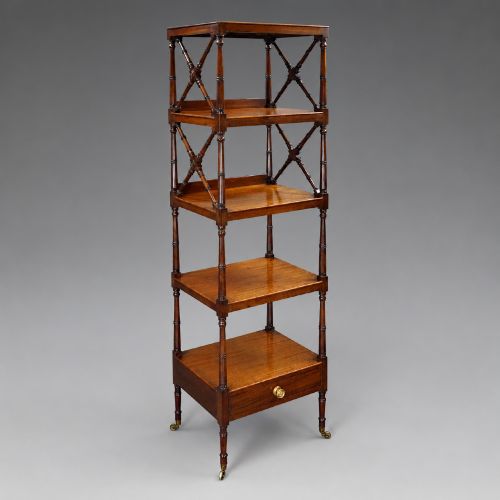
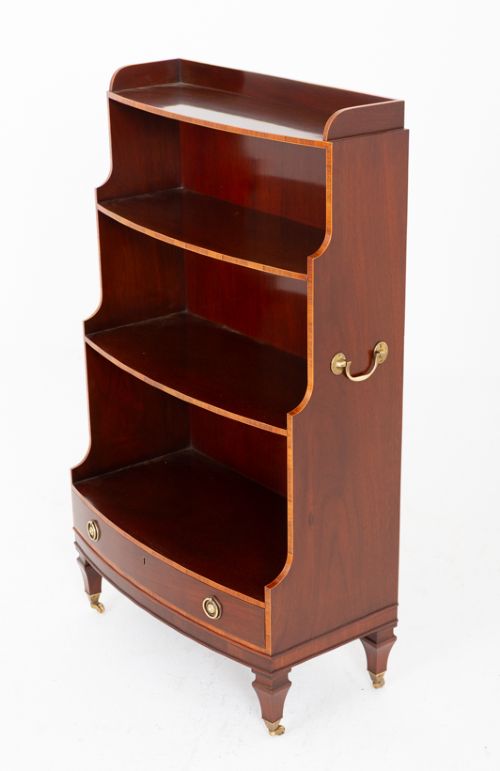
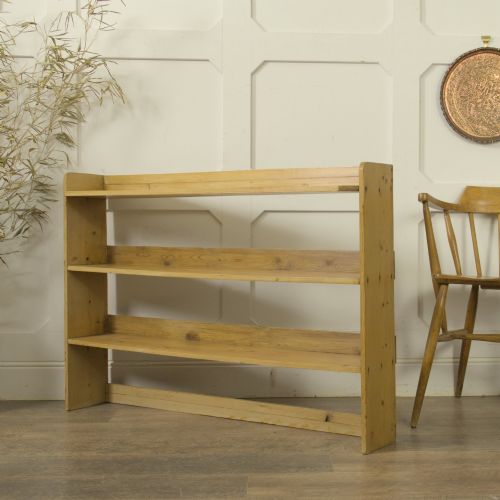
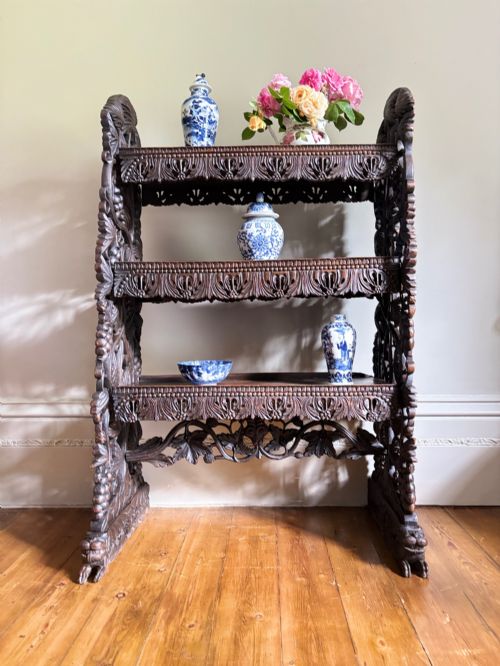
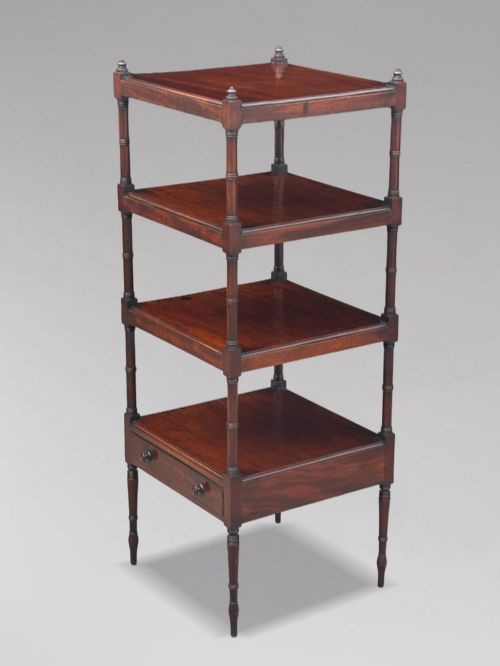
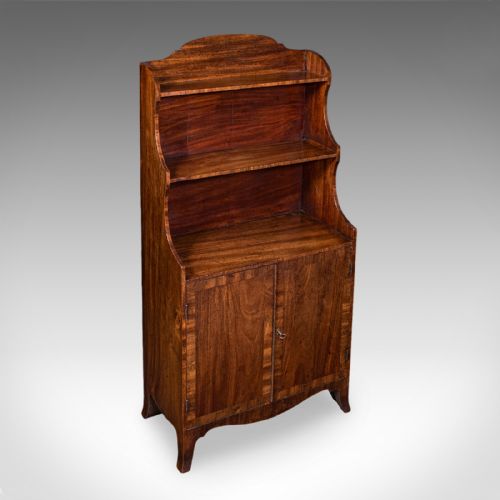
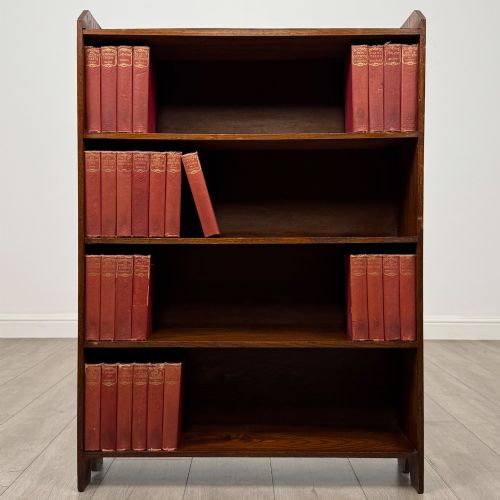
An open tier display shelf encompasses multiple forms such as whatnots, etageres, waterfall bookcases, and wall shelves that present items across stacked levels. These pieces appear frequently from the Victorian, Regency, and Edwardian periods, constructed to stand on the floor or hang upon a wall. The form serves to exhibit collections and organise volumes without enclosing them behind cabinet doors.
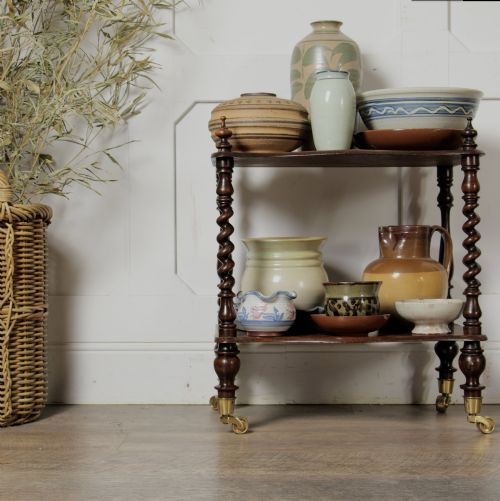
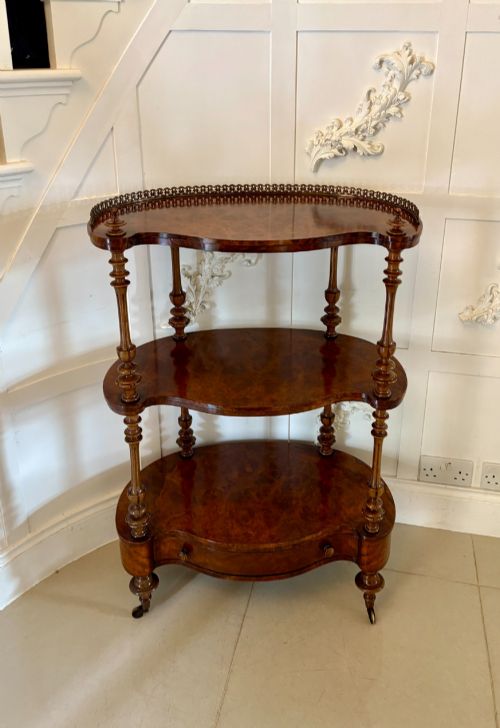
Buyers meet variations ranging from compact corner cabinets and slim three-tier etageres to larger four-tier mahogany and burr walnut bookcases. Many examples incorporate turned supports, barley twist uprights, or serpentine shapes that define their architectural silhouette. The selection includes both English workshop pieces and occasional continental expressions in the French manner.
How they were made
Cabinet makers utilised dense hardwoods including mahogany, walnut, rosewood, oak, and burr walnut, sometimes framing the tiers with brass mounts or gilt metal. Selected pieces feature bamboo and lacquer or padauk, reflecting global trade materials used during the nineteenth century. Timber selection dictated the structural stability required to support stacked tiers of books or display items.
Construction relied on precise joinery to secure upright supports and shelves, often combining turned legs with graduated tiers as seen in waterfall bookcases. Surface finishes brought out the natural grain of the wood, while specialised forms integrated turning techniques like barley twist uprights.
What varies in quality
Quality reveals itself in the choice of timber figure, such as the rich grain of burr walnut or figured mahogany, and the crispness of turned components like barley twist supports. Superior examples display thoughtful proportions and harmonious tier spacing, alongside finer details such as brass mounts or serpentine shaping.
Construction integrity separates standard utility pieces from finer items, seen in the seamless integration of uprights and shelves. The distinction rests on the refinement of the silhouette and the quality of the timber selection across each tier.
The Open Tier Display Shelf Glossary
- Whatnot
- A movable set of open shelves used for displaying ornaments and small objects. These pieces typically feature three or four tiers supported by turned columns.
- Etagere
- A piece of furniture consisting of a set of open shelves for displaying small articles. The term derives from French usage and often describes lighter, decorative buffet shelves.
- Waterfall bookcase
- A set of open shelves where each tier steps back progressively from the one below. This creates a cascading profile reminiscent of falling water.
- Barley twist
- A type of turning resembling a rope wound around a cylinder. This decorative technique appears frequently on nineteenth-century upright supports.
- Serpentine
- A curved line that waves inward and outward, resembling the movement of a snake. This contour softens the edge of shelves and tabletops.
Open Tier Display Shelf: Frequently Asked Questions
What is an open tier display shelf?
An open tier display shelf is a multi-level piece of furniture designed for holding books and decorative items without doors.
These versatile pieces include whatnots, etageres, and bookcases dating from the nineteenth and early twentieth centuries.
How were these shelves used?
Historically, these items functioned as movable display surfaces in parlours and drawing rooms for porcelain, books, and curiosities.
They allowed owners to arrange and rotate collections in prominent living spaces.
Which woods are most common?
Mahogany, walnut, and oak appear frequently across the available inventory, alongside more decorative timbers like rosewood and burr walnut.
Some iterations incorporate exotic woods such as padauk or finish with ebonised surfaces.
How do I identify a Victorian piece?
Victorian examples often feature heavier timbers, turned uprights, and sometimes intricate serpentine shaping or brass mounts.
Period characteristics also include the use of rich walnut veneers and barley twist supports.