


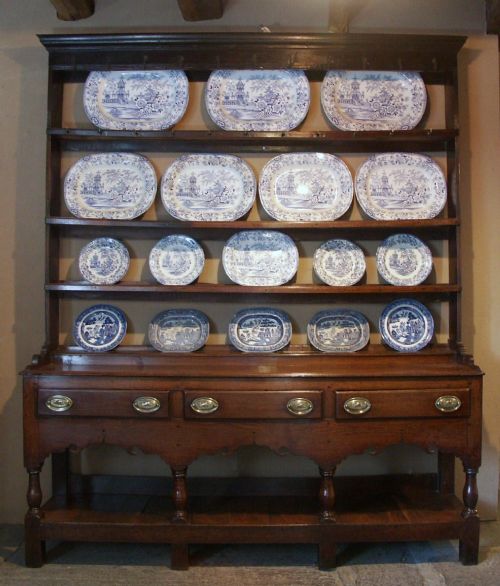

Open Pot Board Sideboard
An open pot board sideboard provides utilitarian storage with a low display shelf, bringing robust country character to domestic spaces.
Open Pot Board Sideboard
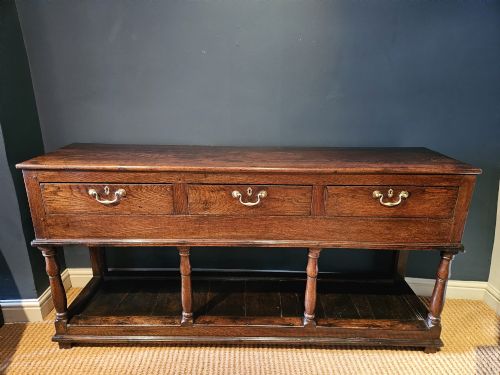
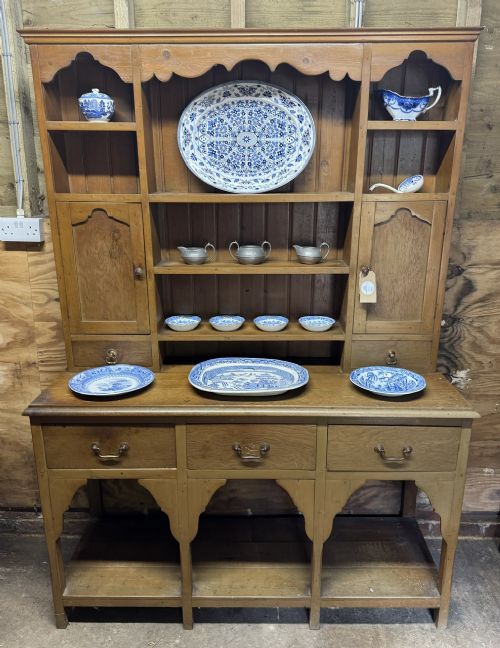
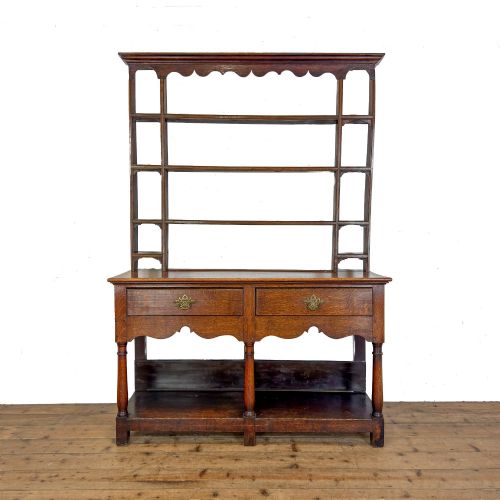
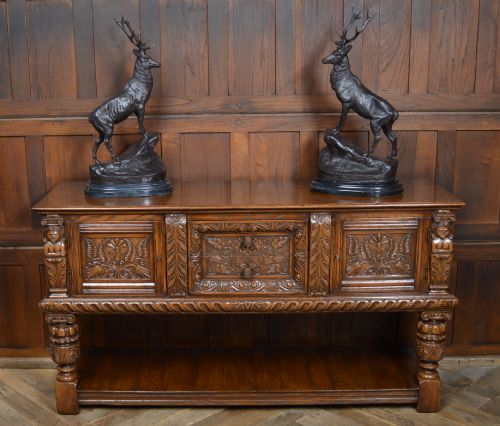
An open pot board sideboard represents a sturdy form of storage furniture, appearing frequently across the eighteenth and nineteenth centuries in English and Welsh country contexts. These pieces combine a solid timber top surface with a lower shelf, known as the pot board, positioned near the floor for storing heavy kitchen utensils.
How they were made
Carpenters constructed these sideboards using solid native timbers, chiefly oak and pine, joined with traditional framing techniques suited to heavy daily use. Surfaces often retain original patination or historic painted finishes applied directly to the wood.
Hardware elements such as hinges and pulls utilise brass or iron, fastened securely to drawers and doors. The lower pot board sits directly above the floor level, supported by sturdy legs or stile feet that distribute the weight of heavy domestic wares.
Basement dressers remind us that historic kitchens often worked hard below stairs long before open-plan living became fashionable.
What varies in quality
Quality in these sideboards depends heavily on the integrity of the timber and the preservation of original surfaces, such as honey oak patination or early painted finishes. Pieces retaining their structural authenticity without excessive timber replacement command greater interest among collectors.
The sophistication of the vernacular design also marks differences across the range, separating simpler utility pieces from more refined Georgian country examples. Proportions, drawer construction, and the survival of original hardware further distinguish higher quality instances.
The Open Pot Board Sideboard Glossary
- Pot board
- The low shelf fitted near the base of a dresser or sideboard, traditionally used for storing pots and pans. This distinctive feature defines the open structure of the lower section.
- Dresser base
- The lower portion of a dresser, functioning independently as a sideboard or serving table. It typically incorporates drawers above cupboards or the open pot board.
- Vernacular
- Regional furniture built by local craftsmen for everyday domestic use rather than following formal metropolitan styles. These pieces reflect local material availability and traditional building methods.
- Patina
- The surface sheen and colour acquired by wood over centuries of handling, polishing, and exposure to light. Original patination indicates minimal interference with the historic timber surface.
Open Pot Board Sideboard: Frequently Asked Questions
What is a pot board sideboard?
A pot board sideboard is a heavy wooden storage piece featuring a low shelf near the floor beneath a flat top and drawers. It served as a functional work and storage surface in country kitchens.
Today, these pieces function well in dining rooms or kitchens as practical sideboards with open display capacity.
How do I date an oak sideboard?
Dating relies on observing construction methods, timber selection, and hardware styles across the piece. Georgian and eighteenth-century examples display hand-cut joinery and aged patination distinct from later Victorian manufacturing.
Comparing the drawer construction and wood type helps narrow the period of origin within the broader span of available examples.
Where were these sideboards made?
Many examples originate from regional workshops in England and Wales, reflecting local rural traditions. Vernacular pieces often utilise native woods like oak and pine sourced near the maker's workshop.
Regional characteristics sometimes appear in the framing details and the treatment of the lower pot board structure.
How do I care for antique oak?
Maintaining antique oak involves keeping the timber away from direct heat sources and sudden humidity changes to prevent splitting. Regular dusting with a dry cloth preserves the historic surface without stripping the natural oils.
Applying a suitable wax occasionally helps protect the wood while maintaining the accumulated patination of the surface.