
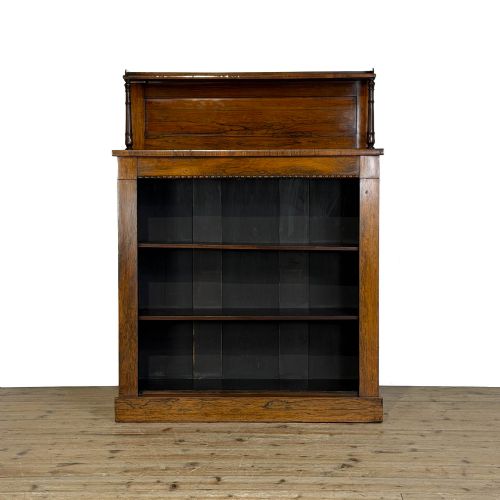
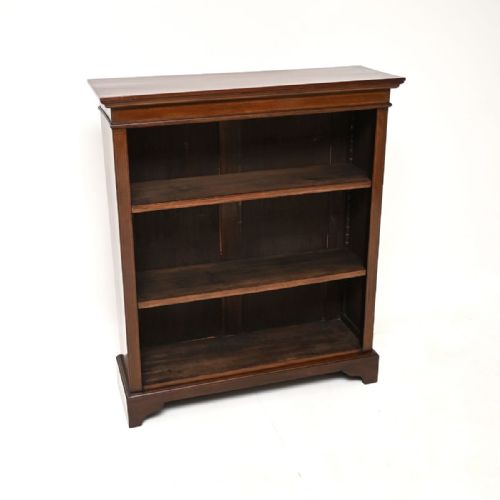
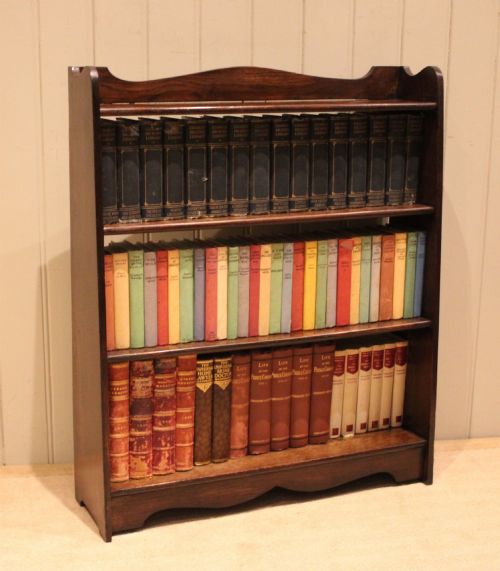
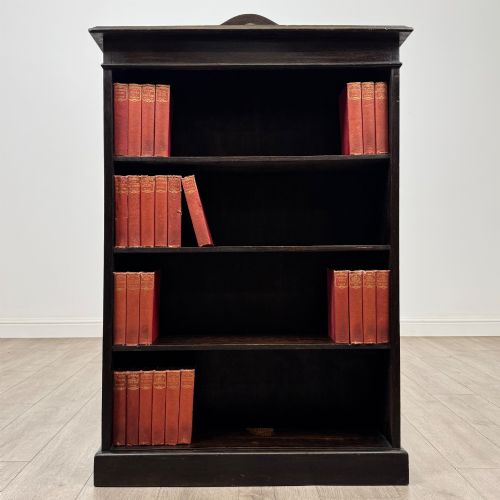
Open Front Shelving Unit
An open front shelving unit provides accessible storage and display, bringing character and practical organisation to any room.
Open Front Shelving Unit
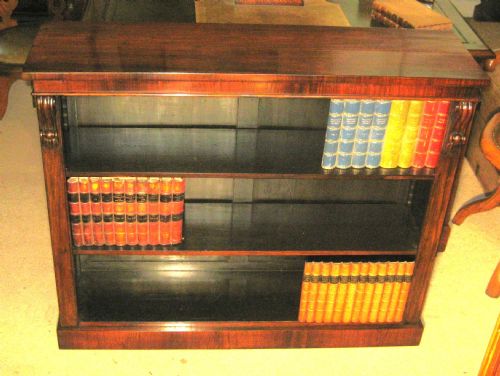
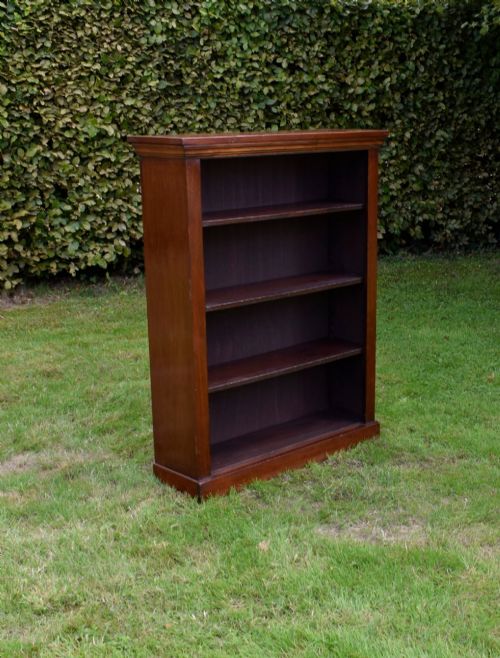
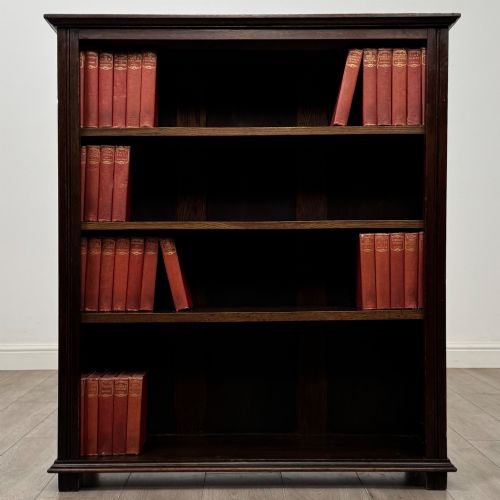
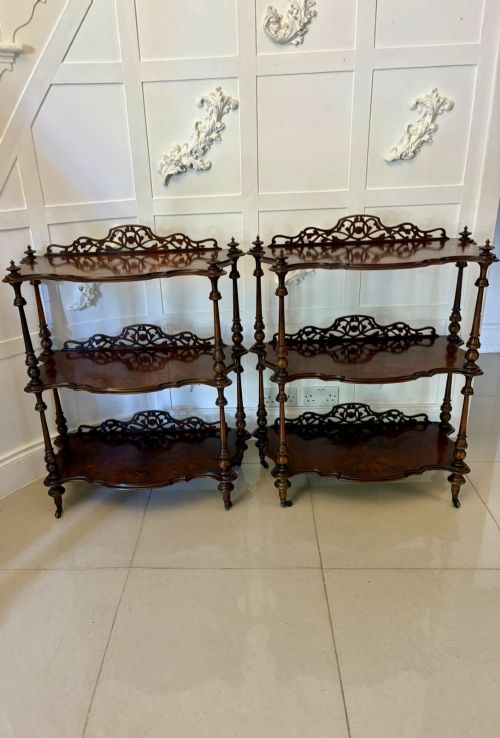
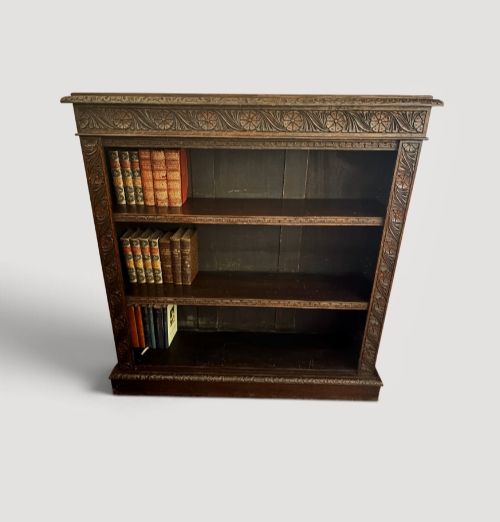
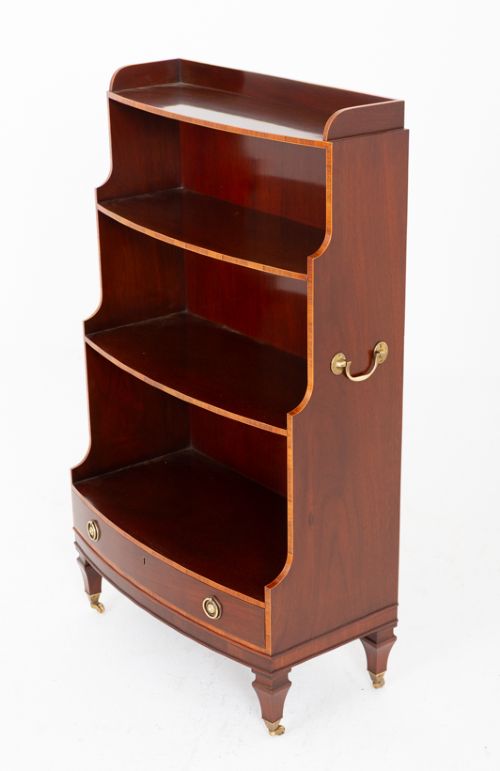
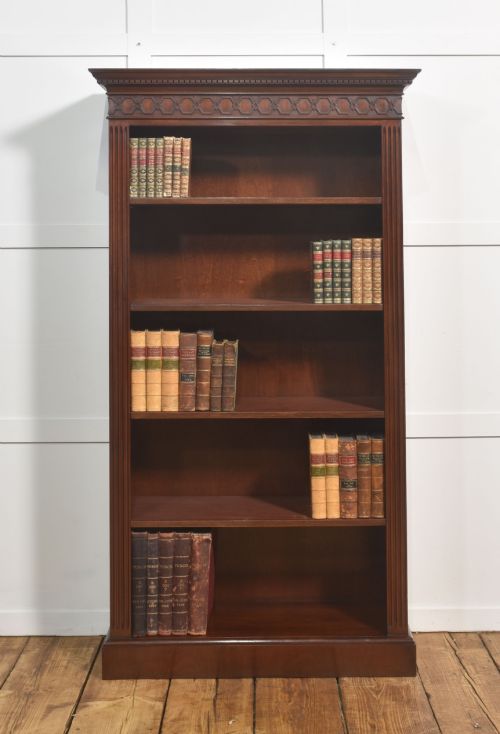
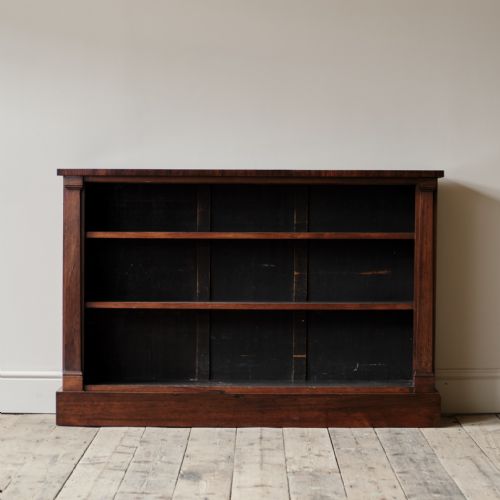
An open front shelving unit functions primarily as a bookcase or display cabinet, keeping books and objects immediately accessible. These pieces take various forms, including traditional bookcases, whatnots, and low library units.
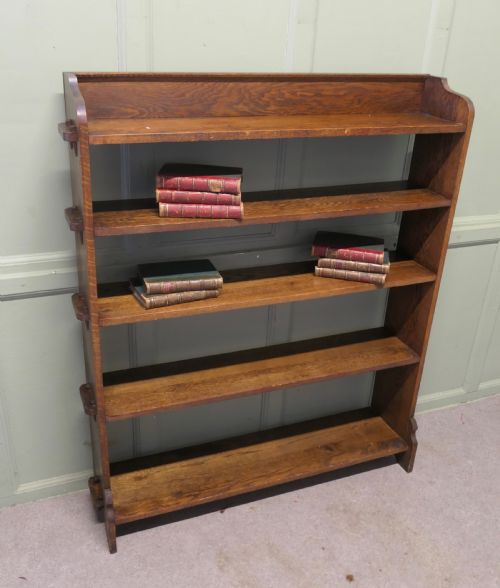
The selections span the Victorian, Edwardian, and Art Deco periods, alongside examples built in Regency, Georgian, and Arts and Crafts styles. Pieces range from straightforward oak shelving to elaborate designs in rosewood and burr walnut.
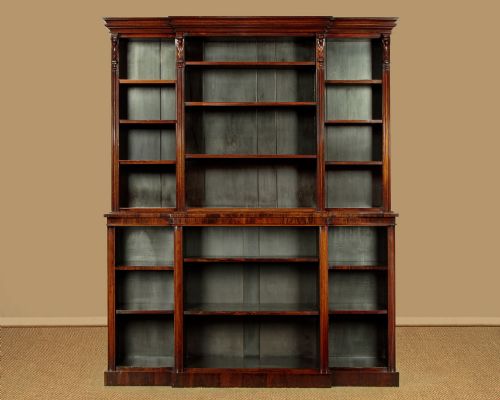
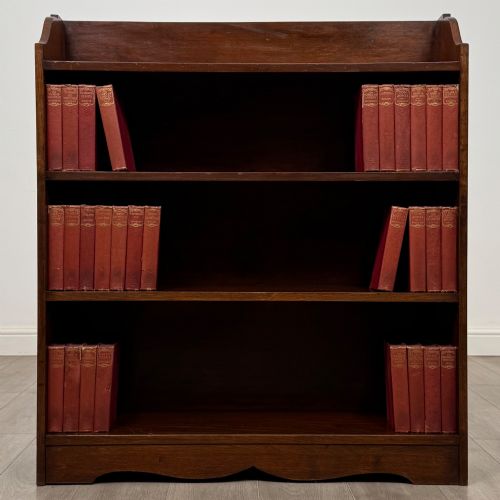
Victorian and Edwardian iterations dominate the selection, offering sturdy proportions and functional adjustable shelving. Buyers encounter both compact domestic items and larger breakfront configurations suited to substantial rooms.
Materials and construction methods
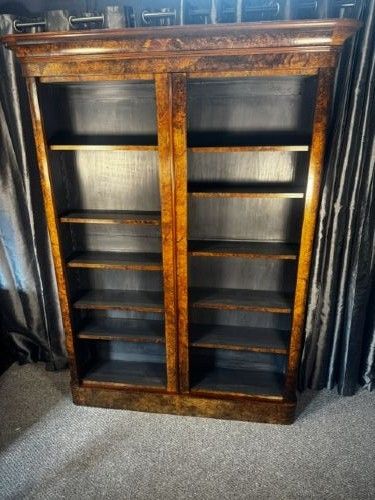
Cabinet makers utilised a range of dense hardwoods, predominantly mahogany, oak, and walnut, often selecting figured grains such as burr walnut, pollard oak, and birdseye maple for visual impact. Rosewood and satinwood also appear frequently, providing deep colour and contrasting tones.
Detailing on these pieces incorporates brass inlays, ormolu mounts, carved oak motifs, and delicate wood inlays that define different stylistic periods from Regency to Art Deco. Construction techniques focus on stability, accommodating adjustable wooden shelves within rigid outer carcases.
One exceptional piece was designed by an architect for a country house in Oxfordshire, proving that even shelving can have royal architectural credentials.
Judging quality and execution
The standard of an open front shelving unit rests on the selection of timber veneers and the crispness of applied carvings or brass work. Finer examples feature continuous grain matching across breakfront facades and substantial timber thicknesses.
Internal engineering marks the difference between basic utility items and superior pieces, particularly the smooth operation of adjustable shelving systems. Design ambition, such as Neoclassical styling or architect-designed commissions, further separates standard domestic furniture from exceptional pieces.
Sir Charles Barry
The Open Front Shelving Unit Glossary
- Breakfront
- A cabinet or bookcase whose central section projects forward from the flanking wings. This configuration creates architectural depth and allows for varied shelf depths.
- Whatnot
- A piece of open multi-tiered shelving designed for displaying ornaments and small objects. These items typically feature slender upright supports.
- Waterfall bookcase
- A shelving unit where each successive shelf steps back from the one below it, creating a profile resembling a cascade. This form appears in mahogany and oak.
- Pollard oak
- Oak timber taken from trees that have been pollarded, producing a gnarled, highly figured grain pattern. Cabinet makers used this wood for decorative veneering.
Open Front Shelving Unit: Frequently Asked Questions
What is an open front shelving unit?
An open front shelving unit is a piece of furniture designed for storing books and displaying objects without doors enclosing the front. These units provide immediate visual access to their contents.
Such furniture appears in forms ranging from tall library bookcases to compact whatnots and stepped waterfall designs. They serve primarily in living spaces, studies, and libraries.
How do I date an open front shelving unit?
Dating relies on identifying timber choices, decorative motifs, and overall structural styles associated with specific eras. Victorian pieces often use rosewood and walnut with carved details, while Edwardian items frequently feature inlaid mahogany.
Later pieces from the 1920s and 1930s introduce simpler oak construction or distinct geometric mouldings characteristic of Art Deco design.
Are the shelves adjustable?
Many of these units feature adjustable shelving systems to accommodate books and objects of varying heights. This flexibility was common in nineteenth-century library furniture.
Buyers should examine the interior uprights to see if traditional peg supports or sliding brackets are present.
Where should I place an open front shelving unit?
These units suit studies, sitting rooms, and hallways where books or decorative collections require accessible storage. Their open nature means items are constantly on view.
Care should be taken to keep them away from direct sunlight and excessive temperature fluctuations to protect sensitive timbers like rosewood and mahogany.