




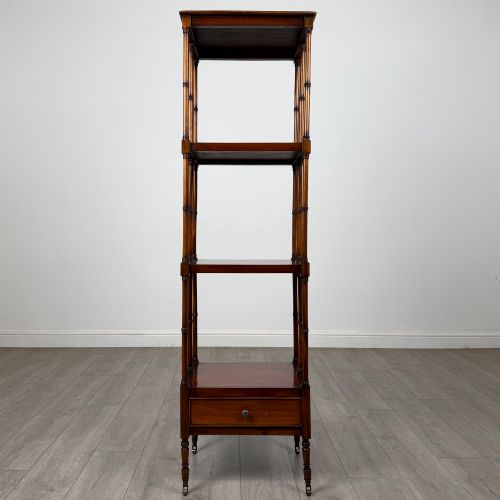
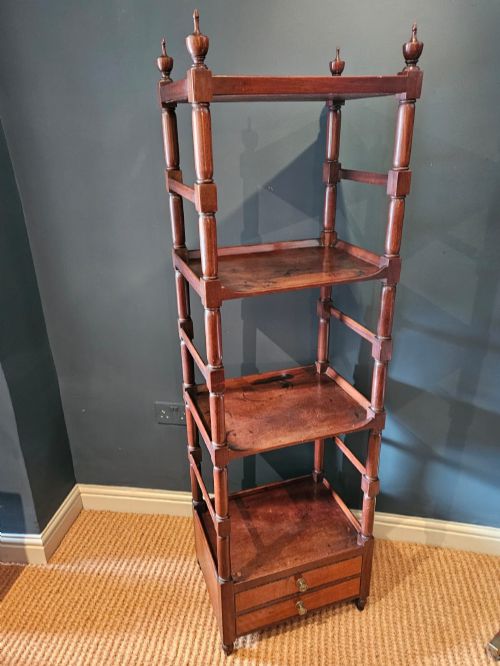



Open Etagere Shelves
Open etagere shelves offer tiered display space for books and ornaments, bringing character and vertical storage to a room.
Open Etagere Shelves
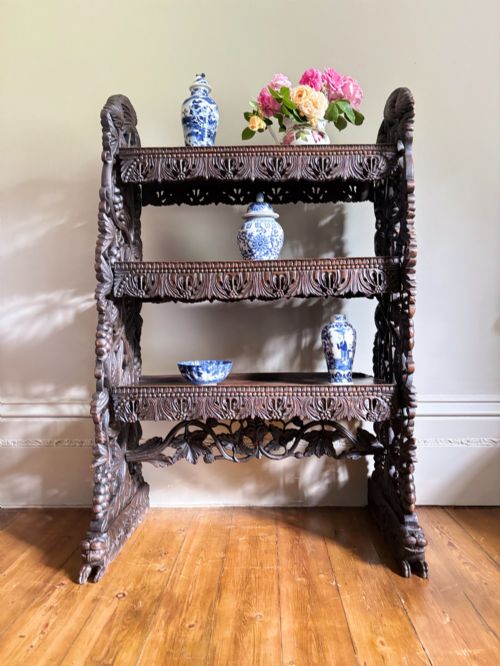
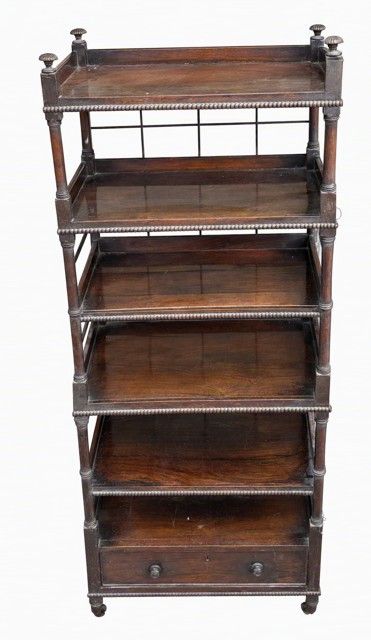
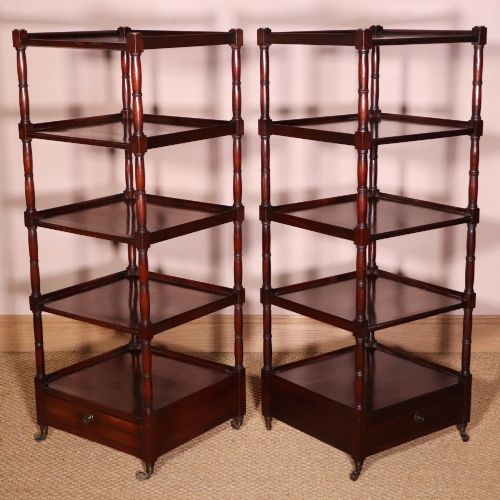
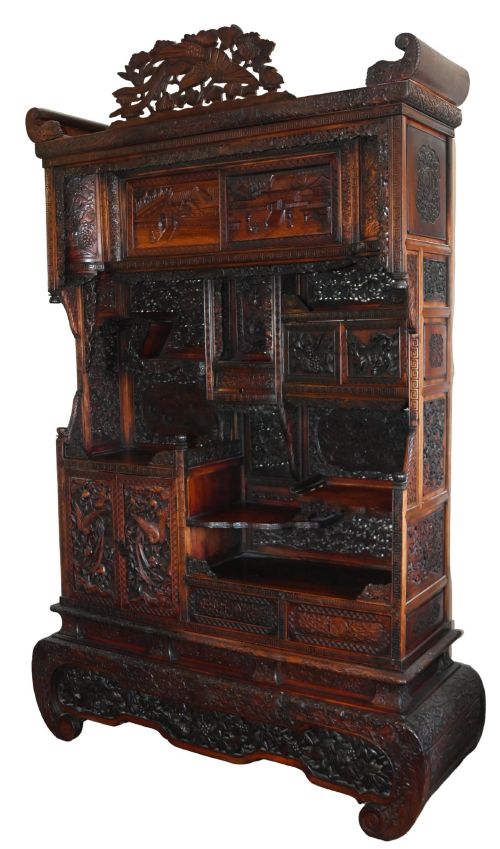
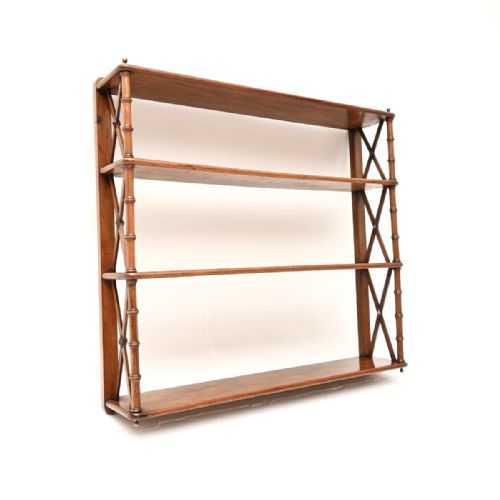
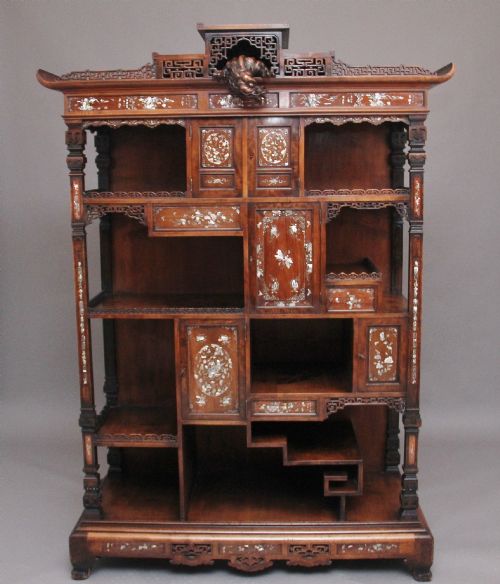
Open etagere shelves are multi-tiered display pieces designed to hold books, small objects and collections in plain view. They appear under several historical names in these listings, including whatnots, etageres, display cabinets, and bookcases.
The pieces on this page span the 19th century, featuring Victorian, Regency, and Georgian periods alongside Anglo-Indian and Meiji period examples. Buyers will find freestanding multi-tier platforms, corner units, and slim buffets.
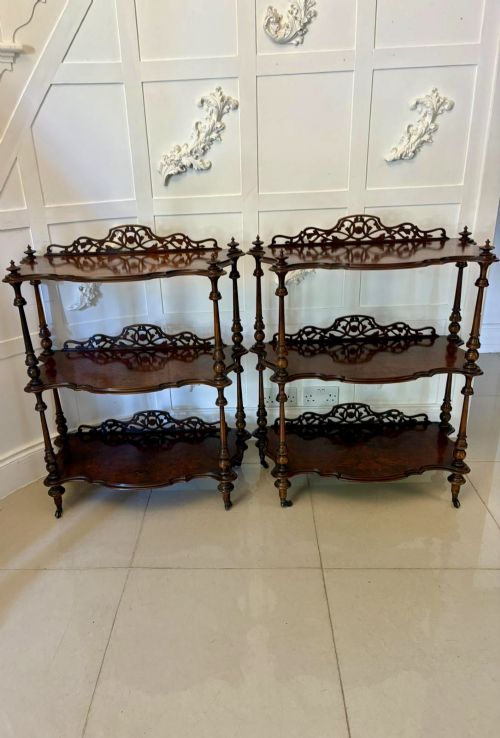
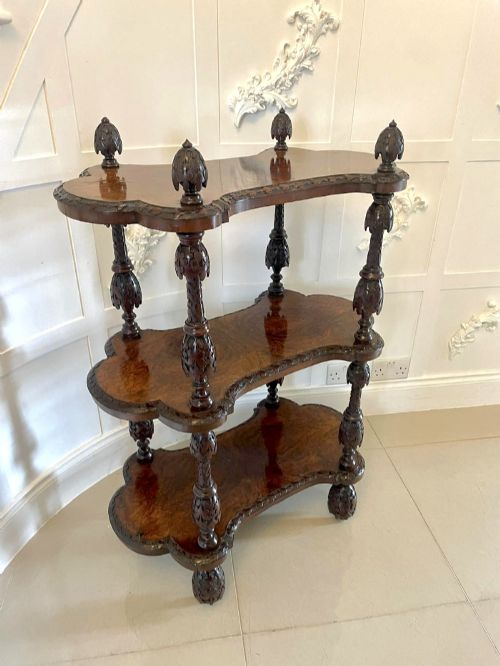
Forms range from simple three-tier mahogany shelving units to elaborate six-tier rosewood or burr walnut designs with brass galleries and turned legs. Many incorporate architectural fretwork, slender pillars, or serpentine shapes.
Materials and construction
Cabinetmakers utilised rich native and exotic timbers such as mahogany, walnut, burr walnut, rosewood, and hardwood. These woods were chosen for their strong grain patterns and stability when supporting multiple stacked tiers.
Metal components added structural detail and decorative contrast, utilising brass galleries, gilt metal mounts, and mother-of-pearl inlay. Turned wooden legs, slender pillars, and pierced fretwork formed the vertical supports.
Many items reflect cross-cultural influences, employing techniques from French cabinetmaking, Chinese joinery, and Japanese Meiji period lacquerwork alongside traditional British manufacturing methods.
Open Etagere Shelves Retail Price Guide 2026
Typical asking prices for open etagere shelves among the pieces listed under this phrase on Sellingantiques today, from the lower quarter to the upper quarter. They describe what is for sale here now, not the wider market.
The furniture spans multiple design traditions, incorporating George III, Regency, Victorian, Louis XVI manner, and Meiji period Japanese styles.
Quality differences
The refinement of the timber selection dictates the visual impact, with figured burr walnut and richly grained rosewood sitting at the upper end of the scale. Plain secondary woods or simpler cuts indicate standard utility pieces.
Construction intricacy separates everyday examples from exhibition pieces. Serpentine-shaped shelves, intricate pierced fretwork, and detailed brass galleries demonstrate superior craftsmanship compared to plain rectilinear tiers.
Cohesion of style and historical integrity define the better examples. Pieces that maintain original hardware, matching turned pillars, and balanced proportions hold greater presence in an interior.
Edwards and Roberts·Gabriel Viardot
The Open Etagere Shelves Glossary
- Etagere
- A piece of furniture consisting of a set of open shelves for displaying small objects or ornaments. It originated in France during the 18th century.
- Whatnot
- A nineteenth-century multi-shelved piece of furniture used for storing or displaying books, ornaments, and knick-knacks. It often stands in a corner or freestanding against a wall.
- Shodana
- A Japanese display cabinet featuring asymmetrical shelving and compartments, popular during the Meiji period. These cabinets often incorporate intricate lacquerwork and carved wood.
- Gallery
- A raised decorative rail or pierced border running along the edge of a shelf or tabletop. It prevents items from sliding off the surface.
- Fretwork
- Ornamental perforated wood or metal design created by cutting patterns through the material. It adds lightness and decorative detail to shelf brackets and panels.
- Serpentine
- A curved shape consisting of a convex centre flanked by concave curves. It appears along the front edges of shelves to create undulating movement.
Open Etagere Shelves: Frequently Asked Questions
What is an etagere?
An etagere is a piece of furniture made up of multiple open tiers designed for displaying decorative objects.
Originally developed in France, these pieces provide vertical storage without enclosing items behind solid doors.
How were antique whatnots used?
Antique whatnots served as functional display units in Victorian and Regency parlours for holding books, ceramics, and ornaments.
Their open construction allowed owners to showcase collections while keeping them easily accessible in daily life.
Can corner whatnots fit small spaces?
Corner whatnots utilise neglected angles of a room to provide vertical storage without occupying central floor space.
Their triangular footprint makes them practical for compact rooms or narrow hallways.
How do I identify a Victorian whatnot?
Victorian whatnots typically feature rich timbers like burr walnut or rosewood, often complemented by turned pillars and brass galleries.
Many examples from this era incorporate pierced fretwork or serpentine shelving shapes characteristic of mid-19th century design.