
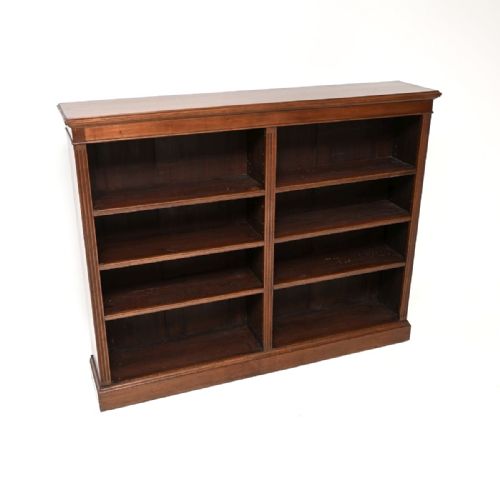
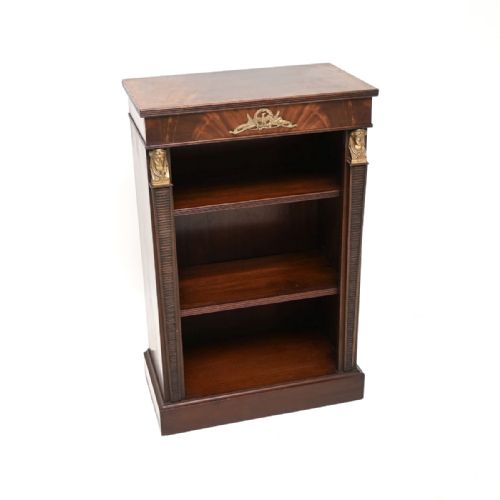
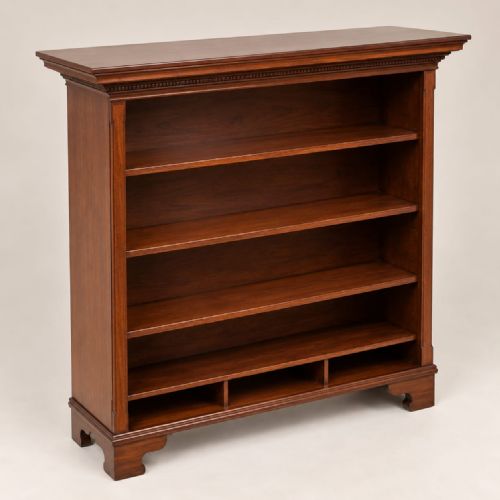
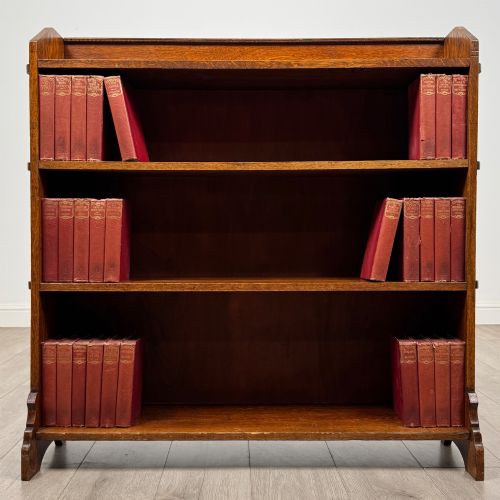
Open Bookshelf Unit
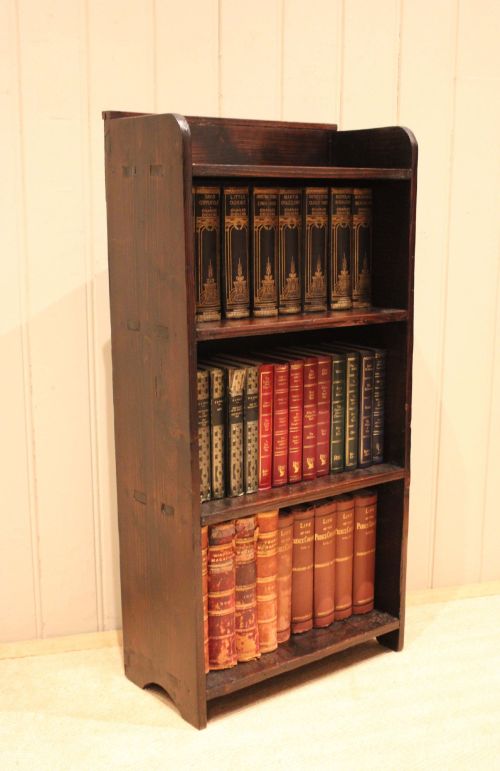
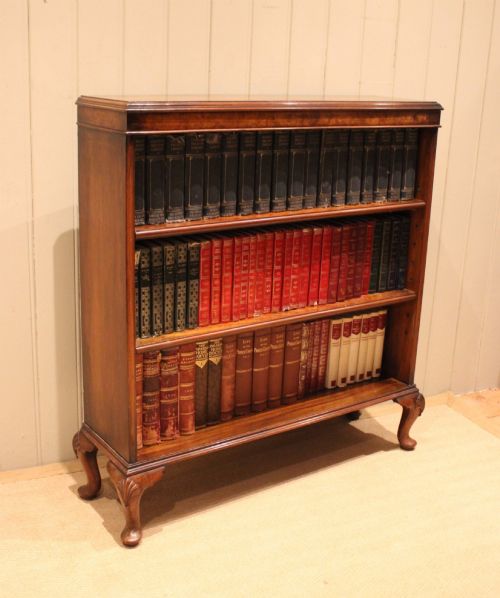
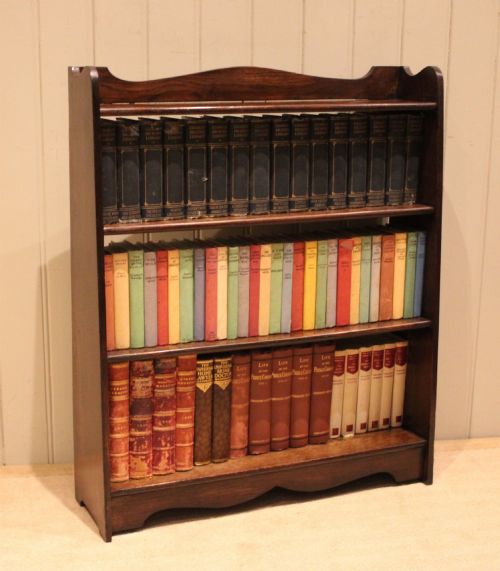
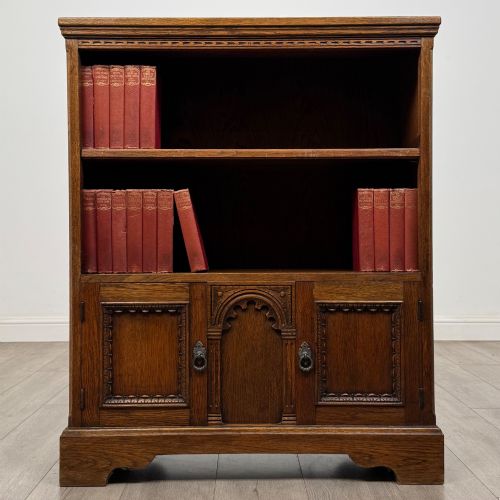
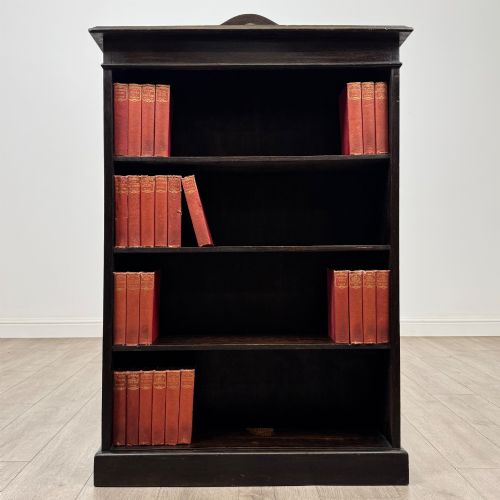
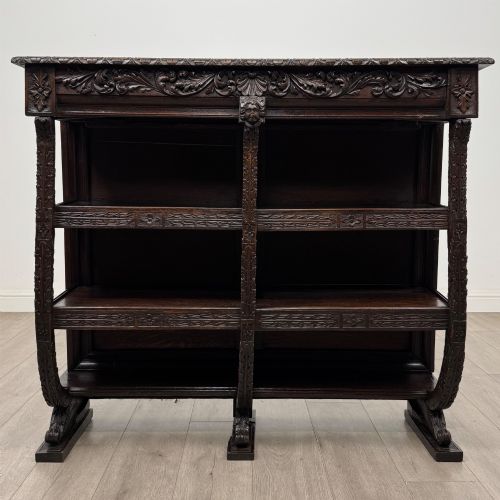
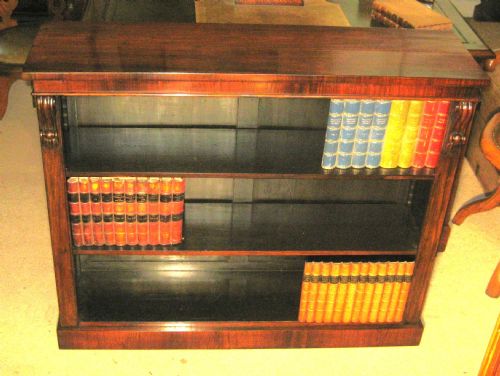
An open bookshelf unit provides practical library storage while showing off bindings.
Open Bookshelf Unit
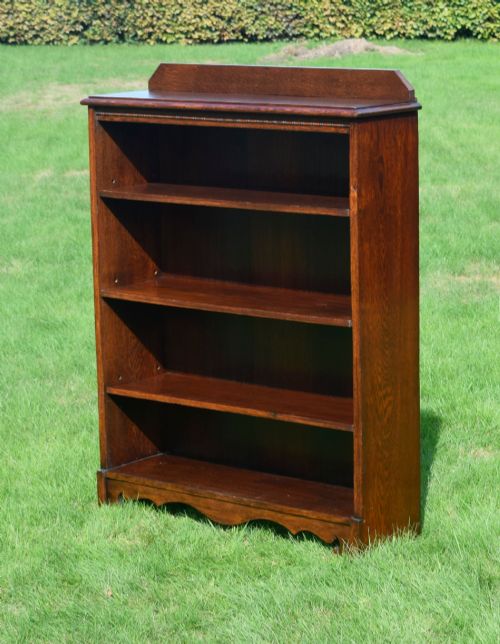
An open bookshelf unit gives immediate access to volumes without doors in the way, making it a staple for home libraries and studies.
You will most commonly encounter oak and mahogany examples from the Victorian, Edwardian, and early twentieth century periods on this page.
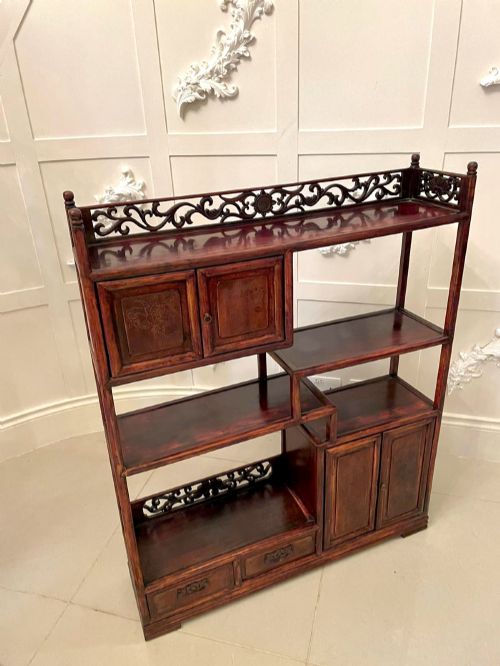
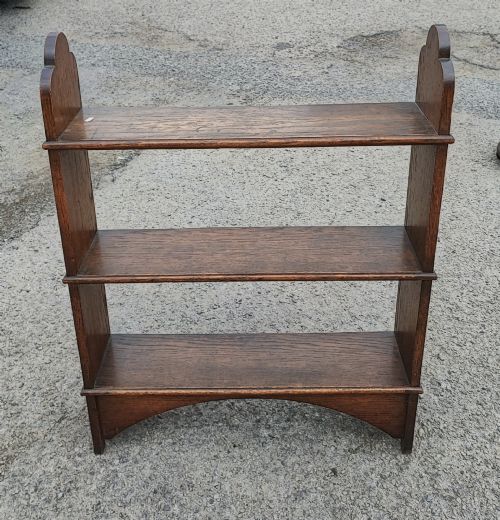
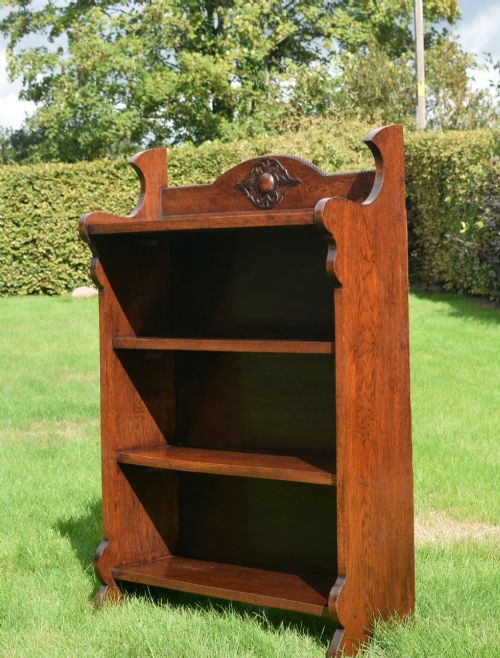
Formats range from small rustic pieces and low dwarf bookcases to slim waterfall designs and large library pieces.
Materials and construction
Cabinet makers utilised hardwoods such as oak, mahogany, walnut, rosewood, and ash, often pairing them with brass castors or decorative inlay.
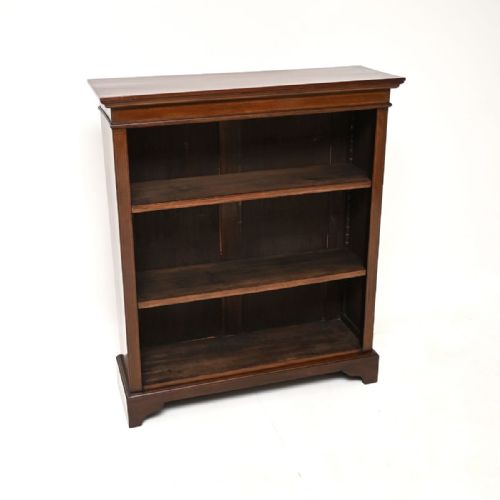
Many examples feature adjustable shelves supported by integrated fittings, while others incorporate carved ornamentation and beaded edges.
The construction relies on sturdy timber frames designed to support heavy rows of books without sagging.
Listings feature periods from the nineteenth and twentieth centuries, spanning Victorian, Edwardian, Arts and Crafts, and Art Deco styles.
Assessing quality
Quality rests on the selection of timber figures, such as burr walnut or figured mahogany, and the crispness of any carved details.
Refined pieces display careful joinery and thoughtful proportions, whereas utilitarian items show simpler construction.
Hardware choice also distinguishes the range, from plain wooden edges to brass castors and intricate inlay work.
Heals
The Open Bookshelf Unit Glossary
- Waterfall bookcase
- A stepped bookcase where each higher tier is narrower than the one below it. This form creates a cascade effect popular in mahogany and walnut pieces.
- Dwarf bookcase
- A low bookcase designed to sit beneath dado height. These pieces often feature adjustable shelves and carved details.
- Adjustable shelves
- Shelves that can be moved to different heights using internal vertical supports. This feature allows the unit to accommodate books of varying sizes.
- Inlay
- A technique where contrasting materials are inserted into the wood surface to form decorative patterns. Edwardian and Victorian pieces frequently utilise this method.
Open Bookshelf Unit: Frequently Asked Questions
How do I style an open bookshelf unit?
Arrange books vertically and horizontally to create visual weight and prevent monotony across the shelves.
Intersperse rows with decorative objects or small framed items to break up solid blocks of text.
Are shelves usually adjustable?
Many of these pieces feature adjustable shelving systems that allow you to alter shelf heights as needed.
Check individual descriptions to confirm whether the shelves are fixed or movable.
Where should I place a low bookcase?
Dwarf and low bookcases work well beneath windows or against walls where taller furniture would block light.
Their top surfaces also provide extra display space for lamps and ornaments.
How do I identify a waterfall bookcase?
A waterfall design steps back progressively from the bottom to the top tier.
This tiered configuration gives the silhouette its characteristic sloping profile.