

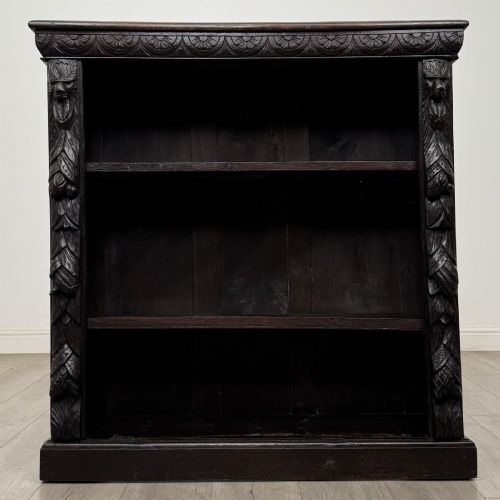
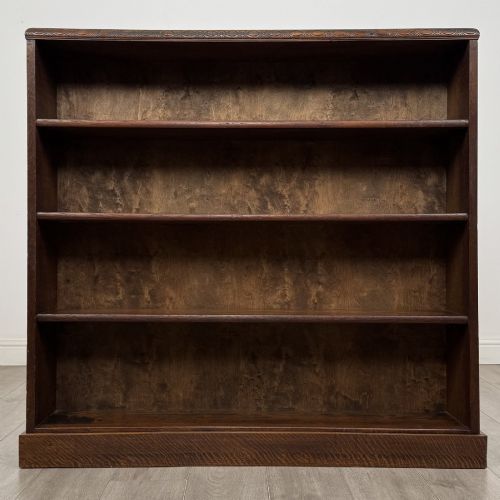
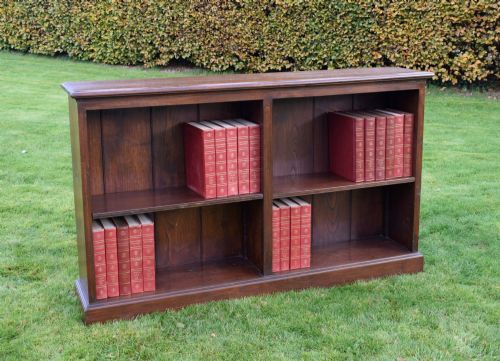
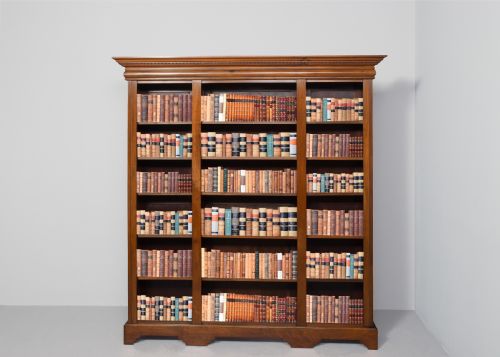

Open Book Shelves
Open book shelves bring direct utility and classic proportions to a room, offering immediate access to volumes without the barrier of glass doors.
Open Book Shelves
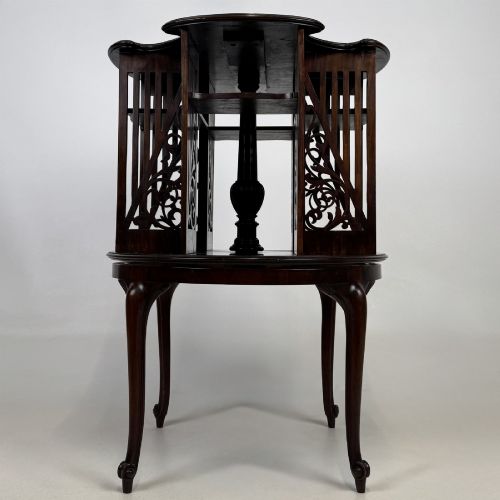
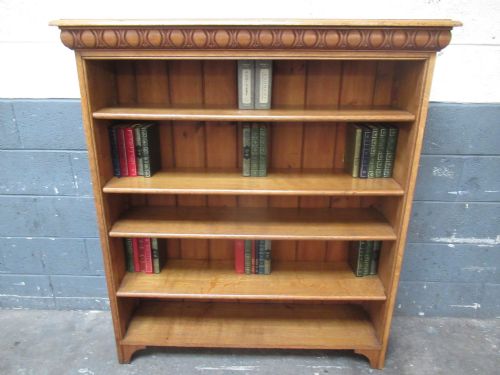
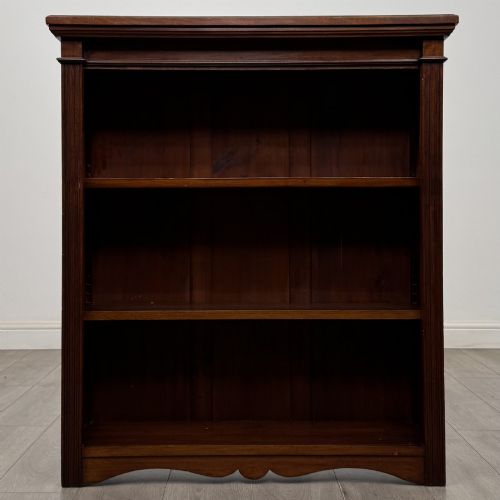
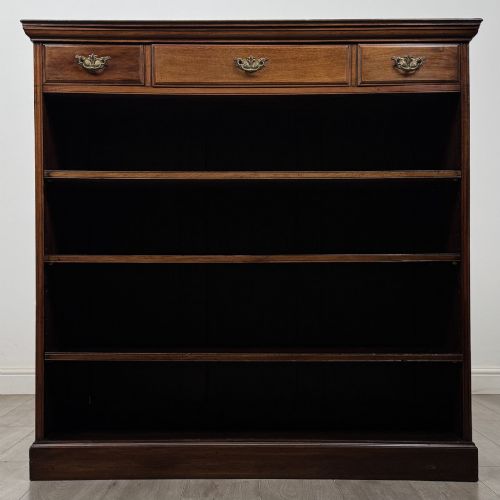
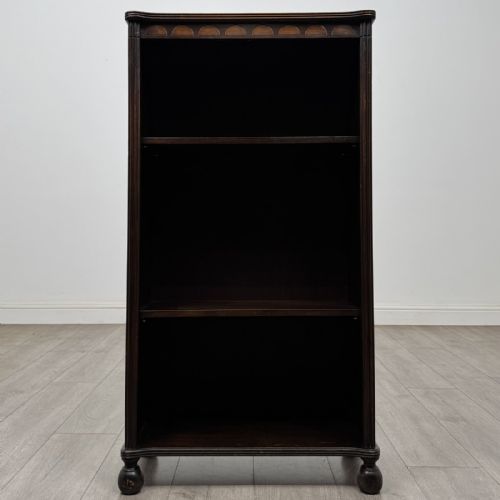
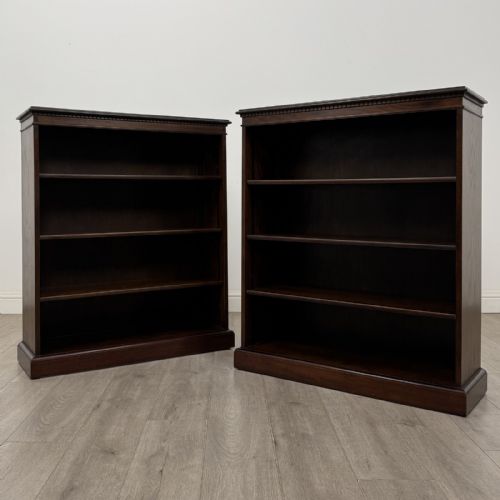
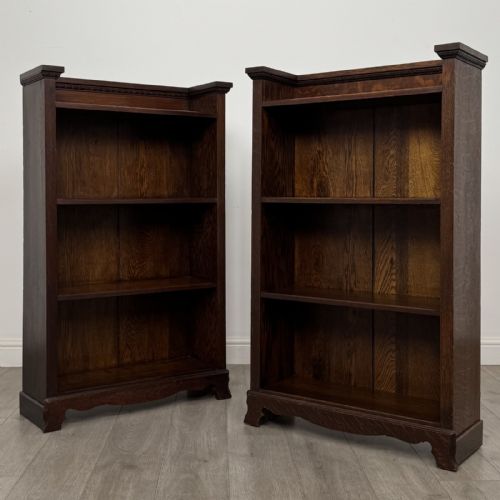
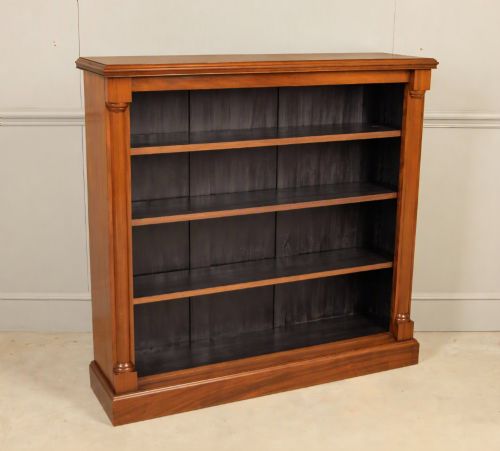
When searching for open book shelves, you encounter pieces designed to hold libraries in domestic spaces without enclosing them behind timber or glass panels. These items range from compact wall shelves and low dwarf cases to tall, floor-standing units intended for substantial collections.
The versions most commonly met on this page span the Victorian, Edwardian, and early twentieth-century periods. You will frequently find freestanding oak and mahogany examples alongside walnut, pine, and rosewood variants tailored for domestic studies and living rooms.
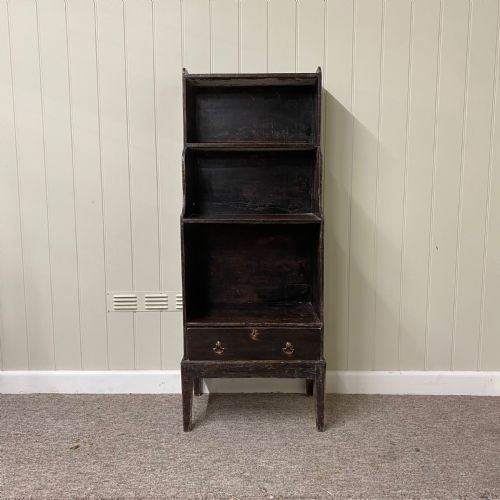
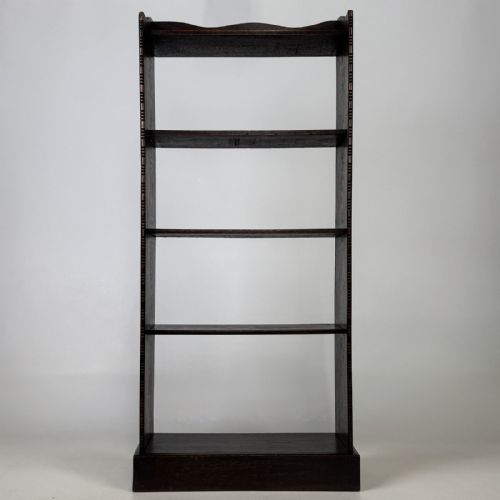
Object types vary from traditional bookcases and wall shelves to etageres, whatnots, and specialised waterfall formats. Many incorporate adjustable shelving or lower cupboards, balancing display space with enclosed storage.
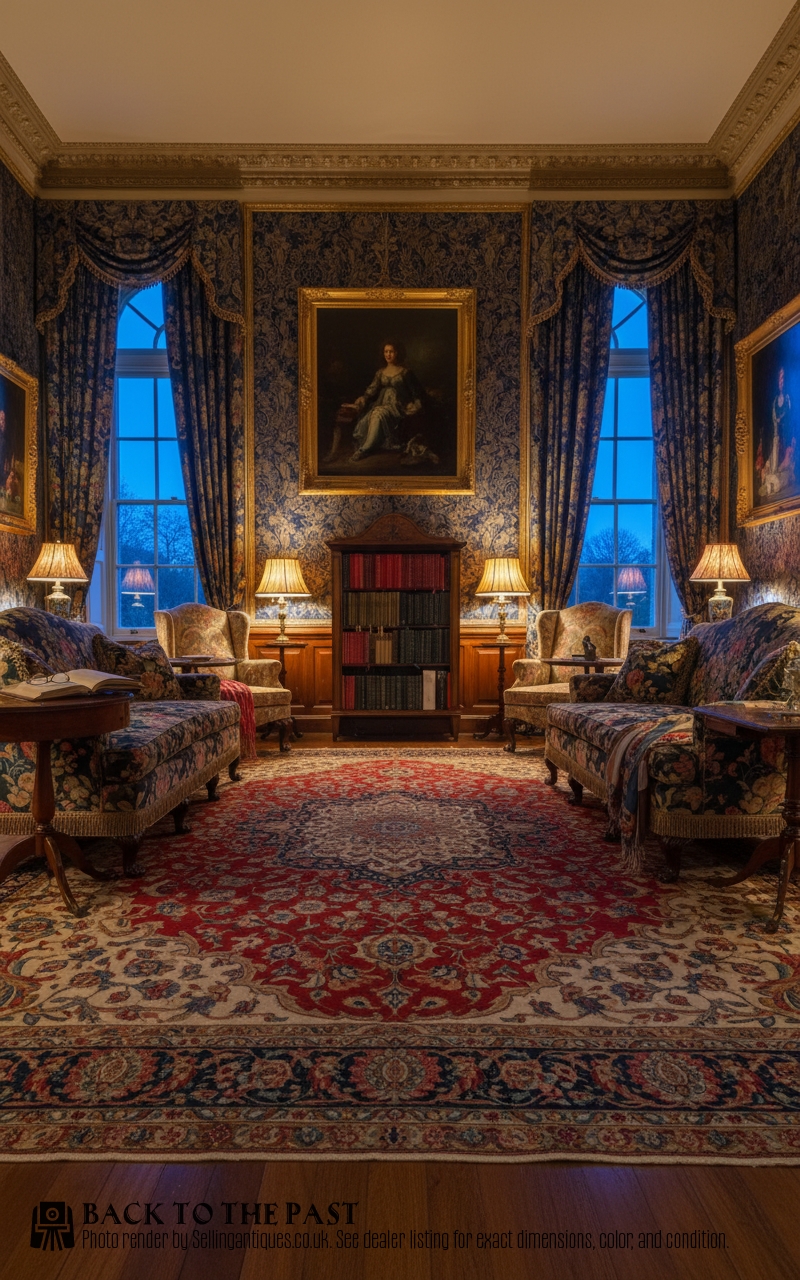
Materials and Construction
Cabinet makers built these pieces using solid hardwoods and selected veneers, predominantly oak, mahogany, and walnut, with occasional use of rosewood and pine. Timber selection defined the character of the piece, from the golden and dark tones of oak to the deep reddish grain of mahogany.
Joinery techniques included mortise and tenon frames, dovetailed shelves, and beaded edges, supported by functional hardware such as brass fittings. Many variants integrated internal rack systems or traditional peg supports to allow adjustable shelf heights.
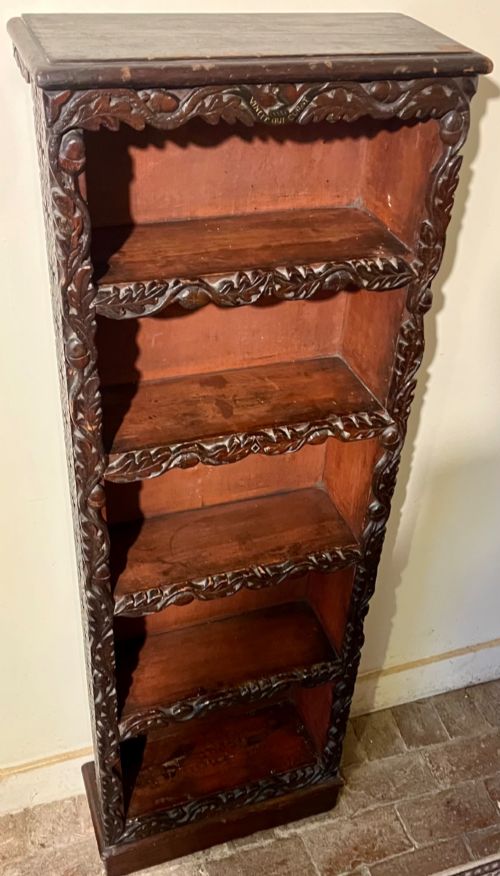
Decorative touches emerged through specific stylistic periods, including carved oak details in Arts and Crafts pieces, inlaid mahogany typical of Edwardian workshops, and stepped profiles seen in Art Deco or waterfall designs.
Open Book Shelves Retail Price Guide 2026
Typical asking prices for open book shelves among the pieces listed under this phrase on Sellingantiques today, from the lower quarter to the upper quarter. They describe what is for sale here now, not the wider market.
Some Edwardian shelves spent a century holding heavy ledgers before finding a peaceful retirement guarding paperback novels.
Evaluating Quality
The calibre of a piece rests on the selection of timber and the precision of its construction. Dense, evenly grained hardwoods and substantial solid backs separate superior examples from lighter utility items.
Proportion and utility dictate the upper tier of the range. Pieces featuring well-executed adjustable shelving mechanisms, balanced proportions, and restrained decorative carving demonstrate superior workshop execution.
The Open Book Shelves Glossary
- Waterfall bookcase
- A stepped bookcase where each successive shelf is shallower than the one below, creating a cascading profile.
- Whatnot
- A multi-tiered piece of freestanding furniture designed for displaying books and ornaments, common in Victorian interiors.
- Adjustable shelves
- Shelves that rest on moveable supports or rack strips, allowing the interior height to change according to the books stored.
- Dwarf bookcase
- A low floor-standing bookcase designed to sit below window height, leaving the wall space above unobstructed.
- Breakfront
- A cabinet or bookcase where the central section projects forward from the flanking outer sections.
Open Book Shelves: Frequently Asked Questions
How do I choose the right size bookcase?
Consider the volume of your collection and the available wall space in your room. Low dwarf cases preserve sightlines, while tall multi-shelf units maximise vertical storage capacity.
Measure both the ceiling height and the depth of the floor space to ensure the proportions suit your room without blocking pathways.
Are shelves usually adjustable?
Many period bookcases feature adjustable shelves supported by wooden ratchets, brass pegs, or vertical slots. This flexibility allows you to accommodate volumes of varying heights.
Fixed shelves do appear, particularly in simpler rustic or utility pieces from the early twentieth century.
Where should I place an open bookcase?
Position your bookcase against interior walls away from direct sunlight and strong heat sources to protect the timber and bindings. Freestanding low cases also function well as room dividers or beneath windows.
Ensure the floor is level so the tall structure remains stable without requiring permanent wall fixings.