



Opaline Shade Table Light
Opaline shade table light examples bring a soft, diffused glow to a room through milky glass paired with sturdy metal bases.
Opaline Shade Table Light
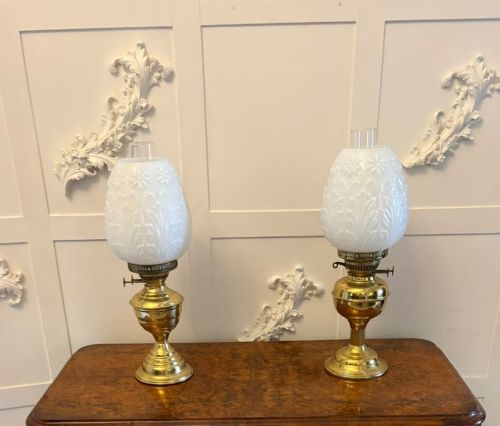
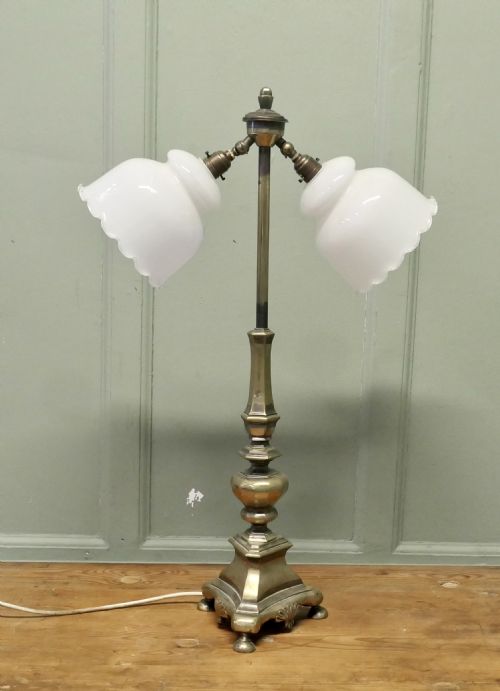
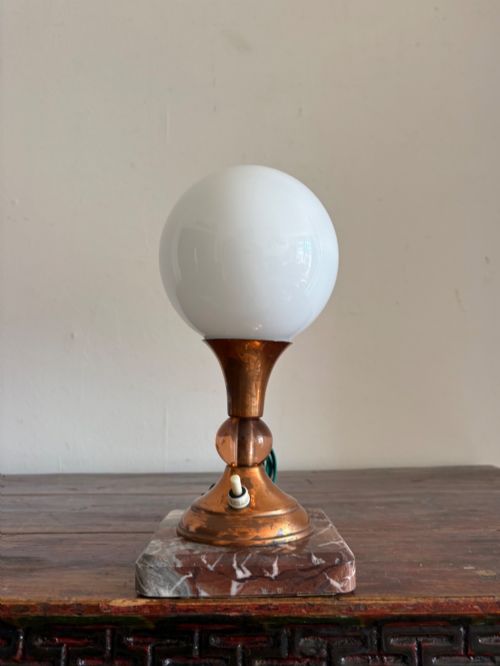
When you search for an opaline shade table light, you are looking at task and ambient lighting spanning from the Victorian and Edwardian eras into the Art Deco and Modernist periods. These pieces combine translucent glass shades with bases formed from brass, copper, chrome, bronze, and marble.
The versions you are most likely to meet on this page range from converted nineteenth century oil lamps with heavy brass fonts to French Art Deco designs and twentieth century chrome desk lamps. They bridge the gap between functional workspace illumination and decorative interior pieces.
Makers and manufacturers utilised various styles including Victorian, Edwardian, Art Deco, and French Neoclassical aesthetics. Many items began life as oil or paraffin burners before conversion to electricity, while others were built specifically for electrical wiring in the early twentieth century.
How they were made
The primary material combination relies on opaline glass blown or moulded into shades, paired with metalwork such as cast brass, copper, or polished chrome. Metal components were often turned on lathes or cast in moulds before being hand-finished and assembled.
Bases frequently incorporate contrasting heavy materials like marble or wood to provide stability for the upright stem and shade assembly. Glass shades diffuse light evenly through the chemical composition of the opaline glass, which suspends metallic oxides during manufacture.
Many of these sturdy desk companions started life burning paraffin before retiring to a life of reading books by electricity.
What varies in quality
Quality separates through the weight and thickness of the metal castings used for the bases and arms, alongside the depth and consistency of the opaline glass in the shades. Finer examples display crisper chasing on brass or ormolu mounts and heavier gauge metals that resist bending.
The integrity of the conversion work on older oil lamps also dictates the standard of the piece, with professional rewiring and retention of original components marking superior pieces. Details like hand-painted highlights or original switchgear distinguish standard production items from workshop outputs.
Wild and Wessel
The Opaline Shade Table Light Glossary
- Opaline glass
- A type of semi-opaque glass, either white or tinted, that diffuses light softly without glare. It was widely used in Victorian and twentieth century lighting shades.
- Oil lamp
- A lighting device that burns liquid fuel via a wick, commonly converted to electricity in later decades while retaining its original brass or porcelain reservoir.
- Ormolu
- Gilded bronze or brass applied to decorative mounts and lamp bases, prevalent in French Neoclassical and nineteenth century lighting designs.
- Pricket lamp
- A candlestick or lamp style featuring a central spike to secure the candle or fitting, adapted in later periods for electrical desk and table lighting.
Opaline Shade Table Light: Frequently Asked Questions
Are these lamps safe to use today?
Most antique and vintage lamps require professional rewiring to meet current electrical standards before regular use in a modern home. A qualified electrician can easily replace older cloth or rubber wiring with modern insulated flex while preserving the historical body of the lamp.
Original brass fittings and switches are generally retained during rewiring to maintain authenticity and character. Regular PAT testing ensures older metal-bodied lights remain safe for daily placement on desks and side tables.
How do I clean an opaline shade?
Opaline glass benefits from gentle washing in warm soapy water using a soft cloth, avoiding abrasive pads that can scratch the delicate surface. Metal bases should be dusted gently and kept dry to preserve patination, particularly on exposed brass or copper surfaces.
Harsh chemical polishes should be kept away from the glass shades entirely to prevent dulling the milky finish. Regular light dusting prevents grime build-up in the detailed casting crevices of Victorian and Edwardian metalwork.
How can I tell a Victorian lamp from an Art Deco one?
Victorian and Edwardian examples typically feature ornate brass castings, heavy ceramic fonts, and ruffled or traditional shade profiles. They lean towards botanical motifs and heavier proportions built for oil burning.
Art Deco and Modernist pieces favour clean geometric lines, chrome finishes, and streamlined marble or copper bases. The shift towards electrical power in the nineteen twenties allowed designers to reduce the overall bulk of the lamp body.
Where should I place an opaline table light?
The soft, diffused illumination provided by opaline glass makes these lights well suited for reading desks, sideboards, and bedside tables. Their enclosed glow reduces harsh shadows while casting adequate light for detailed tasks.
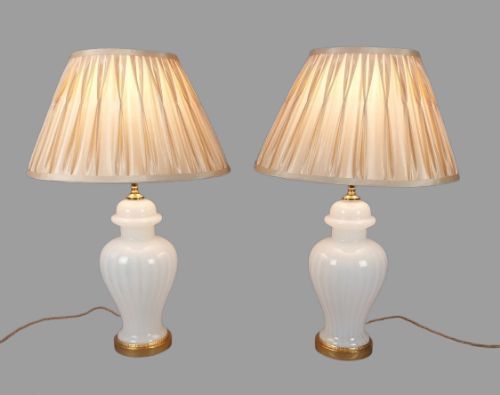
Matching pairs work effectively on either side of a larger piece of furniture or a mantelpiece for balanced interior styling. Single pieces serve as focal points on entrance hall tables or within living room reading corners.