




Opaline Globe Lamp
An opaline globe lamp diffuses a soft, milky glow through milk glass, bringing authentic period charm to any room.
Opaline Globe Lamp
When searching for an opaline globe lamp, you encounter lighting fixtures that span from the Victorian and Edwardian eras into the 1930s Art Deco period. These pieces bridge utilitarian origins and decorative interiors, appearing in domestic settings and grander spaces alike.
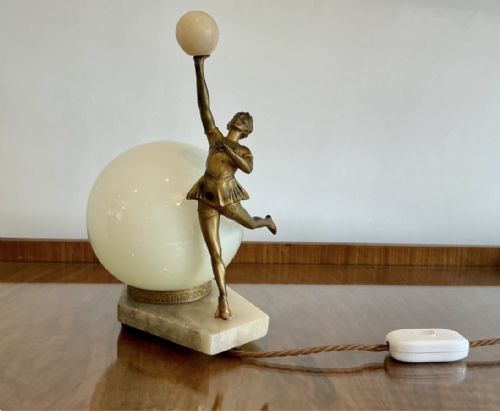
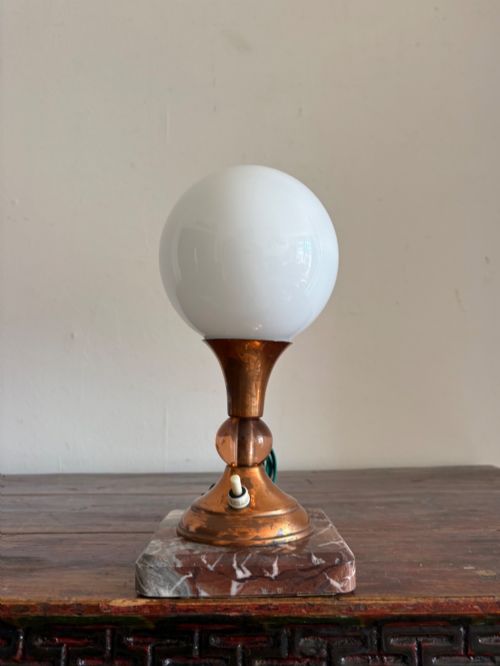
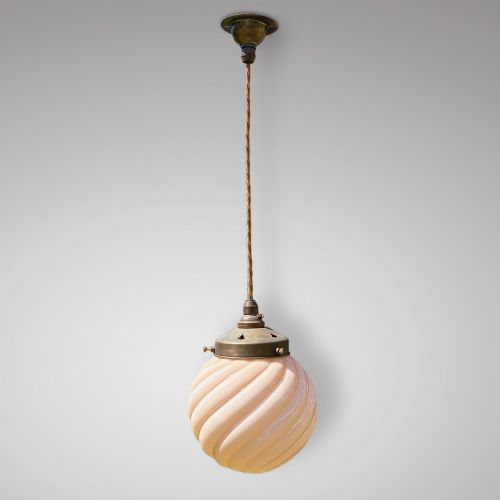
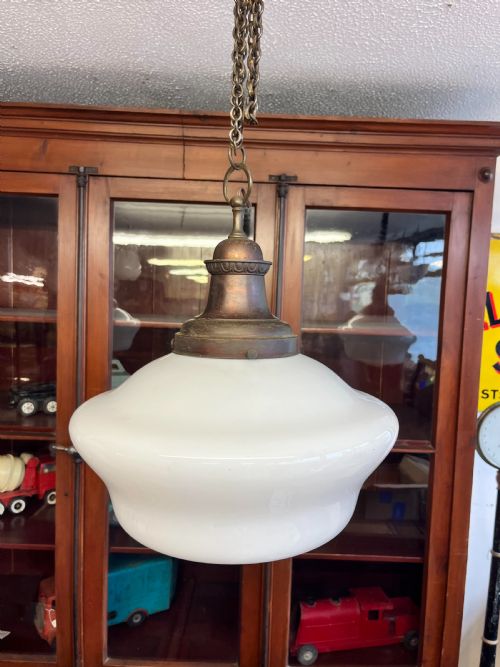
The selections on this page showcase notable variety, from hanging pendant lights and hallway fixtures to converted table lamps and oil lamps. You are most likely to meet pieces combining milky opaline glass with brass or marble mounts, reflecting early 20th century tastes.
Origins stretch from English workshops to French studios, encompassing specialist chapel lights and night lights alongside standard domestic forms. Each iteration utilises the signature translucent properties of opaline glass to soften illumination.
Materials and construction
The primary material is opaline glass, prized for its dense, milky appearance that hides the light source while scattering a warm glow. Glassmakers achieved this distinctive opacity through mineral additives during the molten stage.
Metalwork forms the structural backbone, with brass, gilt bronze, copper, and spelter utilised for bases, galleries, and mounts. Heavier iterations incorporate marble or granite bases to anchor the proportions of tall table lamps.
Wiring and suspension hardware range from period-appropriate brass chains and rods to modern fabric flex used during conversion work. Craftsmanship shows in the secure seating of glass globes within metal collars and galleries.
Materials recorded across the selection include opaline glass, brass, marble, copper, spelter, gilt bronze, and fabric flex.
Evaluating quality and execution
Quality reveals itself in the density and evenness of the opaline glass, where superior examples exhibit a smooth, cloud-like consistency without streaks or thinning patches. The weight and finish of the metal mounts, whether cast brass or chased gilt bronze, further distinguish finer pieces from standard production.
Proportion and architectural harmony separate exceptional lighting from routine examples, particularly in how the globe sits relative to its base or suspension hardware. Maker attribution, such as work originating from established firms like Perry & Co, elevates the distinction of a piece.
Perry & Co
The Opaline Globe Lamp Glossary
- Opaline Glass
- A type of semi-opaque glass developed in the nineteenth century, ranging from pure white to pastel shades. It was widely utilised for lighting shades and decorative objects because of its ability to diffuse light evenly.
- Spelter
- An alloy of zinc and other metals, frequently cast and patinated to imitate bronze. It provided an economical alternative for decorative lamp bases during the Victorian and Edwardian periods.
- Gilt Bronze
- Bronze metal that has been coated with a thin layer of gold or gold leaf. This technique imparted a rich, enduring finish to high-end decorative mounts.
- Gallery
- The metal ring or collar designed to hold a glass shade securely in place. Galleries often feature thumb screws or tightening brackets.
- Pricket
- A sharp spike on a candlestick or lamp base designed to hold a candle or support a mounting fitting. It represents an older form of domestic lighting adaptation.
Opaline Globe Lamp: Frequently Asked Questions
What is an opaline globe lamp?
An opaline globe lamp is a lighting fixture featuring a rounded shade made from translucent milk glass. These lamps diffuse a soft, even light and date from periods including the Victorian era, the Edwardian period, and the 1930s.
They appear in various formats, functioning as hanging ceiling pendants, hallway lights, converted oil lamps, and table lamps mounted on brass or marble bases.
How do I date an antique opaline lamp?
Dating relies on examining the materials, manufacturing techniques, and stylistic markers of the base and hardware. Victorian and Edwardian examples often feature heavy brass oil lamp conversions, while 1930s pieces lean towards Art Deco geometric designs or fish scale patterns.
Fittings, screw types, and wiring methods also offer clues, though many functional lamps have been updated with modern fabric flex for safe contemporary use.
Were these lamps originally electric?
Many early pieces began life as oil lamps or paraffin lamps before being converted to electricity later in their lifespan. Edwardian and Victorian examples frequently show this transition, retaining their original brass burners alongside adapted internal wiring.
Ceiling pendants and chapel lights were often hardwired from the outset, particularly those produced during the Art Deco period.
How do I clean opaline glass?
Cleaning requires gentle handling with warm water and mild washing-up liquid to preserve the delicate surface of the glass. A soft cloth prevents scratching the milky finish, particularly around older mould seams.
Harsh chemical cleaners and abrasive scouring pads should be avoided entirely, especially near patinated metal mounts like brass or copper.