


Opal Pendant Necklace
When you search for an opal pendant necklace, you enter a world of shifting colours and precious metals spanning from Victorian times to the mid-twentieth century.
Opal Pendant Necklace
An opal pendant necklace combines the distinct play-of-colour in natural opals with precious metal settings suspended from a chain. These pieces range from delicate antique drops to substantial cluster designs featuring diamonds, pearls, or rubies.
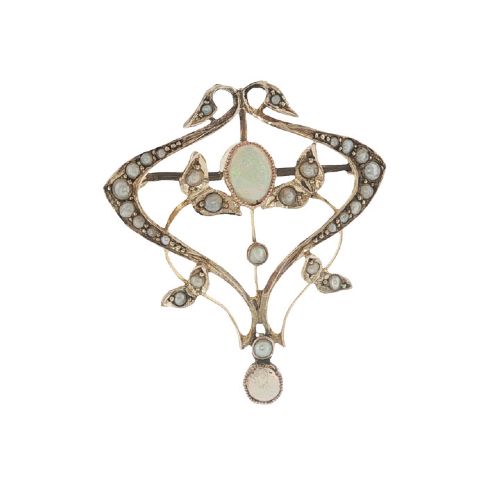
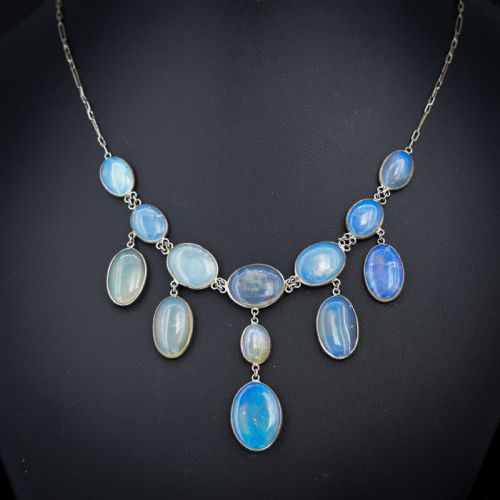
The selection on this page centres heavily on mid-century 9ct gold iterations alongside Edwardian, Victorian, and Art Deco examples. Buyers frequently encounter solitaire stones, fringe festoons, and elaborate pendant brooches that double as neckwear.
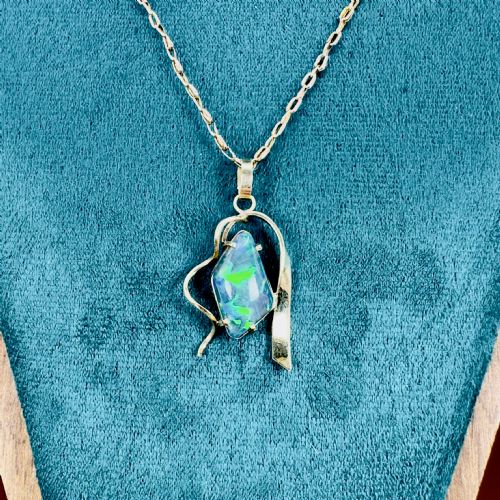
Origins stretch across eras from the late nineteenth century through the 1950s, capturing shifts in design from romantic organic motifs to clean geometric lines. The pieces showcase various opal types including black opals, fire opals, and doublets.
How they were made
Goldsmiths utilised yellow gold in 9ct and 15ct purities, alongside silver, platinum, and 18ct white gold to frame the stones. Metalwork often involved fine filigree, bezel settings, or cluster arrangements surrounding the central gemstone with accent diamonds or seed pearls.
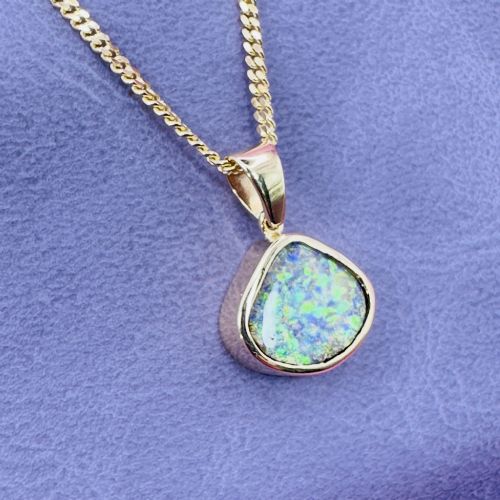
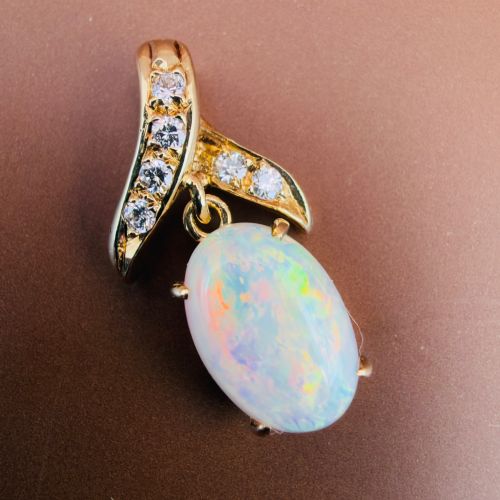
Opals were shaped into cabochons, pear cuts, or unusual boulder forms to highlight their internal fire and play-of-colour. Makers occasionally employed doublets or backed stones to enhance durability and depth.
Listings feature periods spanning from Victorian and Edwardian eras through the 1920s Art Deco movement up to 1950s designs.
What varies in quality
Quality rests primarily on the vibrancy of the opal's play-of-colour, the weight and purity of the gold or platinum, and the integration of secondary gems like diamonds or natural pearls. Superior examples display intense flashes of red, green, and blue across the stone surface.
The Gaskins·WH Haseler·Liberty and Co·Murrle Bennett
The Opal Pendant Necklace Glossary
- Cabochon
- A gemstone with a smooth, rounded, convex top surface and a flat or slightly curved base rather than facets. This cut is standard for displaying the shifting internal colours of opals.
- Fringe festoon
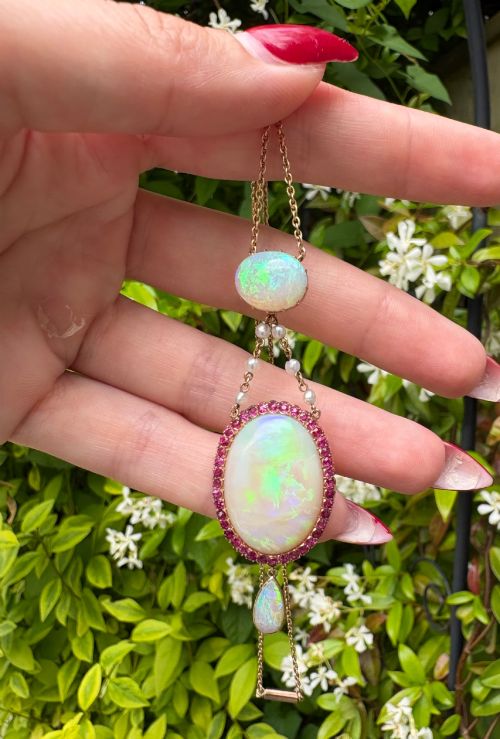
- A necklace style featuring a central chain draped with smaller suspended drops or pendants. Edwardian makers frequently used this layout to showcase graduated opals and pearls.
- Doublet
- A composite gemstone made of two layers, typically combining a thin slice of natural opal on top with a darker backing material like ironstone to intensify the play-of-colour.
- Lavaliere
- A pendant necklace featuring a central gemstone drop suspended below a main decorative motif. These pieces became popular during the late Victorian and Edwardian periods.
Opal Pendant Necklace: Frequently Asked Questions
How do I care for my opal pendant?
Opals contain water and require gentle treatment to prevent drying out or cracking. Avoid exposing them to harsh chemicals, ultrasonic cleaners, and sudden extreme temperature changes.
Store the necklace in a soft pouch away from harder gems like diamonds that might scratch the surface. Clean the metal and stone gently with a damp cloth after wearing.
Can I wear an opal necklace daily?
Opal pendants can be worn regularly provided you take sensible precautions against knocks and drops. Because opals rate lower on the hardness scale than diamonds or sapphires, they demand more care during active tasks.
Many antique and vintage pieces feature secure bezel settings that help protect the girdle of the stone from accidental impacts.
How do I date an antique opal pendant?
Dating relies on stylistic clues, metal hallmarks, and the cut of accompanying gemstones. Victorian pieces often use heavy gold mountings and seed pearls, while Edwardian designs favour delicate platinum or silver filigree.
Art Deco examples introduce geometric symmetry, and 1950s pieces frequently showcase heavier 9ct gold settings with bold solitaire stones.