

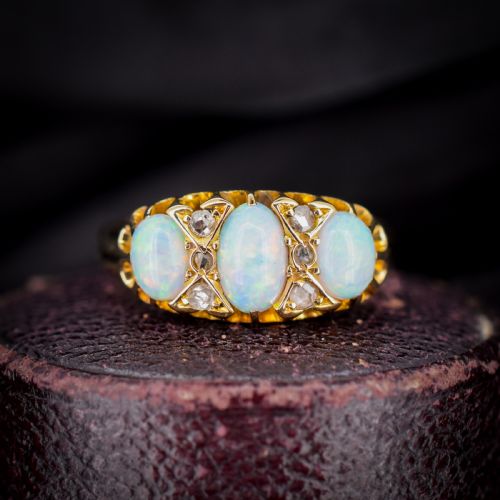
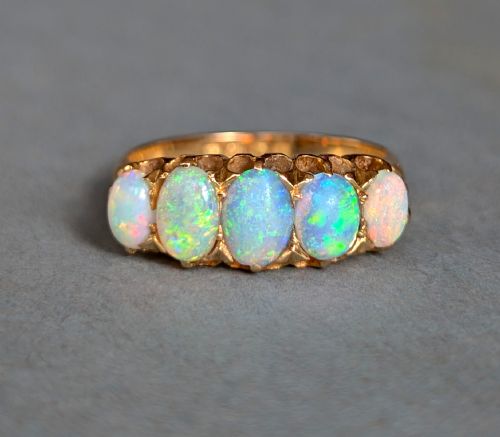
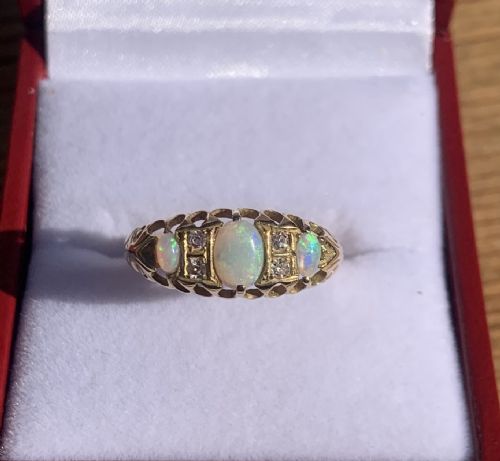


Opal Diamond Carved Ring
An opal diamond carved ring brings together fiery play-of-colour and brilliant sparkle in enduring precious metal settings.
Opal Diamond Carved Ring
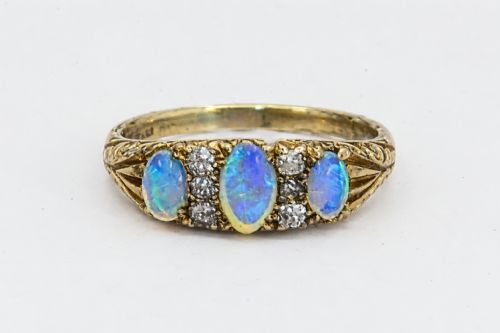
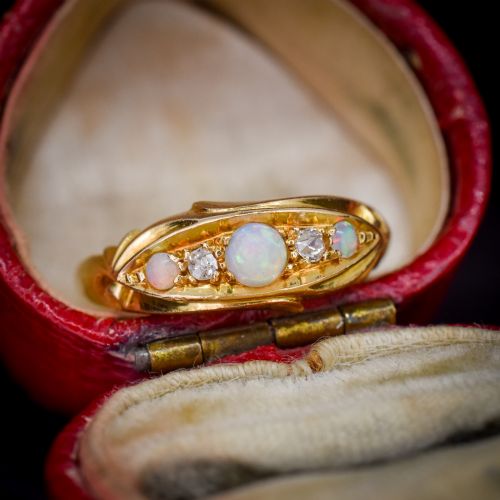
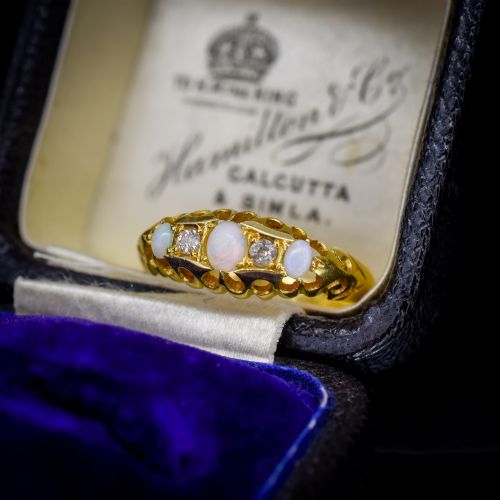
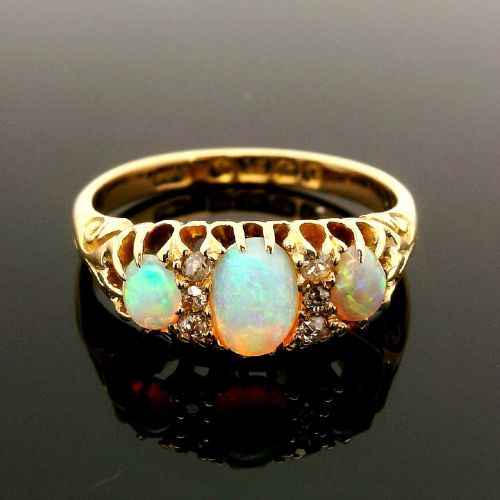
An opal diamond carved ring combines iridescent opals with sparkling diamonds set into precious gold bands. These pieces span the Victorian, Edwardian, and vintage eras, showcasing the distinct aesthetic preferences of each period.
The boat ring and the trilogy ring emerge as the predominant forms on this page, often utilising eighteen-carat yellow gold or nine-carat yellow gold. Hallmarks from assay offices such as Chester and Birmingham frequently authenticate the historic origins of these jewels.
Makers of the late nineteenth and early twentieth centuries favoured these configurations to display the shifting hues of natural opals alongside contrasting diamond accents. Buyers encounter both traditional multi-stone arrangements and delicate dress rings designed for daily wear.
How they were made
Goldsmiths constructed these rings using eighteen-carat gold or nine-carat yellow gold, shaping the metal to house central opals flanked by or interspersed with diamonds. The precious metal is worked into traditional boat profiles and low-profile trilogy settings that protect the softer gemstone.
Setting techniques rely on careful claw or bezel work to secure each natural opal and diamond firmly within the gold mount. Hallmarks stamped directly into the shank record the assay office and date of manufacture for many of the pieces.
Chester assay offices stamped delicate boat mounts over a century ago for Victorians who simply could not resist a flash of neon green.
What varies in quality
The brilliance of the play-of-colour across the natural opal surface separates superior stones from simpler examples, alongside the clarity and cut of the accompanying diamonds. Livelier optical play and well-matched stone proportions lift a piece above standard production.
The crispness of the gold work and the legibility of the full hallmarks indicate the level of initial craftsmanship and subsequent preservation. Heavier gauge eighteen-carat gold shanks demonstrate greater durability than lighter mounts.
The Opal Diamond Carved Ring Glossary
- Boat ring
- A ring featuring a curved, boat-shaped setting that tapers towards the shoulders. This style accommodates multiple stones in a graceful horizontal arrangement.
- Trilogy ring
- A ring set with three stones of graduated or equal size, traditionally symbolising the past, present, and future. Diamonds and opals frequently alternate in these configurations.
- Play-of-colour
- The optical phenomenon where spectral colours shift and flash across the surface of an opal as the viewing angle changes. This movement defines the visual appeal of the gemstone.
- Hallmark
- A series of official marks stamped into precious metal to indicate the purity, assay office, and year of manufacture. These symbols provide verified historical context for antique jewellery.
- Yellow gold
- Gold alloyed with copper and silver to produce a warm yellow tone. It serves as the primary metal for Victorian and Edwardian gemstone rings.
Opal Diamond Carved Ring: Frequently Asked Questions
How do I care for my opal ring?
Opals contain water within their structure and score lower on the hardness scale than diamonds, requiring gentle handling during daily wear.
Avoid exposing antique rings to harsh chemicals, ultrasonic cleaners, or sudden temperature changes to preserve the integrity of the natural stones.
Are these opals natural?
The stones found in these historic listings are natural opals formed through geological processes over millennia. They display characteristic play-of-colour unique to untreated specimens.
Craftsmen paired these natural gems with diamonds in eighteen-carat and nine-carat gold settings during the Victorian and Edwardian periods.
Can I resize an antique gold ring?
Most gold rings from the Victorian and Edwardian eras can be resized by a skilled jeweller who understands historic metalwork.
However, care must be taken near the shoulders and hallmarks to ensure the structural integrity and historical marks remain undisturbed.