



Olive Leather Chair
An olive leather chair brings deep tone and strong character to a room, offering enduring comfort through generations of use.
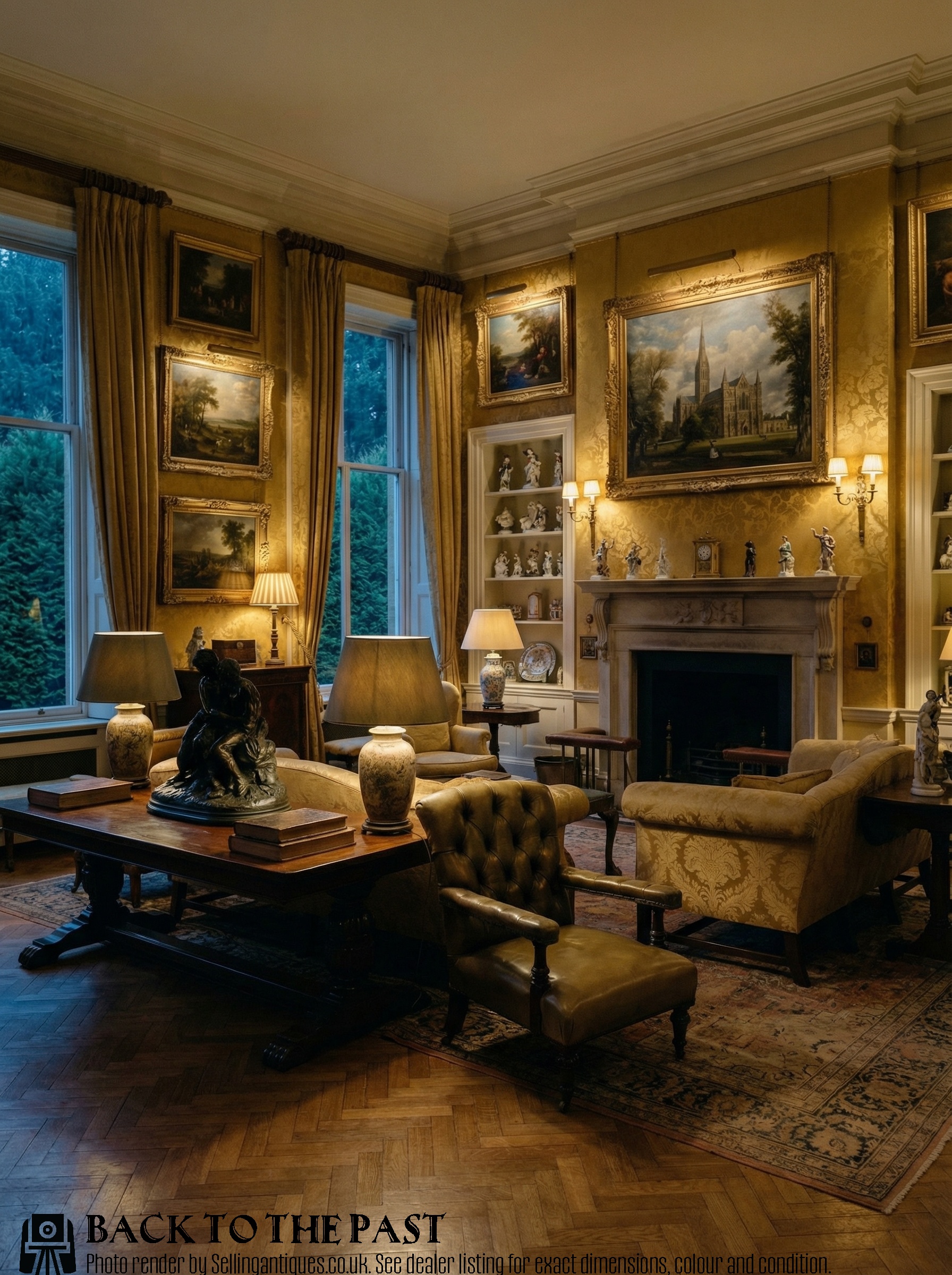
Olive Leather Chair
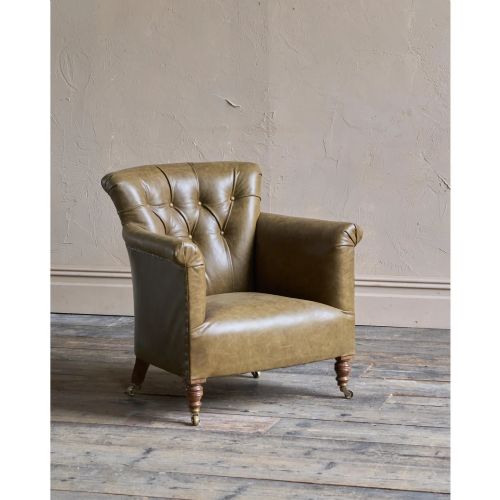
When you search for an olive leather chair, you encounter seating designed for studies, libraries, and formal rooms where rich upholstery matters. These pieces take the form of armchairs, desk chairs, and library chairs, usually built with substantial timber frames.
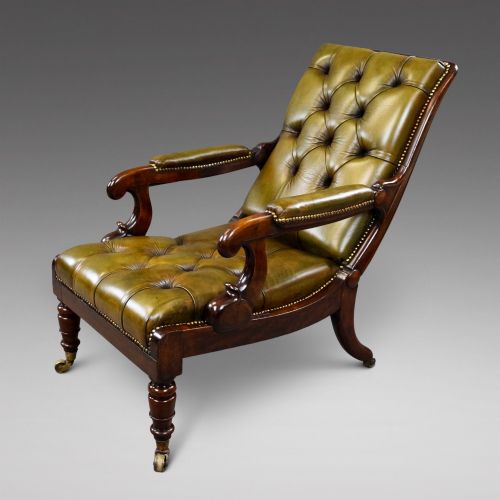
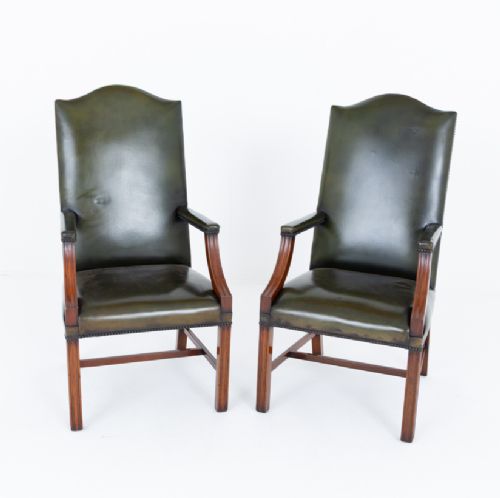
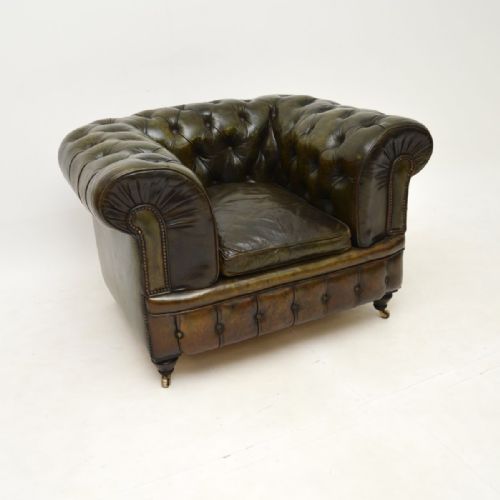
The versions you meet most frequently on this page date from the nineteenth century into the early twentieth century. Styles range from Victorian Chesterfields and William IV library chairs to Georgian Revival Gainsborough chairs and Edwardian wingbacks.
Muted green and olive tones dominate the historical archive and current listings, often paired with buttoning, brass nailhead trim, and dark wood supports. They function equally well as reading seats or executive desk chairs.
Materials and construction
Makers built these frames using dense timbers such as mahogany and hardwood to ensure structural integrity under heavy daily use. Exposed wooden legs and arm supports frequently feature carved details or turned shapes characteristic of their period.
Upholstery relied on durable leather stretched over internal padding, secured with brass tacks and sometimes finished with deep buttoning. Hessian often served as a robust foundation material beneath the main seat construction.
Current listings feature nineteenth-century pieces alongside 1920s examples, utilising leather, mahogany, brass, and hessian across armchair and desk chair formats.
Distinguishing quality
Quality rests in the depth of the timber frame and the substance of the leather hide selected for the seat and back. Heavier woods and thicker, supple leathers separate finer library and desk chairs from more utilitarian workshop output.
Hand-finished details such as evenly spaced brass nailing, precise button tufting, and well-proportioned carved mahogany arms indicate superior craftsmanship. The integrity of the underlying support webbing and springs dictates how well the chair retains its shape and comfort.
Howard and Sons
The Olive Leather Chair Glossary
- Chesterfield
- A large upholstered armchair or sofa traditionally featuring deep buttoning and rolled arms of equal height. This form provides a formal appearance and sturdy support.
- Gainsborough chair
- A type of open-arm desk chair with a wide seat and high back, originating in the mid-eighteenth century and often revived later. It suits placement behind a partners desk.
- Hessian
- A coarse woven fabric made from jute fibres, traditionally used underneath upholstered seats as a foundation layer. It supports the internal stuffing and spring units.
- Wingback
- An armchair with high sides attached to the back, designed to shield the occupant from drafts. Historical versions frequently utilise leather upholstery in deep green shades.
Olive Leather Chair: Frequently Asked Questions
How do I style an olive leather chair?
Place the chair beside a wooden bookcase or fronting a partner's desk to anchor a study. Its muted green tone pairs naturally with darker walls and traditional wool rugs.
Allow enough surrounding space for the arms and back to remain visible as distinct focal points in the room.
What periods do these chairs represent?
The selection spans the nineteenth and early twentieth centuries, encompassing Regency, William IV, and Victorian designs. Later Edwardian and interwar club chairs also appear in the archive.
Each era brings distinct proportions and turning styles to the wooden frames and legs.
Are these chairs suitable for daily use?
Built with hardwood frames and durable leather hides, these pieces were originally constructed for heavy daily service in libraries and offices. Their robust internal framing supports regular seating.
Routine conditioning of the leather keeps the material supple over years of domestic or workspace enjoyment.
How do I identify a library chair?
Library chairs generally feature low, comfortable armrests and wide seats intended for long hours of reading. They often incorporate supportive buttoned leather backs and sturdy mahogany or hardwood frames.
Their substantial weight distinguishes them from lighter decorative parlour seating.