


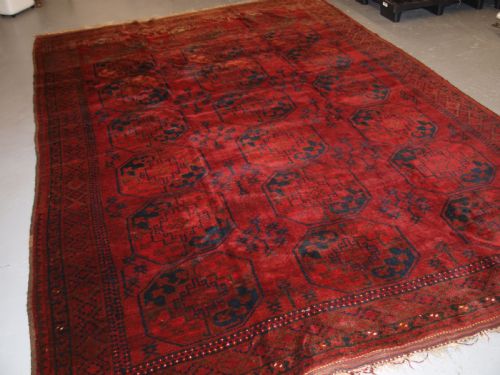
Old Village Rug
An old village rug brings genuine tribal character into a room through honest wool and traditional motifs.
Old Village Rug
An old village rug represents domestic weaving traditions from regions across Turkey, Persia, and Afghanistan, dating from the early decades of the twentieth century. These floor coverings are primarily encountered in formats ranging from smaller area rugs up to room-sized carpets.
Buyers seeking an old village rug will find formats created for domestic utility rather than court workshops. The aesthetic relies upon tribal designs, local colour palettes, and traditional methods of construction that have been passed down through generations.
How they were made
The construction of these textiles relies upon hand-spun wool and cotton, providing a sturdy foundation and a soft pile. Natural dyes impart the characteristic depth of colour found across the Turkish and Afghan specimens.
Weavers utilised traditional upright looms within domestic or village settings, tying symmetrical or asymmetrical knots by hand. The resulting structures incorporate durable wool foundations alongside supplementary cotton elements in specific regional examples.
Old Village Rug Retail Price Guide 2026
Typical asking prices for old village rug among the pieces listed under this phrase on Sellingantiques today, from the lower quarter to the upper quarter. They describe what is for sale here now, not the wider market.
Some Afghan village carpets exhibit unexpected touches of bright red wool that practically glow under evening lamplight.
What varies in quality
The superiority of a textile rests upon the quality of the wool and the depth achieved by natural dyes. Softer, glossier piles and tightly packed knots distinguish finer examples from coarser counterparts.
Integrity of design and precision in executing traditional tribal motifs separate standard pieces from superior weaving. The richness of the palette and the preservation of the original format dictate the upper tier of the range.
The Old Village Rug Glossary
- Pile
- The upright loops or cut ends of yarn that form the usable surface of a rug. This layer determines the softness and texture underfoot.
- Natural Dyes
- Colourants derived from plants, insects, and minerals rather than synthetic compounds. These materials produce subtle tonal variations across the wool.
- Warp
- The vertical threads stretched tightly on the loom before weaving begins. The fringe of a rug typically consists of these extended end threads.
- Weft
- The horizontal threads passed through the warp to lock the knots in place. Together with the warp, this forms the foundational grid of the textile.
Old Village Rug: Frequently Asked Questions
How do I clean an old village rug?
Gentle surface brushing and professional specialist cleaning are recommended to protect the natural wool fibres. Avoid harsh chemical detergents or immersion in water.
Regular light vacuuming without a rotating power brush helps prevent dust accumulation in the pile. Prompt attention to spills by blotting prevents moisture penetration into the foundation.
Where were these rugs made?
These textiles originate from weaving communities and nomadic groups across Turkey, Persia, and Afghanistan. Specific regions include Yahyali, Yagcebedir, Ardabil, and Hamadan.
Production occurred in domestic settings where families utilised local materials and traditional designs. Each area maintained distinct geometric or floral motifs unique to its cultural heritage.
How can I date an old village rug?
Dating relies upon stylistic analysis, structural examination, and the types of dyes and wool present in the weave. Pieces from the early twentieth century often display specific regional palettes and tribal motifs.
Comparing knot density and design execution against known historical examples helps establish the likely period of manufacture. Natural dye fading patterns also provide indicators of age.
Can I place these rugs in high traffic areas?
The sturdy hand-spun wool construction allows these textiles to withstand normal domestic use in living spaces. Placing a quality underlay beneath the rug reduces friction and movement.
Lighter traffic zones help preserve the pile and natural dyes over extended periods. Regular rotation ensures even wear across the surface of the carpet.