





Old Silver Serving Spoons
Old silver serving spoons are substantial dining table implements from the eighteenth and twentieth centuries, sought after for their weight and craftsmanship.
Old Silver Serving Spoons
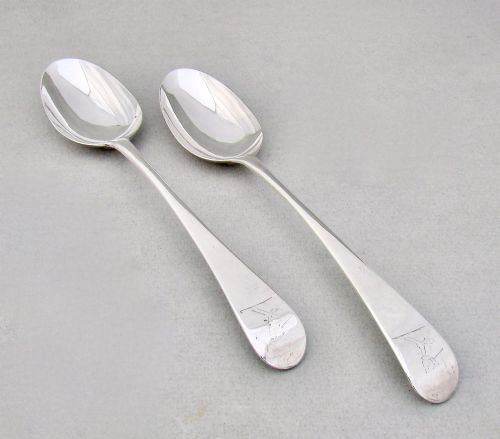
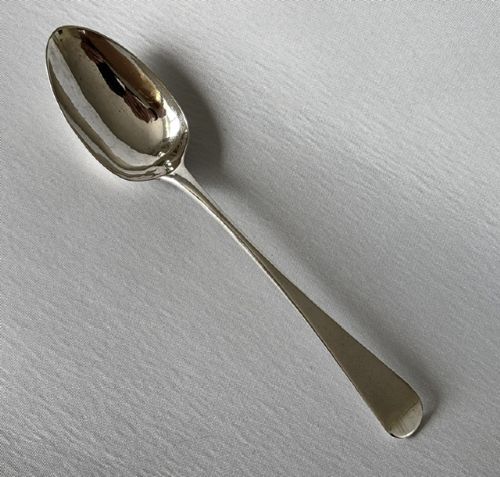
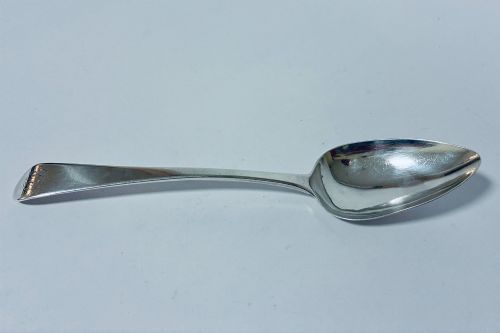
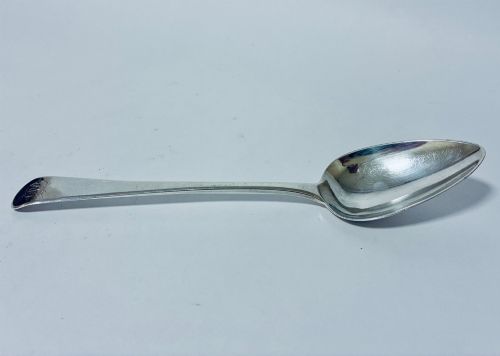
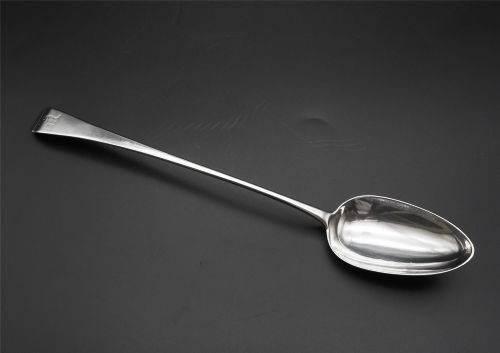
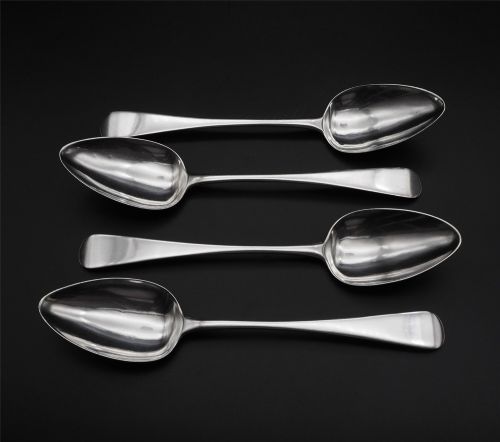
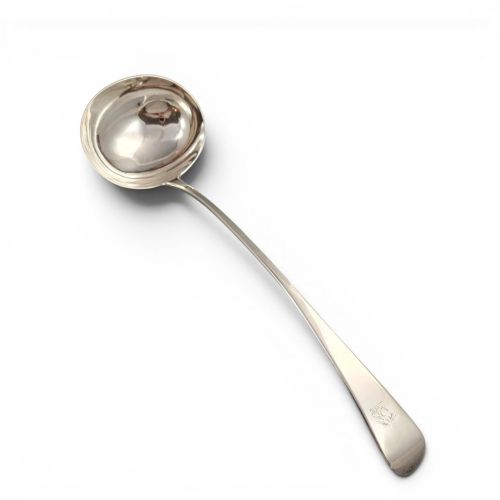
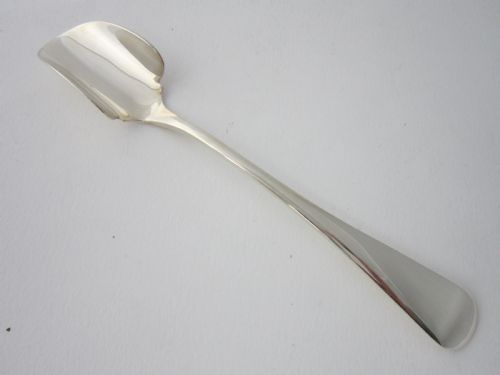
Old silver serving spoons encompass large cutlery pieces designed for the dining table, including basting spoons, gravy straining spoons, soup ladles, cheese and Stilton scoops, and standard serving spoons. When searching for old silver serving spoons, a buyer will primarily encounter Georgian examples dating from the eighteenth century, alongside occasional twentieth-century George V pieces.
These items served practical functions in family dining and entertaining, ranging from spooning sauces and basting meats to portioning soup and serving cheese. Surviving pieces demonstrate the domestic habits and dining customs of the eighteenth and early twentieth centuries.
Materials and Construction
Old silver serving spoons are constructed from sterling silver or standard silver, hammered and shaped by silversmiths working in provincial and capital workshops. The metal provides the necessary durability and weight required for heavy table service.
Makers applied hallmarks, incuse duty marks, and provincial town marks directly onto the silver during the manufacturing process to indicate origin, standard, and date of production. Handles and bowls were formed to traditional patterns such as Old English, with specialised pieces like straining spoons featuring pierced compartments.
Old Silver Serving Spoons Retail Price Guide 2026
Typical asking prices for old silver serving spoons among the pieces listed under this phrase on Sellingantiques today, from the lower quarter to the upper quarter. They describe what is for sale here now, not the wider market.
Listings feature sterling silver serving spoons spanning the eighteenth century, Georgian period, and George V era.
Quality and Distinction
Quality in old silver serving spoons rests upon the clarity of the maker marks and town hallmarks stamped into the metal, which establish provenance and date. Crispness in the execution of patterns like Old English and the preservation of original bowl shape separate standard examples from finer items.
The presence of specialised forms, such as straining spoons, gravy ladles, and cheese scoops, introduces regional and maker variations that influence desirability. Pieces originating from provincial or Irish silversmiths display distinctive regional characteristics that appeal to collectors of specific localities.
John Lambe·Peter and Jonathan Bateman
The Old Silver Serving Spoons Glossary
- Sterling silver
- A silver alloy containing 92.5 percent pure silver and 7.5 percent other metals, usually copper, used traditionally for British cutlery and flatware.
- Basting spoon
- A large serving spoon utilised in the eighteenth century for pouring meat juices over roasting joints.
- Straining spoon
- A specialised spoon featuring a pierced partition or insert designed to separate solid food from liquids or sauces during serving.
- Old English pattern
- A traditional flatware and cutlery design characterised by a rounded handle end turning downward, popular throughout the Georgian period.
- Incuse duty mark
- A sovereign's head profile stamped into silver in relief below a sunken background, used briefly on British silver from 1784.
Old Silver Serving Spoons: Frequently Asked Questions
What is a basting spoon used for?
A basting spoon is an elongated serving implement created to scoop and pour pan juices over meats during roasting.
In eighteenth-century dining, these large spoons were also brought to the table for serving vegetables, sauces, and stews.
How do I identify Georgian silver spoons?
Georgian silver spoons are identified through hallmarks stamped directly onto the metal, indicating the assay office, maker, and year of production.
Stylistic indicators include the Old English pattern and the heavier proportions typical of eighteenth-century tableware.
How should I care for old silver serving spoons?
Old silver serving spoons benefit from gentle hand washing with warm soapy water and thorough drying with a soft cloth to protect the surface.
Regular use prevents stubborn tarnish build-up, while chemical dips should be avoided to preserve the original hallmarks and patina.