



Old Diamond Pendant
An old diamond pendant brings together hand-cut stones and precious metals from the Victorian, Edwardian, and Art Deco periods.
Old Diamond Pendant
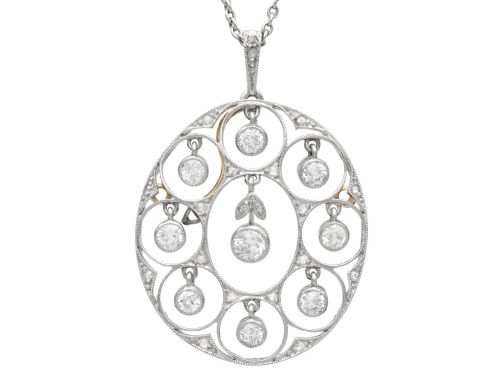
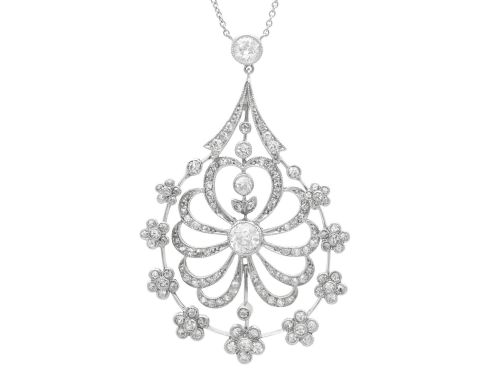
An old diamond pendant is a piece of antique or vintage jewellery designed to hang from a neck chain, often incorporating historical motifs such as bows, stars, hearts, and floral drops. These ornaments emerge from periods including the Victorian era, the Edwardian epoch, the Art Deco years, and the mid-century period.
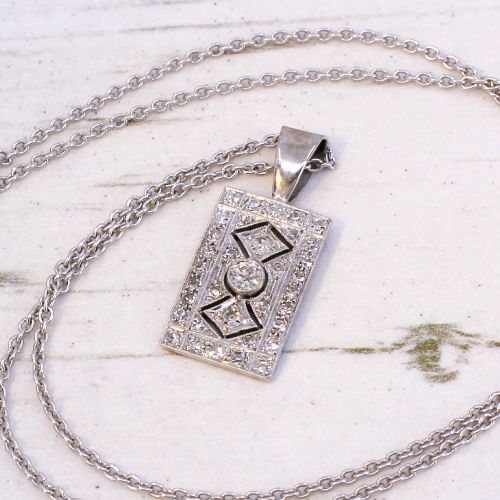
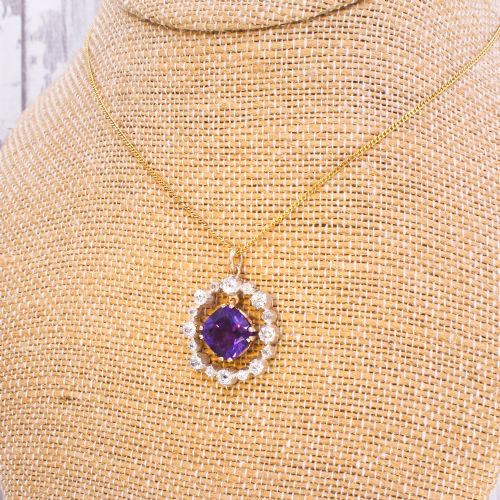
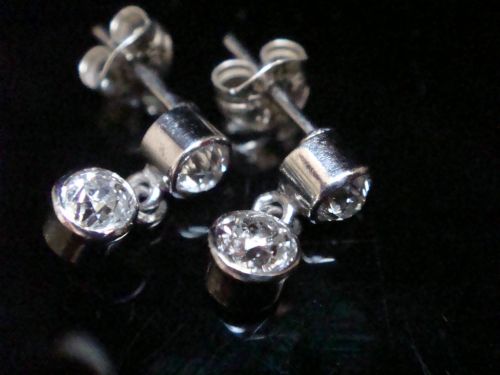
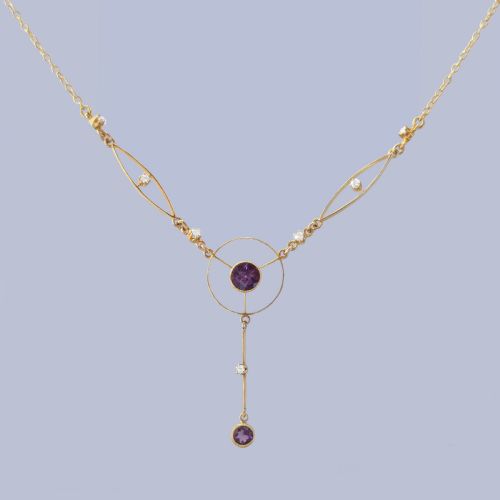
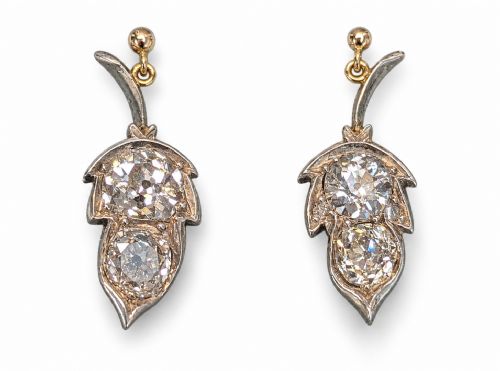
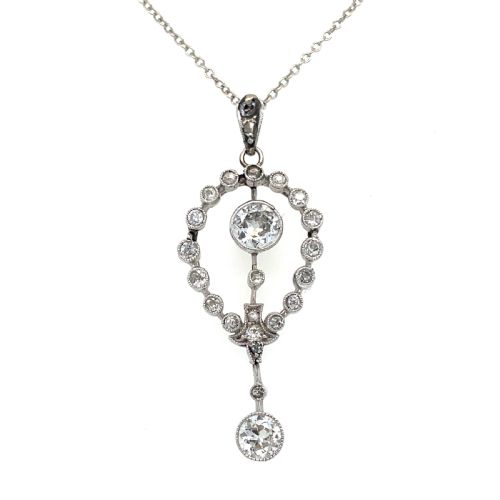
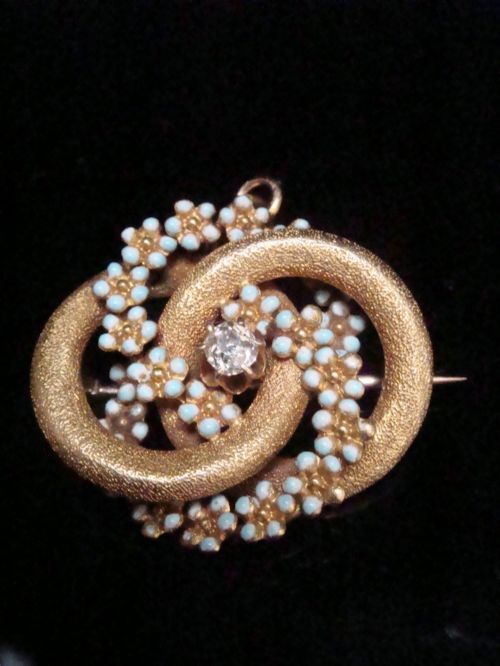
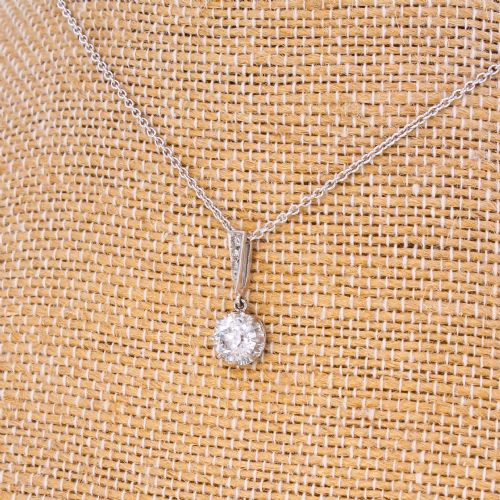
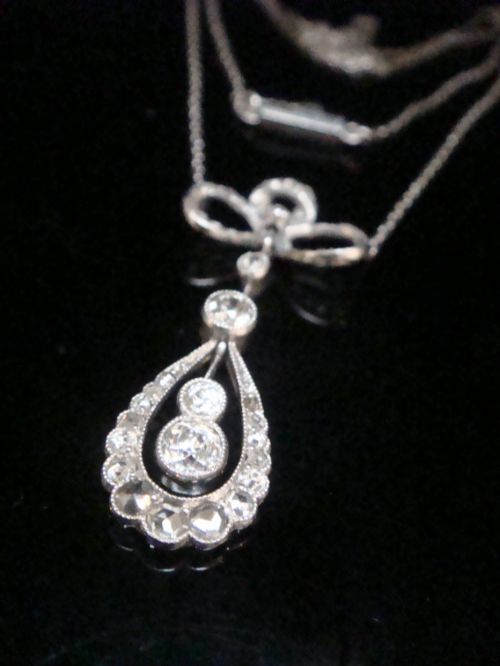
The pieces appearing on this page take various forms, including single stone pendants, lavalier necklaces, convertible brooch-pendants, and drop earrings set with diamonds. Buyers encounter mountings shaped from platinum, silver, and gold in various carat weights, sometimes accompanied by sapphires, amethysts, pearls, or natural conch pearls.
Victorian and Edwardian examples frequently display intricate pierced work, millegrain edges, or yellow gold backs with silver-topped settings designed to maximise the brilliance of the stones. Later Art Deco and mid-century items lean towards geometric platinum and white gold arrangements that reflect changing tastes in jewellery design.
Materials and construction methods
Goldsmiths and jewellers utilised combinations of silver and gold before platinum became widely adopted for fine settings during the Edwardian period. Silver was frequently soldered to gold fronts in nineteenth-century pieces to provide a bright, white backdrop that complemented the greyish lustre of hand-cut diamonds.
Stones in these pieces display characteristic old-cut facets, such as old European cuts and rose cuts, which were shaped by hand rather than by automated machinery. This method of cutting results in smaller tables, higher crowns, and open culets that catch candlelight and gaslight in a distinct manner.
Old Diamond Pendant Retail Price Guide 2026
Typical asking prices for old diamond pendant among the pieces listed under this phrase on Sellingantiques today, from the lower quarter to the upper quarter. They describe what is for sale here now, not the wider market.
The periods represented across these items stretch from Victorian and Edwardian decades through Art Deco geometry to mid-century design.
Assessing quality in antique diamond jewellery
The overall standard of an old diamond pendant depends on the integrity of the original setting and the matching of the central and surrounding stones. Finer examples retain their original clasps, bale fittings, and securely mounted gems without evidence of modern replacement claws or heavy laser repairs.
Proportion and balance also distinguish superior pieces, particularly in convertible brooch-pendants and lavalier necklaces where every articulated drop must move fluidly. The precision of hand-pierced openwork and the subtlety of millegrain decoration indicate the level of craftsmanship invested by the original maker.
The Old Diamond Pendant Glossary
- Old cut
- A diamond facet arrangement hand-polished before the standardisation of modern brilliant cuts, typically featuring a small table and a prominent culet.
- Millegrain
- A decorative technique involving a row of tiny raised metal beads along the edge of a setting, characteristic of Edwardian jewellery.
- Lavalier
- A pendant necklace featuring a central stone or drop suspended from a shorter secondary drop below the main chain line.
- Rose cut
- A vintage diamond cut with a flat base and a domed crown faceted into triangles, resembling an unopened rosebud.
- Culet
- The small facet at the very bottom of a gemstone, visible as a tiny flat circle through the table in older cut diamonds.
Old Diamond Pendant: Frequently Asked Questions
What periods do these pendants come from?
The pieces listed span the late nineteenth century through to the mid-twentieth century, covering Victorian, Edwardian, Art Nouveau, Art Deco, and mid-century styles.
Each era brings distinct mounting techniques and design motifs, from floral gold work to geometric platinum settings.
Are these pendants supplied with chains?
Some items are mounted on their original chains or feature integrated bales designed for specific necklace lengths, while others are sold as pendants alone.
Convertible pieces often double as brooches and retain their original pin mechanisms on the reverse.
How do I care for an antique diamond pendant?
These delicate settings require gentle cleaning with warm soapy water and a soft brush, avoiding harsh chemical dips that can damage older metals or pearls.
Regular inspection by a jeweller ensures that claws holding old-cut diamonds remain secure.
What is a silver-topped gold setting?
This traditional technique places a thin sheet of silver over a gold backing, allowing jewellers to set diamonds against a bright white metal while retaining the structural strength of gold.
It is commonly observed in nineteenth-century jewellery before platinum became the preferred white metal.