




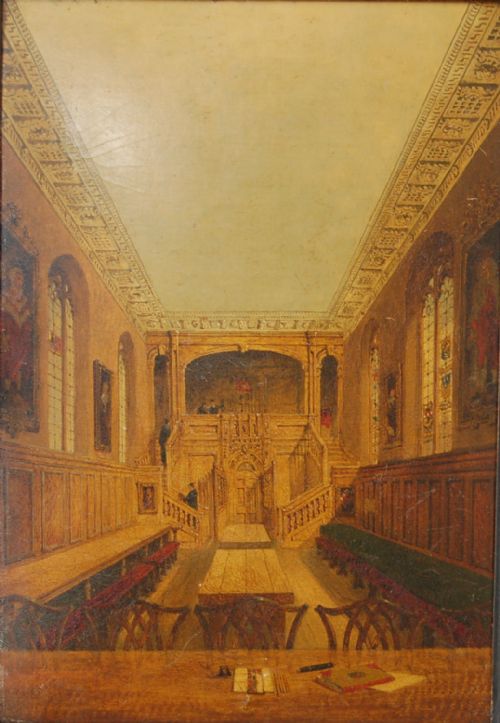
Oil Painting of Room
An oil painting of room captures domestic interiors, reception halls, and quiet corners rendered in pigment upon canvas, wood, or board.
Oil Painting of Room
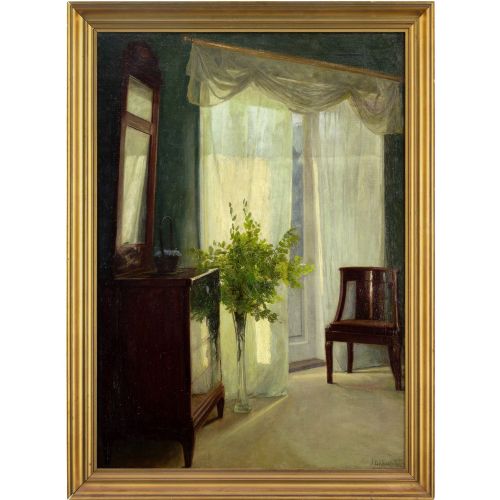
When you search for an oil painting of room, you encounter depictions of stately homes, cottage dining spaces, formal halls, and garden doors viewed through sunlight. These works span periods from the eighteenth century through the Edwardian era into the mid-twentieth century.
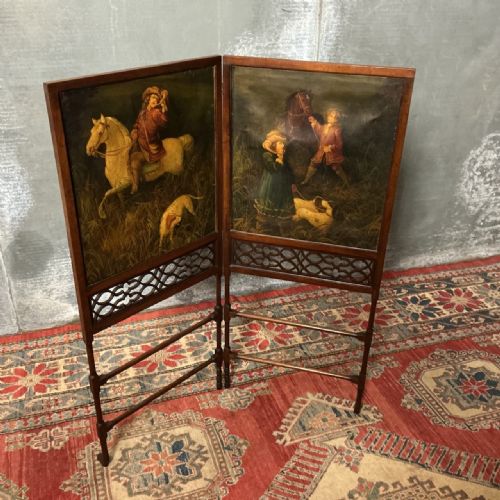
The selections on this page mix canvas paintings with painted screens, framed wall art, and wooden panels. Interiors range from quiet domestic settings to specific spaces like ship liner smoker rooms and college halls.
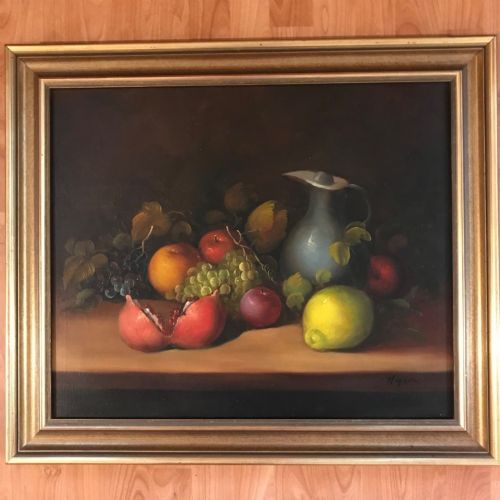
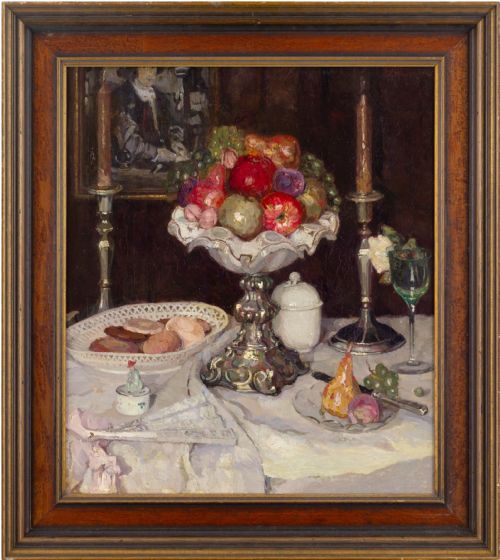
British naive art, classical realism, and post-impressionism appear alongside pieces by named artists such as John Lübschitz, Joseph Murray Ince, and Elinor Margaret Charteris. Certain works focus closely on still life fruit arranged within these interior spaces.
How They Were Made
Artists applied oil paint using canvas, wood panels, and artists' boards as supports. Pigments built up layers of colour and texture to define light entering through doorways and windows.
Many works incorporate frames fashioned from wood, often enhanced with gold leaf, gilt, or gilded decorative elements. Multi-fold screens utilise painted wooden panels hinged together to form functional room dividers.
Materials recorded across the archive include oil paint, gold leaf, gilded wood, and canvas supports.
What Varies in Quality
The competence of perspective and the handling of light define the division between standard and superior pieces. Skilled works capture natural illumination falling across floorboards and furniture, whereas lesser examples rely on flat application.
The preservation of the original wooden frame or gilt housing alters the integrity of the piece. Works retaining their period presentation maintain stronger historical context than those remounted later.
John Lübschitz·Else Preußner·Gertrude Halsband·Charles Cameron Baillie·Francis Alleyne·Elinor Margaret Charteris·Joseph Murray Ince·Zsuzsanna Suger·John Exley·William Broome
The Oil Painting of Room Glossary
- Canvas
- A heavy woven fabric stretched across a wooden stretcher frame to serve as a support for oil paint. It provides a flexible yet durable surface that accepts layers of pigment.
- Gilt
- A thin layer of gold leaf or gold paint applied to wood or frame surfaces. It adds reflective highlights and decorative warmth to picture borders and fire screens.
- Still life
- An artwork depicting inanimate subject matter, frequently featuring fruit, jugs, and candlesticks. These arrangements often sit upon tables within domestic rooms.
- Naive art
- Work produced by artists without formal academic training, characterised by direct perspective and straightforward representation. Examples include nineteenth-century cottage interior scenes.
Oil Painting of Room: Frequently Asked Questions
What periods do these paintings cover?
The works span from the eighteenth century through Victorian, Edwardian, and mid-twentieth-century decades up to nineteen sixty.
Each period brings distinct interior styles, ranging from stately homes to cottage rooms and academic halls.
How were fire screens used?
Painted wooden screens served as decorative room dividers and functional barriers placed before fireplaces to block radiant heat when fires were unlit.
Many incorporate multiple folds and elaborate gilt frames housing oil paintings.
Are these works signed by artists?
Certain pieces bear signatures or attributions to recorded painters, while others originate from unnamed schools or domestic workshops.
Attributions connect specific works to notable makers from British and European traditions.
What surfaces support the oil paint?
Makers utilised stretched canvas, wooden panels, and artists' boards to hold the pigment.
Some paintings form part of functional wooden furniture panels rather than standard wall hangings.
How do I care for an oil painting?
Keep works away from direct sunlight and dramatic moisture fluctuations to protect both the canvas and the wooden support.
Dust frames and surfaces gently with a soft, dry cloth without applying liquid cleaners.