


Oil Painted Trumeau Mirror
An oil painted trumeau mirror brings together architectural woodwork and hand-painted canvas to anchor a room.
Oil Painted Trumeau Mirror
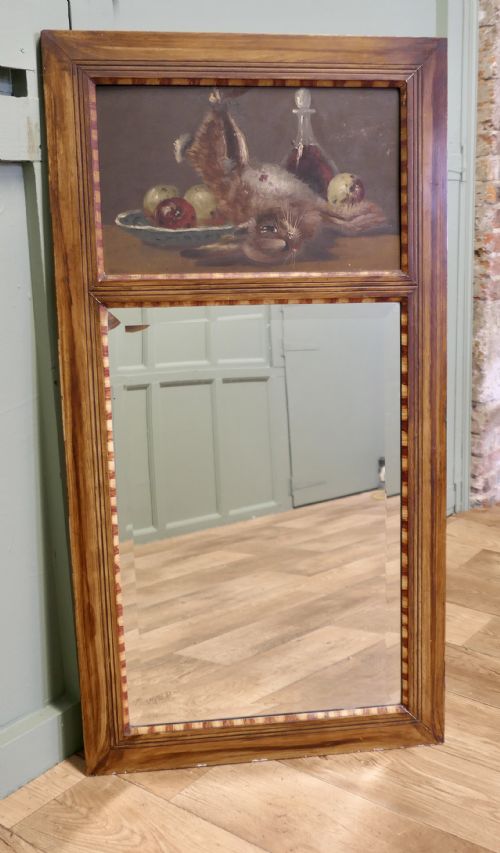
An oil painted trumeau mirror combines a vertical wall glass with an integrated oil painting set into the wooden frame above. These architectural wall fixtures emerge in forms such as pier mirrors, overmantle mirrors, and country house wall glasses.
The versions most commonly met on this page span the eighteenth, nineteenth, and early twentieth centuries. They frequently showcase French country, French chateau, and Queen Anne revival styles.
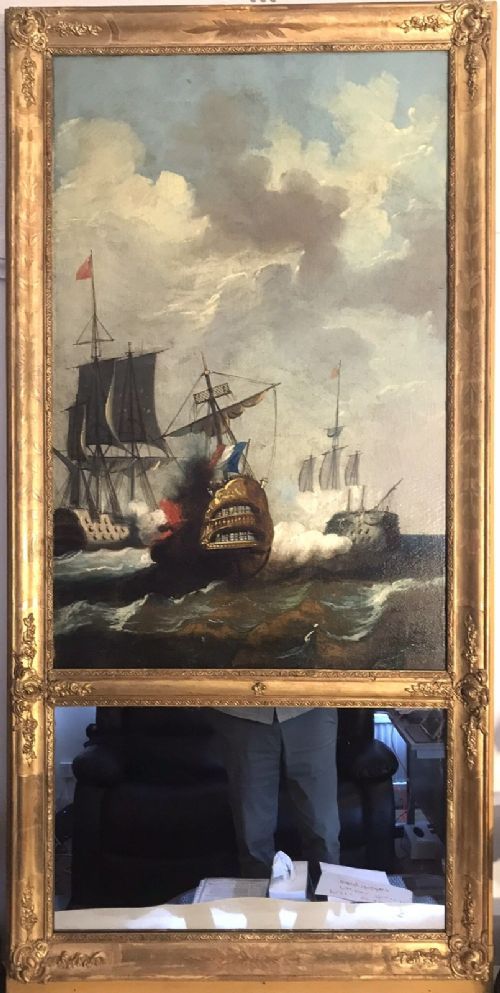
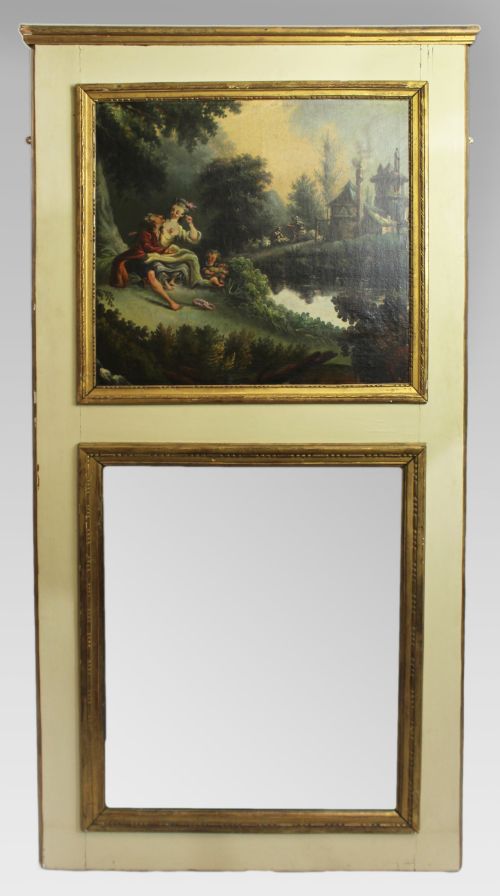
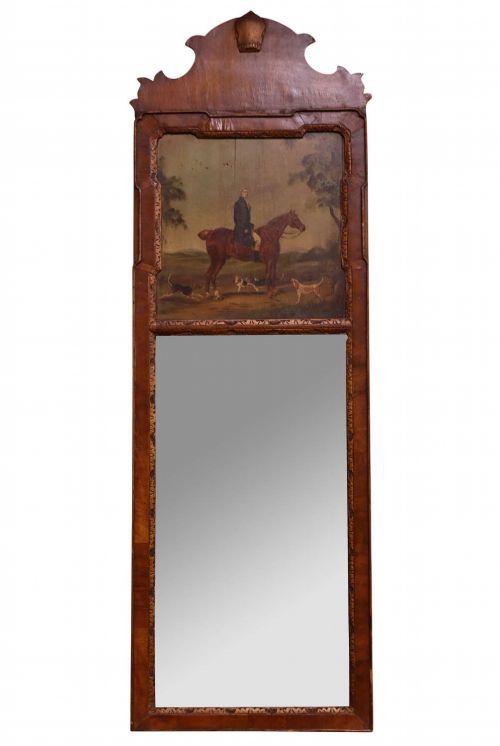
Makers and craftsmen construct these pieces using wood, walnut, and painted or giltwood frames. The integrated artwork depicts seascapes with galleons, pastoral scenes, and equestrian subjects.
How they were made
Makers constructed the primary framework from timber such as walnut, mahogany, and general wood, applying gesso and paint or parcel-gilt finishes. Carved wooden mouldings enclose both the lower mirror glass and the upper canvas section.
Artisans painted the upper panels using oil paint on canvas or directly on prepared wood surfaces. These panels depict maritime, rural, and equestrian subjects executed to fit the specific proportions of the architectural panel above the glass.
Several mirrors swap quiet pastoral scenes for dramatic naval battles featuring galleons tossed about on painted waves.
What varies in quality
The refinement of the carved wooden frame and the depth of the gilding set examples apart. Finer pieces display sophisticated mouldings and harmonious proportions between the mirror plate and the painted upper panel.
The artistic execution of the oil painting itself dictates the caliber of the piece. Superior examples feature detailed brushwork in subjects like galleons at sea or pastoral landscapes rather than simple decorative filler.
The Oil Painted Trumeau Mirror Glossary
- Trumeau mirror
- A wall mirror featuring an architectural wooden frame with an integrated painting or carved panel positioned above the glass. This form originates from eighteenth-century interior decoration.
- Pier mirror
- A tall vertical mirror designed to hang on the wall space between two windows. These pieces often incorporate lower console tables or extended frames.
- Giltwood
- Wood that has been coated with a thin layer of gold leaf or gilt preparation. This finish is typical on formal nineteenth-century and revival frames.
- Parcel-gilt
- A decorative treatment where only specific carved highlights or raised portions of the wooden frame receive gold leaf, while the rest retains a painted finish.
- Overmantle mirror
- A wide mirror designed specifically to be hung on the wall directly above a fireplace mantel. These pieces reflect light across the room from a central hearth position.
Oil Painted Trumeau Mirror: Frequently Asked Questions
What is a trumeau mirror?
A trumeau mirror is a wall-hanging architectural fixture that combines a glass plate with an integrated painting set into the upper wooden panel. The form originates from traditional interior decoration.
These pieces function as focal points in reception rooms and hallways, bridging the gap between fine art and functional mirrors.
Where were trumeau mirrors placed?
Trumeau mirrors were traditionally hung on large expanses of wall between windows or placed centrally above fireplaces as overmantle fixtures. Their vertical proportions suited high-ceilinged rooms.
In period interiors, they reflected natural light and visually expanded the dimensions of the chamber.
How do I date a trumeau mirror?
Dating relies on examining the construction of the wooden frame, the style of the paint finishes, and the characteristics of the glass plate. Eighteenth-century examples differ in joinery and carving style from nineteenth-century country house versions.
The subject matter and technique of the oil painting also offer clues to the period of manufacture.
Can I hang an oil painted trumeau mirror safely?
Hanging these large wooden frames requires secure fixings anchored directly into wall studs or masonry due to their substantial weight. Professional mirror hangers utilise heavy-duty brackets suited to the frame size.
Positioning them away from direct moisture sources preserves both the wooden structure and the oil painting canvas.