
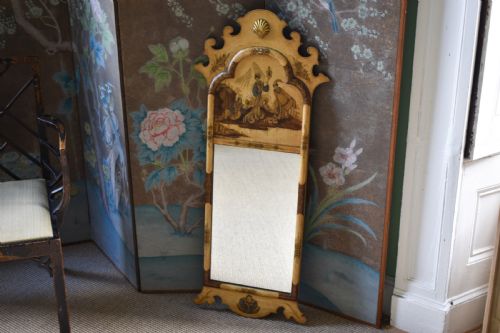


Gilt Decorated Wall Mirror
A gilt decorated wall mirror brings instant light and presence to a room, drawn from nineteenth-century and Edwardian traditions.
Gilt Decorated Wall Mirror
A gilt decorated wall mirror is a striking focal point designed to open up interiors and catch the natural light. When you search for this phrase, you encounter wall mirrors, overmantel mirrors, and trumeau mirrors spanning the nineteenth century and the Edwardian era.
The selection ranges from Victorian oval frames and Louis Philippe designs to elaborate Queen Anne style chinoiserie and Baroque Revival pieces. You are most likely to meet large overmantel formats and hanging mirrors featuring traditional painted and gilt surfaces.
Origins stretch across English, French, Italian, and Venetian workshops, showing diverse regional interpretations of classical decoration. Formats vary from simple ovals to grand architectural plates suited for placement above a fireplace.
How they were made
Carpenters constructed the underlying structures using timber and carved wood, providing a stable foundation for the reflective glass. Artisans applied layers of gesso to create smooth or textured surfaces ready for ornamentation.
Makers finished the pieces using gold leaf, gilt, and paint to achieve the characteristic metallic sheen and colour. Specific examples feature intricate details such as carved lions heads, ribbons, and vine and grape surmounts.
Object forms span standard wall mirrors, expansive overmantels, French trumeaus, and matching pairs finished in gilt and chinoiserie.
What varies in quality
The standard of carving and the crispness of the gesso application define the distinction between ordinary frames and exceptional works. Master craftsmen achieved sharper relief in motifs like foliage and animal heads, whereas simpler items relied on basic surface moulding.
The depth of the gilding and the preservation of the original paint layers dictate the visual richness of the object. Heavier timber construction and well-preserved glass plates also distinguish the more substantial pieces in the range.
The Gilt Decorated Wall Mirror Glossary
- Giltwood
- Wood that has been coated with thin sheets of gold leaf or metallic powder. This finish creates a luminous surface that catches ambient light.
- Gesso
- A plaster-like mixture applied to wood frames to create a smooth base for gilding and painting. It allows craftsmen to carve intricate relief details before the gold is laid.
- Trumeau
- A decorative wall mirror incorporating a painted panel or artwork above the glass plate. These French pieces were traditionally fitted into the panelling of reception rooms.
- Overmantel
- A large mirror specifically proportioned to hang above a fireplace mantelpiece. They often feature horizontal orientations to match the width of the hearth below.
- Chinoiserie
- European decorative style reflecting Chinese artistic traditions, often featuring hand-painted motifs on lacquered backgrounds. This style appeared on Edwardian and nineteenth-century frames.
- Japanned
- European work imitating Japanese lacquer finishes using layered varnishes and paints. Scarlet japanning creates a vibrant contrasting backdrop for gilt decoration.
Gilt Decorated Wall Mirror: Frequently Asked Questions
How do I hang a heavy overmantel mirror?
Heavy overmantel mirrors require secure wall fixings anchored directly into masonry or substantial timber studs to support the combined weight of wood, glass, and gesso.
Professional hanging hardware distributed across multiple points ensures the frame remains stable and flush against the wall surface.
What is a trumeau mirror?
A trumeau mirror combines a lower reflective glass plate with an upper painted panel within a single architectural frame. Originating in French interior design, they were built to fill specific wall spaces between windows or above mantelpieces.
The painted upper sections frequently display pastoral scenes or classical motifs executed in muted tones.
How do I clean gilt surfaces?
Gilt and gesso surfaces require gentle dusting with a soft, dry brush to remove particles without disturbing the delicate metallic leaf. Moisture and modern chemical cleaners should be avoided entirely to prevent stripping the historic finish.
Professional conservation advice is recommended if deeper cleaning becomes necessary over time.
Are these mirrors original antiques?
The pieces originate from nineteenth-century and Edwardian workshops, retaining their period construction materials such as wood, gesso, and original glass plates. Individual items show the genuine wear and patina accumulated over generations of domestic use.
Stylistic markers like Louis Philippe framing or Victorian oval proportions help place them in their historical context.