


Oil Canvas Religious Painting
When you search for oil canvas religious painting, you enter a tradition spanning centuries of devotional portraiture and narrative fine art.
Oil Canvas Religious Painting
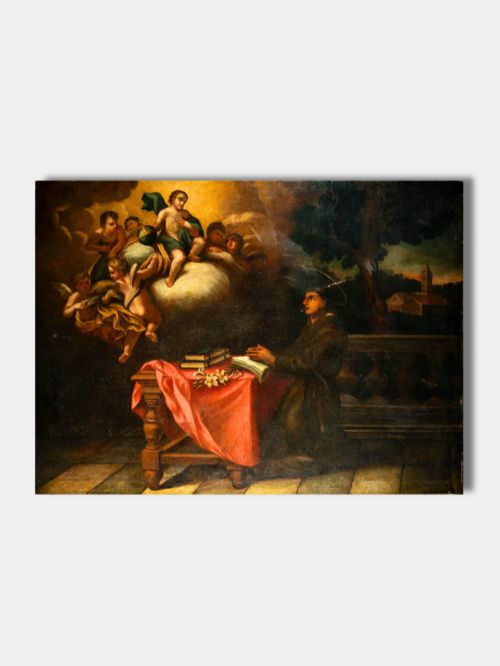
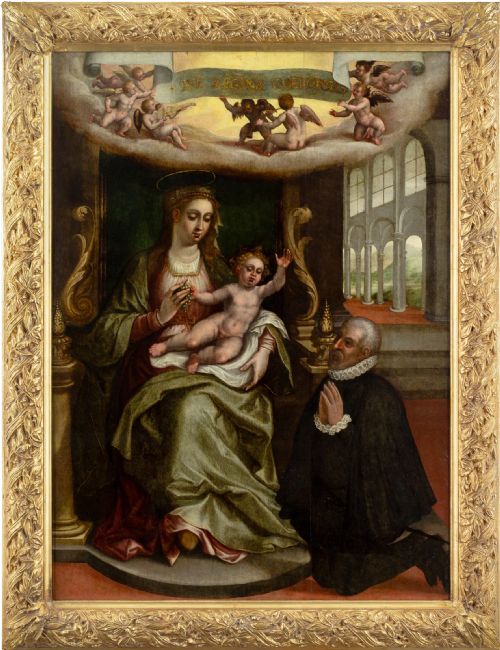
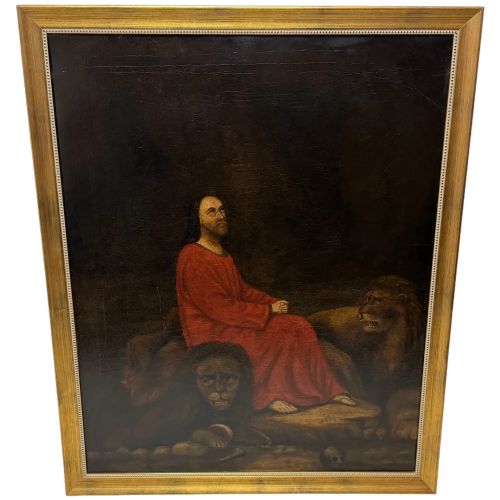
An oil canvas religious painting depicts sacred narratives, saints, and devotional figures, drawing upon Christian iconography developed across European and colonial schools. These works range from intimate panels for private prayer to monumental canvases commissioned for ecclesiastical spaces.
The pieces on this page are most frequently sourced from the seventeenth and eighteenth centuries, heavily weighted toward Italian, Spanish, and French schools. Collectors encounter both original compositions by regional masters and period copies after canonical artists such as Raphael and Correggio.
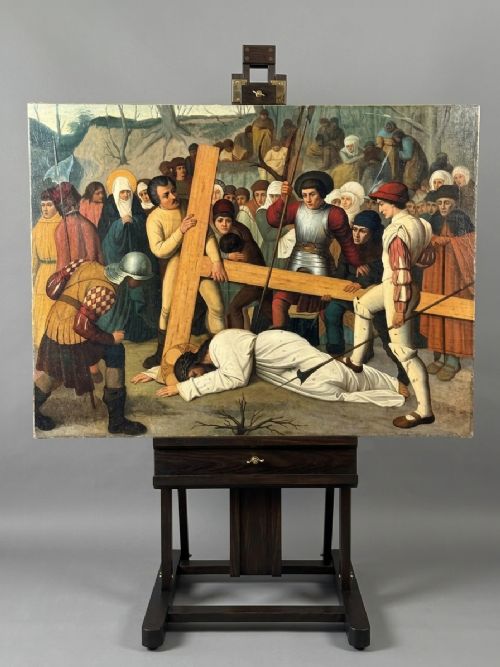
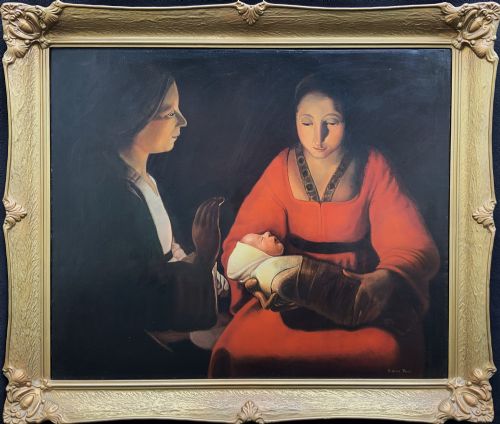
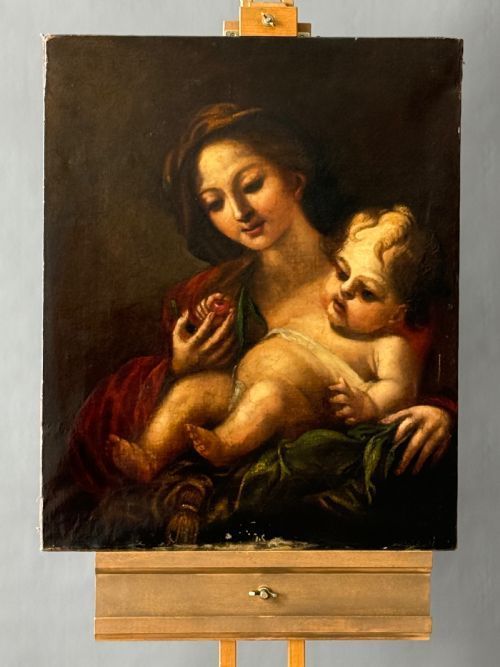
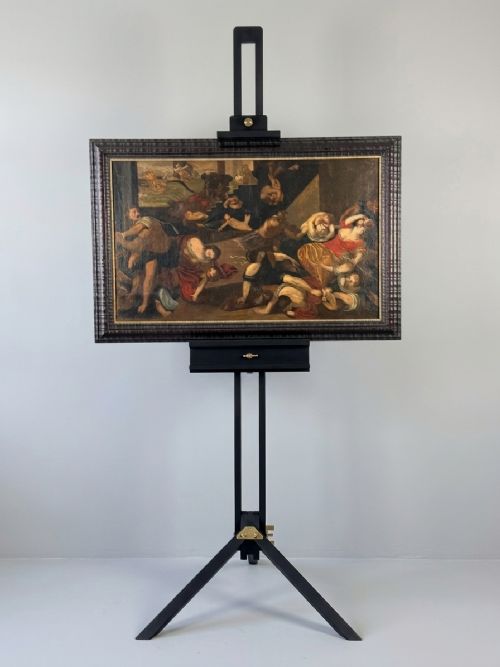
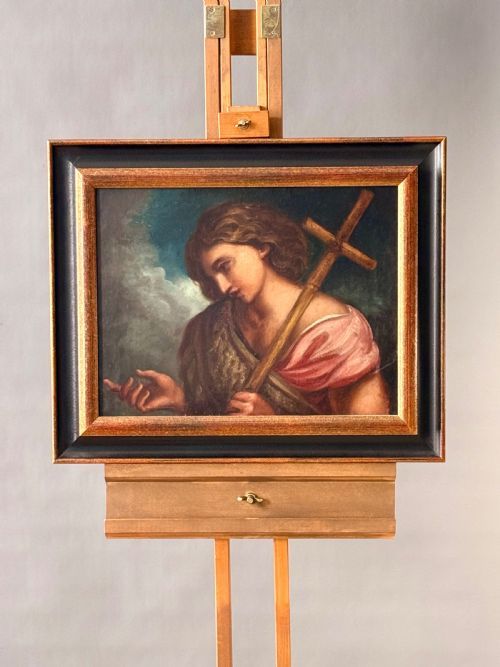
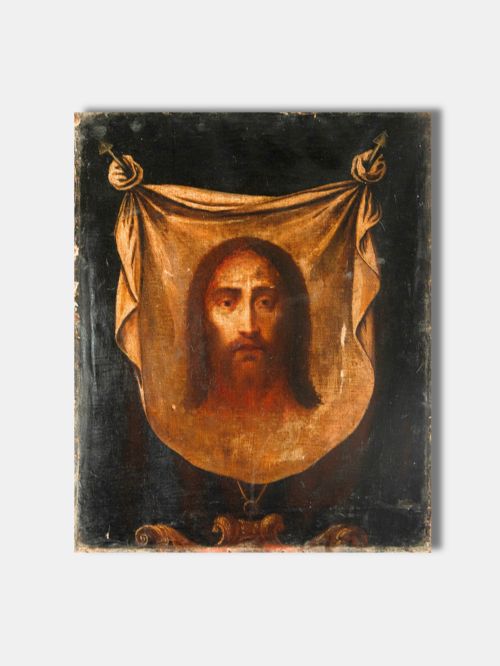
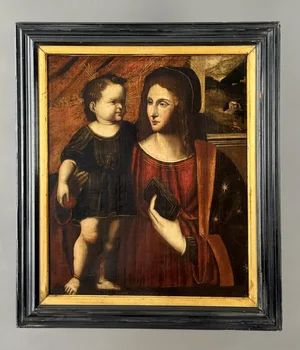
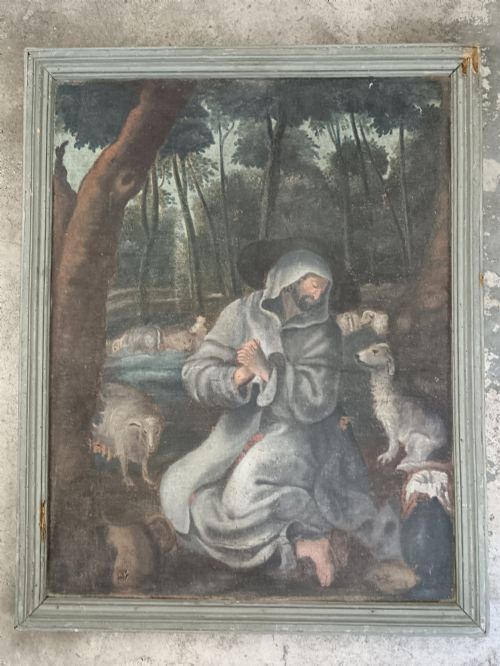
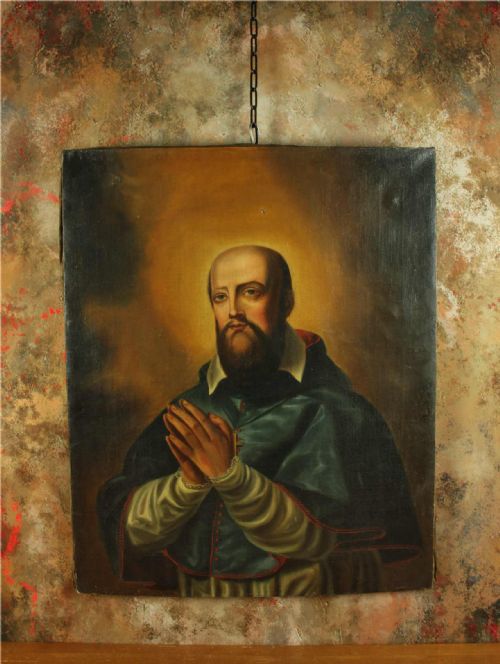
Subjects commonly include depictions of the Virgin and Child, the Holy Family, and narrative scenes like the Massacre of the Innocents or the Passion of Christ. Devotional portraits of individual saints, including Francis of Assisi and Mary Magdalene, also appear with regularity.
How they were made
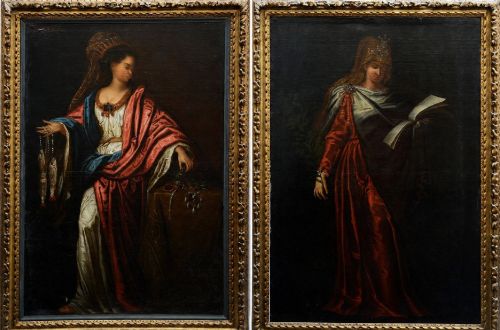
These works are executed in oil paint upon woven canvas supports, utilising traditional priming and layering techniques to build depth and luminosity. Artists applied pigment in glazes and opaque passes to achieve subtle shifts in tone, particularly within drapery and flesh painting.
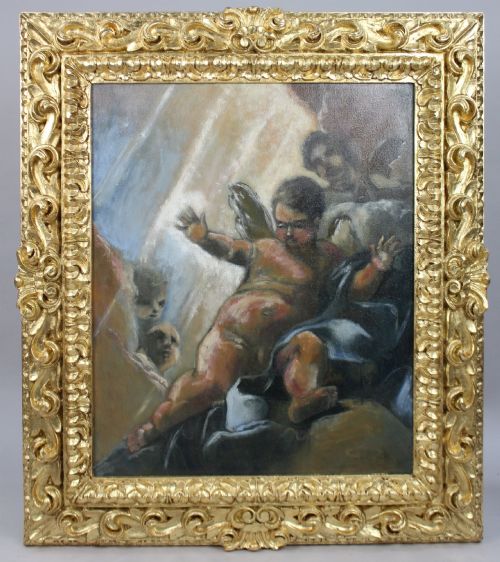
Many surviving canvases retain their original or period wooden frames, frequently embellished with carved giltwood detailing that reflects Renaissance and Baroque aesthetic conventions. The interaction between the painted surface and the gilded moulding forms an integral part of the physical object.
St. Francis of Assisi appears frequently, occasionally accompanied by hidden pentimenti where the artist changed their mind about a fold of cloth.
What varies in quality
The quality of an oil canvas religious painting rests upon the anatomical surety of the figures, the expressive handling of light and shadow, and the sensitivity of the brushwork. Works by central masters or accomplished circle painters display a command of composition that elevates the devotional narrative.
Condition and originality play a significant role in distinction, with untouched surfaces retaining the subtle underdrawing and pentimenti that reveal the artist's working process. Secondary studio copies vary according to the fidelity of the draughtsmanship and the preservation of the original pigment layers.
Jozef Jansessens·Georges de La Tour·Bernardino Luini·Miguel Barroso·Edgard Maxence·Benvenuto Tisi·Francesco Solimena·Raphael·Richard Baxter·Juan Ruiz Soriano·Gaspar de Figueroa·Antonio Allegri·Scipione Pulzone·Gian Lorenzo Bertolotto·Rosso Fiorentino
The Oil Canvas Religious Painting Glossary
- Oil on Canvas
- A painting medium where pigments are bound with drying oils and applied to a stretched woven fabric support. This combination allows for rich colour saturation and blended tonal transitions.
- Old Master
- A term applied to European painters of high skill working before the nineteenth century. These artists operated within established studio workshops and regional schools.
- Giltwood
- Wood carved and coated with gold leaf or gold paint, frequently utilised for decorative period frames. This material provides a reflective border that complements the darker tones of oil paintings.
- Pentimento
- An alteration in a painting evidenced by visible traces of previous brushstrokes beneath the final layer. This phenomenon reveals changes made by the artist during the creative process.
- Iconography
- The traditional subjects, symbols, and motifs associated with religious art. Understanding these visual elements allows viewers to identify saints, narratives, and allegorical meanings.
Oil Canvas Religious Painting: Frequently Asked Questions
What is an old master religious painting?
An old master religious painting is a fine art work created by a European artist before the nineteenth century, focusing on sacred themes and biblical narratives.
These pieces were produced within regional workshops, ranging from autonomous original compositions to studio copies intended for private devotion or institutional display.
How can I identify the period of a canvas?
Dating relies upon stylistic markers, including the treatment of drapery, the complexity of the composition, and the influence of specific Baroque or Renaissance schools.
Physical evidence such as the weave of the canvas, the composition of the stretcher frame, and the ageing of the oil paint further assist in establishing the era.
Where were these paintings originally displayed?
Many of these works hung in European churches, chapels, and monastic foundations as altarpieces or focal points for communal prayer and liturgical celebration.
Smaller devotional paintings were also commissioned for private domestic oratories and personal contemplation within wealthy households.
How do I care for an antique oil painting?
Antique oil paintings require stable environmental conditions with moderate humidity and temperature to prevent the canvas and wood support from warping or cracking.
Displaying pieces away from direct sunlight and consulting a professional conservator for cleaning ensures the preservation of the delicate pigment layers.