

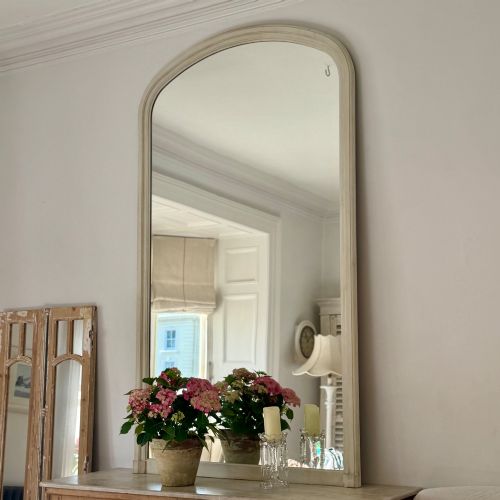


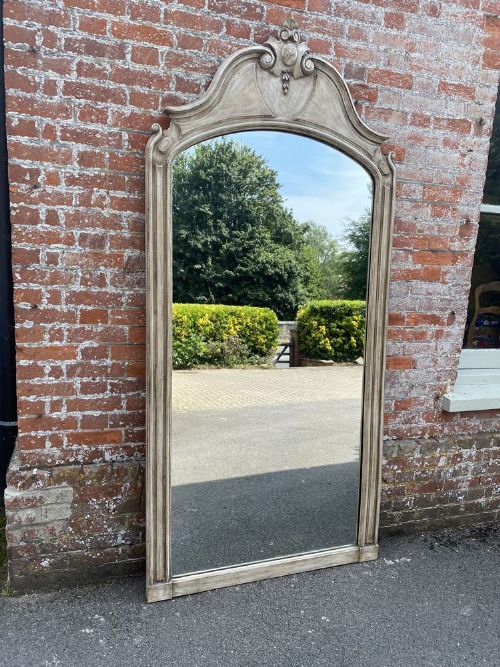
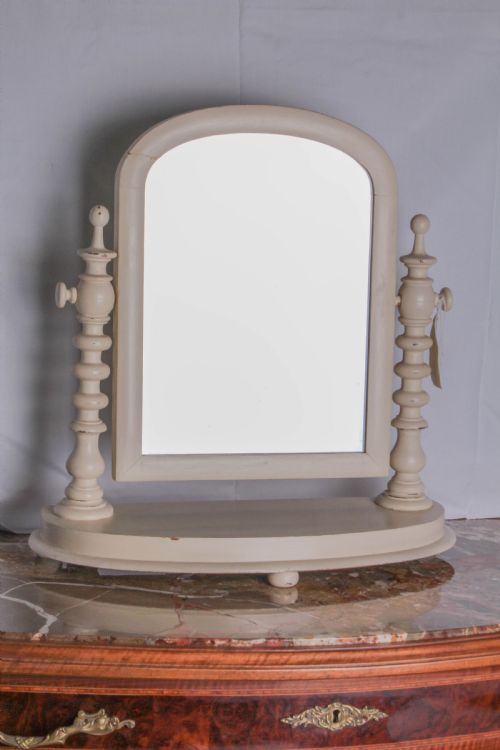
Off White Arched Mirror
An off white arched mirror brings light and period character into a room, offering the curved lines and aged surfaces that collectors seek.
Off White Arched Mirror
When you search for an off white arched mirror, you encounter wall mirrors, overmantel mirrors, and dressing mirrors originating from the nineteenth century. These pieces span English and French workshops, utilising Victorian, Neoclassical, and French provincial styles.
The format most frequently met on this page is the large overmantel mirror designed to sit above a fireplace. Surviving examples often display painted finishes over earlier gilt layers or original gesso grounds.
How they were made
Carved wood and moulded composition provide the structural relief for these arched frames, supporting the weight of thick glass plates. Artisans applied gesso over timber to build up crisp mouldings before finishing the surface with paint.
Painted timber and giltwood form the primary visual layers recorded in the listings. Overpainting on top of original gilding creates the characteristic off white and aged patination seen on these nineteenth-century frames.
Several mirrors carry the ghost of past drawing rooms, hiding patches of original gold leaf beneath generations of quiet off white paint.
What varies in quality
The crispness of the carved wood and gesso ornamentation dictates the visual hierarchy of the piece. Deeply carved foliage and well-defined arched tops separate standard production from finer decorative work.
The integrity of the painted surface and the depth of the original glass plate determine the overall standard. Gradual wear on layered paint reveals complex historical patination rather than flat modern coverage.
The Off White Arched Mirror Glossary
- Overmantel mirror
- A large wall mirror specifically proportioned to hang above a mantelpiece or fireplace. These pieces dominated nineteenth-century drawing rooms to reflect light.
- Gesso
- A plaster-like mixture applied to wood frames to create a smooth surface for carving or gilding. It allows for intricate relief details along the arched top.
- Giltwood
- Timber that has been coated with a thin layer of gold leaf. Many of these mirrors show traces of this material beneath later off white paint.
- Moulded composition
- A mixture of whiting, resin, and oil pressed into moulds to form decorative ornaments. It was widely used on Victorian frames to speed up production.
Off White Arched Mirror: Frequently Asked Questions
Where should an arched mirror hang?
These mirrors traditionally sit above a fireplace mantel, where their height draws the eye upward and balances the room. They also function effectively on main hallway walls to capture and multiply natural light.
Ensure the wall construction supports the combined weight of the timber frame and thick glass plate. Heavy overmantel mirrors require secure fixings anchored directly into wall studs or masonry.
How do I date a painted mirror?
Examine the construction of the timber backing and the composition of the gesso beneath the paint layers. Nineteenth-century frames typically employ hand-carved elements and older joinery techniques.
Look closely at the glass plate itself for slight distortions or foxing that indicate age. Original mercury or early silvering methods display distinct ageing patterns distinct from modern replacements.
Are these mirrors French or English?
The listings include both origins, spanning French provincial and chateau styles alongside English Victorian pieces. French examples often feature more elaborate shaped tops and lighter carved ornamentation.
English variants tend towards heavier proportions suitable for formal Victorian overmantels. Both traditions utilise similar carved wood and gesso construction methods.
What causes the off white finish?
Many nineteenth-century pieces feature later overpainting applied directly above original giltwood or dark painted surfaces. This layered history creates the soft, chalky tones valued in period interiors.
Over decades, the top coat thinnens and reveals hints of the contrasting colours underneath. This natural wear adds depth that cannot be replicated by modern distressing.