
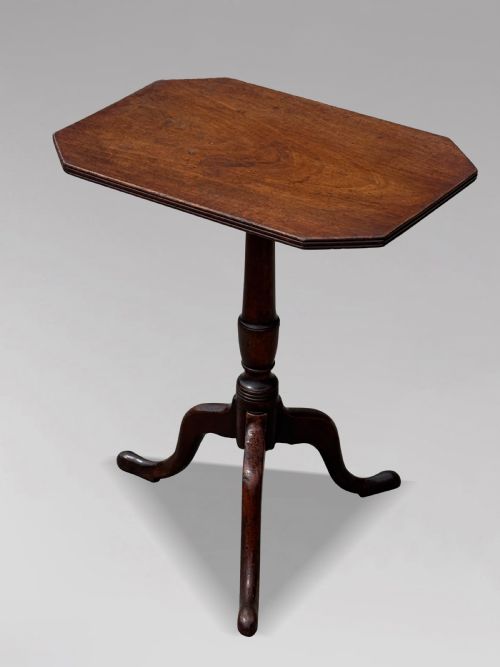
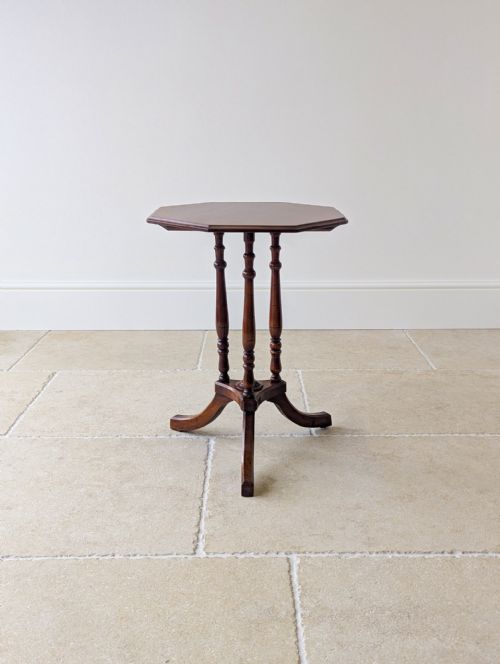
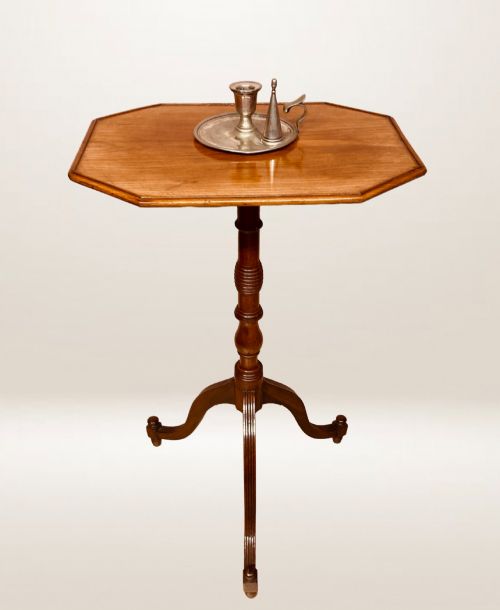


Octagonal Top Lamp Table
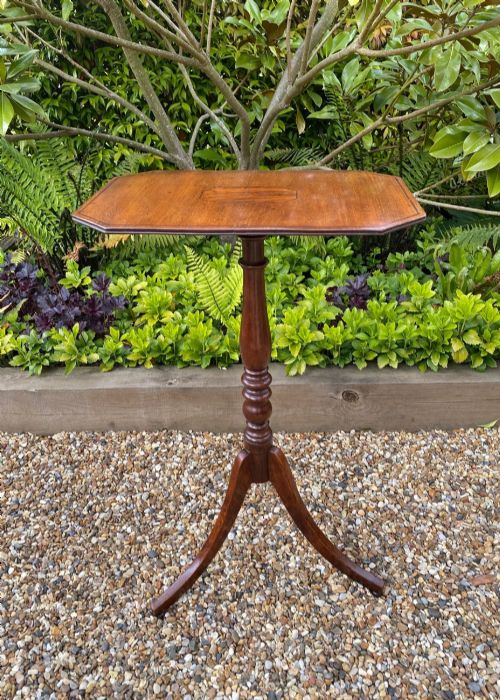
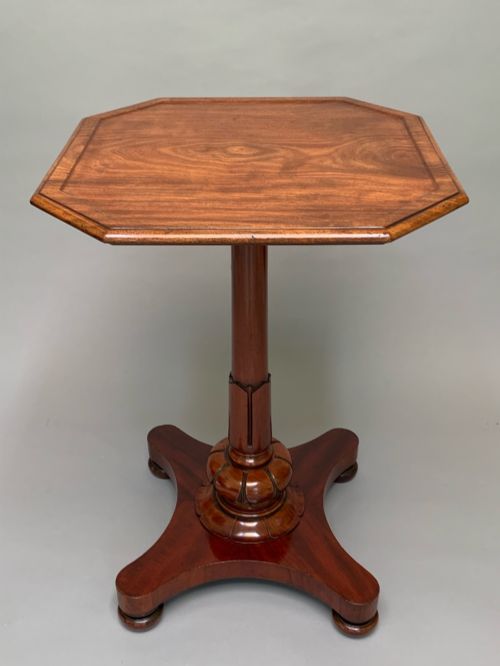
An octagonal top lamp table brings distinct geometry and useful surface space to a corner, most frequently met in mahogany or walnut across this selection.
Octagonal Top Lamp Table
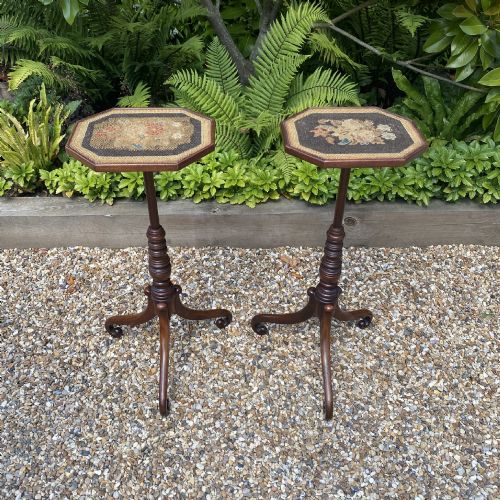
An octagonal top lamp table provides a compact surface for lighting and small objects, utilising an eight-sided form rather than a standard circle or square. These pieces function as occasional, side, or wine tables, occupying minimal floor space while offering distinct angles.
The versions most common on this page date from the Georgian, Regency, and Victorian periods, alongside Edwardian examples. They appear primarily in mahogany, walnut, and oak, often standing on single tripod bases or multi-legged supports.
Makers designed these tables for parlours, libraries, and sitting rooms where flexible surface placement mattered. The octagonal format allows the grain and edge mouldings to catch the light from different directions.
What varies in quality
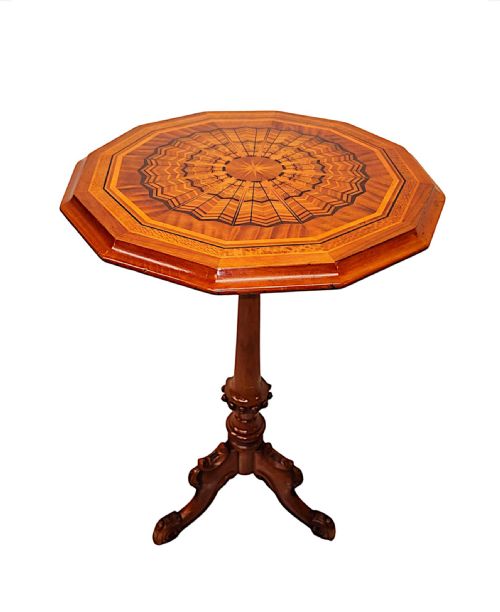
The standard of timber selection and the precision of the inlay set the finest examples apart from standard production pieces. Figured grain veneers, meticulous boxwood stringing, and balanced proportions across the eight sides indicate higher workshop skill.
Construction details also dictate grade, notably the rigidity of the central pillar fixing, the smoothness of any tilt-top or birdcage mechanism, and the crispness of hand-carved elements on the base and legs.
The listings here include diverse materials such as mahogany, walnut, rosewood, oak, satinwood, ebony, marble, and bamboo.
Gillows
The Octagonal Top Lamp Table Glossary
- Tripod table
- A small freestanding table supported by a single central pillar resting on three legs. This construction prevents wobbling on uneven floors.
- Tilt top
- A table top hinged to the pedestal so it can pivot vertically when not in use. This design allowed tables to be stored flat against a wall.
- Birdcage
- A rotating wooden framework beneath a table top that allows the surface to turn and tilt. It uses small turned spindles resembling a cage.
- Stringing
- Thin inlaid lines of contrasting wood used to outline the edges of a table top. Boxwood and ebony were common choices for this decorative banding.
- Occasional table
- A small, movable table designed for specific, intermittent use in a room. These pieces could be easily relocated near seating or lamps as needed.
Octagonal Top Lamp Table: Frequently Asked Questions
What is an octagonal top lamp table used for?
These tables served primarily as convenient surfaces for lighting, holding lamps, candles, or decorative objects beside seating areas in nineteenth-century homes.
Their compact multi-sided footprint allowed them to fit neatly into corners or beside chairs where larger rectangular tables would obstruct movement.
How do I date a wooden lamp table?
Dating relies on examining the timber species, construction joints, leg styles, and secondary woods used beneath the surface. Georgian and Regency pieces often feature Honduras mahogany or rosewood with delicate tripod bases.
Later Victorian and Edwardian examples introduce denser walnut, oak, or maple, alongside machine-sawn components and different finishing techniques that distinguish them from earlier handmade items.
How do I care for antique wood furniture?
Maintain antique timber surfaces by keeping them away from direct heat sources and strong sunlight, which can dry out and fade the wood. Regular dusting with a soft, dry cloth preserves the polished finish.
Apply a quality beeswax polish sparingly only when the wood appears dry, buffing gently to maintain the natural lustre without building up heavy wax layers.