

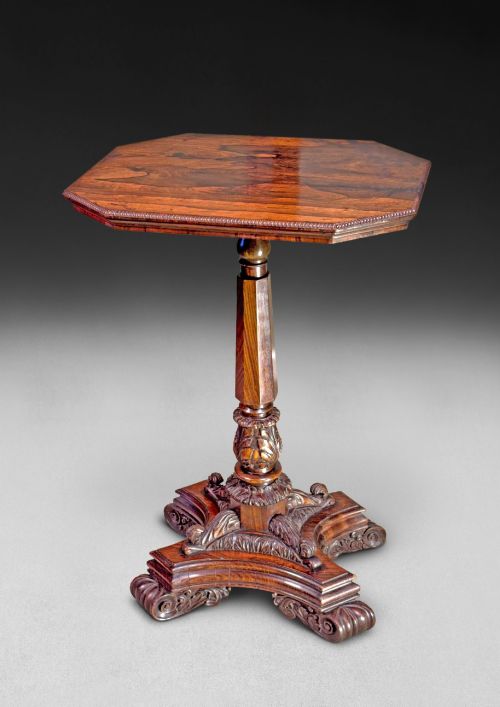
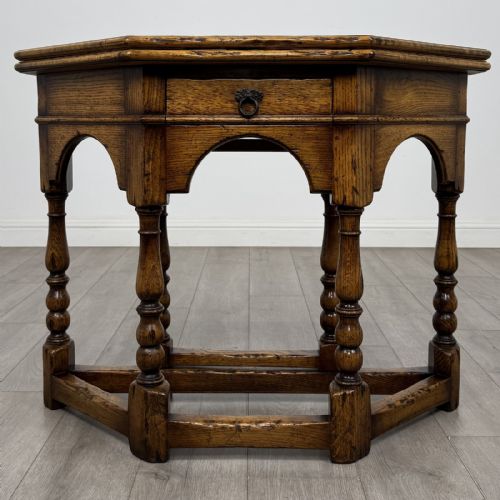
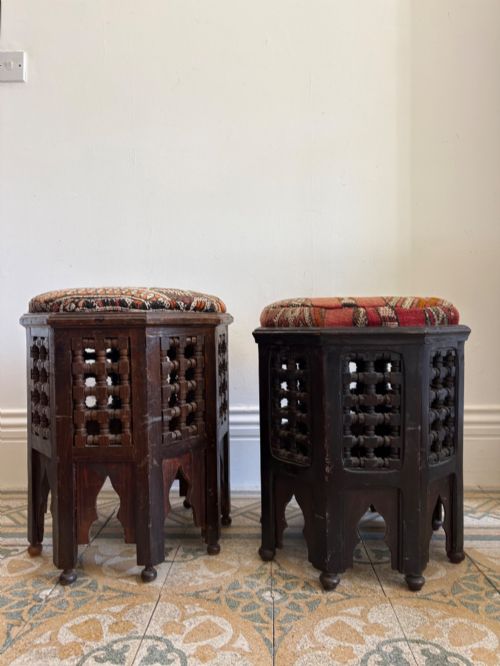
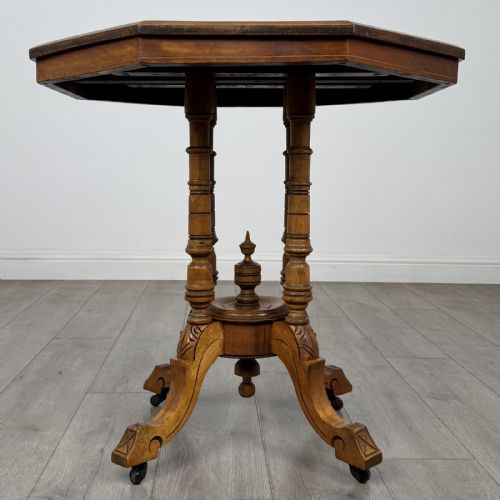


Octagonal Top Accent Table
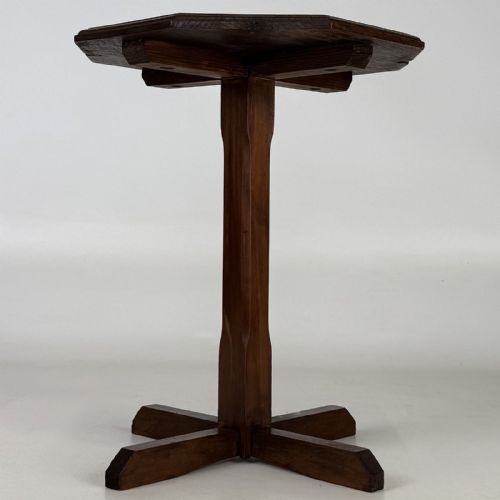
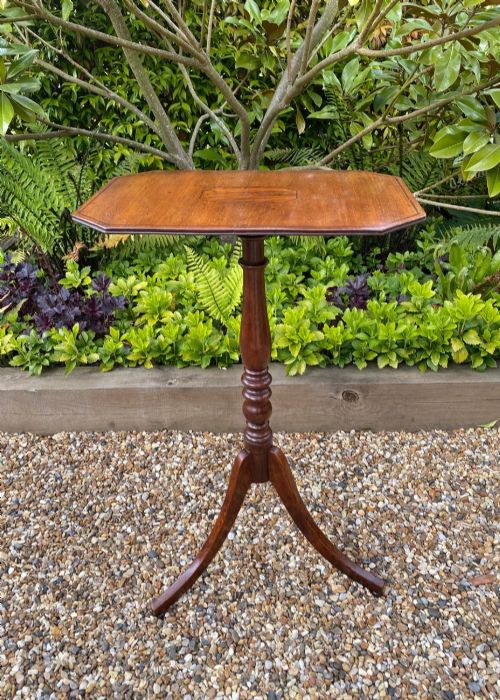
An octagonal top accent table brings geometric precision and rich timbers to a room, serving as a versatile spot for lamps or display.
Octagonal Top Accent Table
An octagonal top accent table provides a distinct eight-sided surface for smaller spaces, frequently appearing as a lamp table, occasional table, or window table. These pieces emerge across several periods, from the eighteenth century through the Edwardian era and into the 1930s.
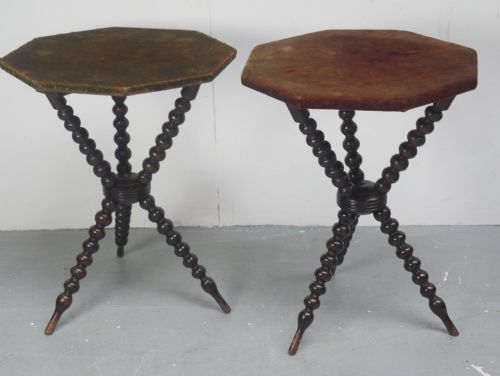
The form adapts to diverse styles, including Victorian walnut designs, Edwardian variations, and Moorish or Anglo-Indian interpretations. Buyers encounter standard side pieces alongside tilt-top variants and multi-sided tables suited for parlours and halls.
How they were made
Cabinetmakers utilised dense hardwoods such as mahogany, walnut, oak, and yew, often pairing them with decorative veneers like satinwood, burr elm, and rosewood. Construction methods involve stable tripod bases or pedestal supports holding the eight-sided tops.
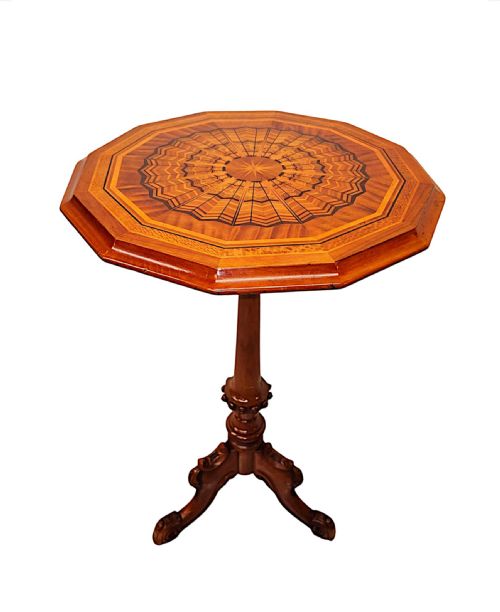
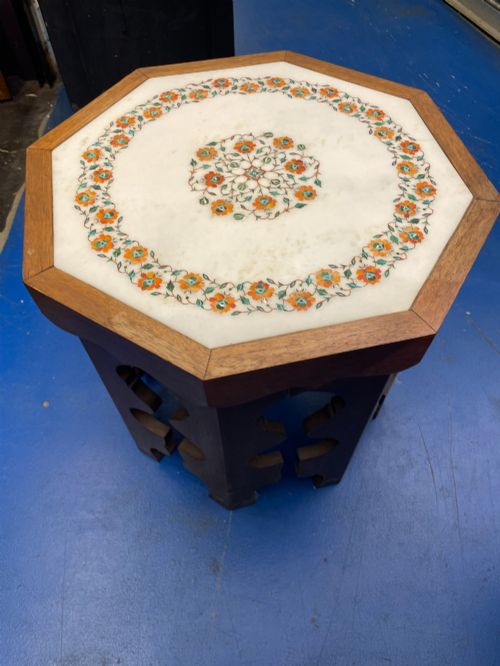
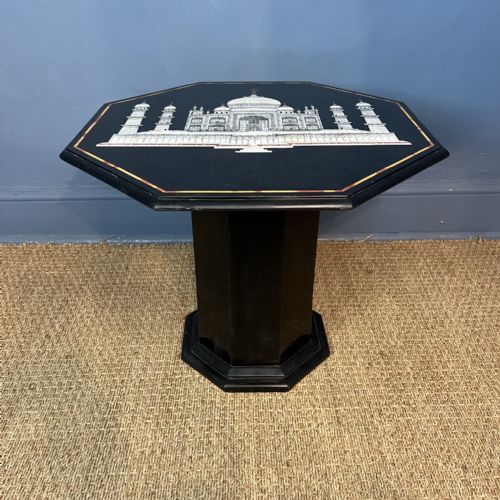
Surface decoration distinguishes many examples, employing intricate inlay, parquetry, stone work like pietra dura and marble, or carved detailing in regional traditions.
Octagonal Top Accent Table Retail Price Guide 2026
Typical asking prices for octagonal top accent table among the pieces listed under this phrase on Sellingantiques today, from the lower quarter to the upper quarter. They describe what is for sale here now, not the wider market.
Listings feature woods including mahogany, walnut, oak, satinwood, rosewood, yew, and padauk across various centuries.
What varies in quality
The standard of timber selection and complexity of surface embellishment dictate the distinction between simpler domestic furniture and finer decorative works. High-grade pieces display precise parquetry, specialised stone inlays, or sophisticated carving.
Integrity of the structural joints and the crispness of the eight-sided geometry remain central to the success of each piece, whether resting on a central pillar or a tripod base.
Gillows·John Taylor Edinburgh·Almerico Gargiulo
The Octagonal Top Accent Table Glossary
- Tilt top
- A mechanism allowing the table surface to pivot upright when not in use. This design saved space in period rooms.
- Parquetry
- Geometric mosaic woodwork formed from small pieces of veneer arranged in patterns. It creates striking decorative tops on tables.
- Tripod base
- A support structure comprising three legs radiating from a central pillar. This configuration provides stability on uneven floors.
- Pietra dura
- An artistic technique using cut and fitted polished coloured stones to create images. It appears on select tabletops as detailed pictorial inlay.
Octagonal Top Accent Table: Frequently Asked Questions
Where should I place an octagonal table?
These tables fit easily beside seating in a drawing room or function as a lamp stand in a corner. Their eight-sided geometry allows them to soften square room layouts.
They also serve effectively in hallways or window spaces where a standard round or rectangular table might block natural flow.
How do I care for inlaid wood?
Keep wooden surfaces away from direct heat sources and strong sunlight to prevent the timber and delicate veneers from drying out. Regular dusting with a dry cloth maintains the finish.
Apply suitable wax sparingly if the timber appears dry, avoiding moisture on inlaid stone or delicate parquetry.
What is a tilt top used for?
The pivoting mechanism enabled historical users to store the furniture flat against a wall when floor space was required for other activities.
Today, this feature remains a functional mechanical detail that demonstrates period construction methods.
How do I identify a Victorian example?
Victorian tables frequently utilise dark walnut or mahogany, often featuring robust turned pedestals or heavy tripod bases. Many incorporate tilt-top actions or elaborate decorative carving.
Comparing the timber density and construction joints helps distinguish these pieces from earlier Georgian or later Edwardian work.