
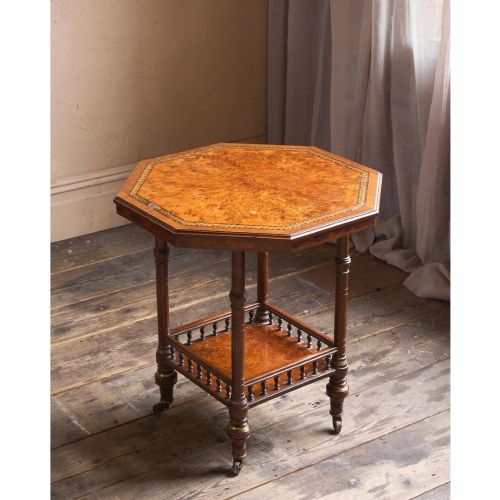
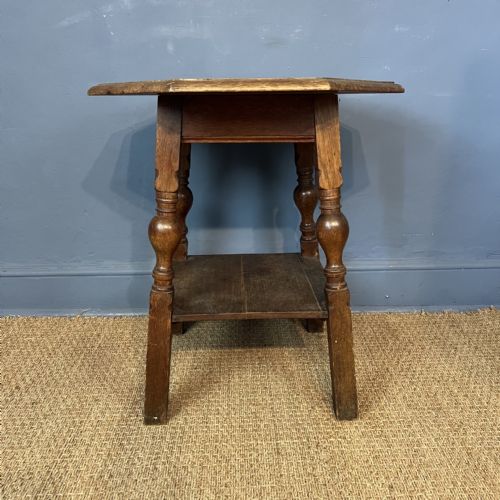
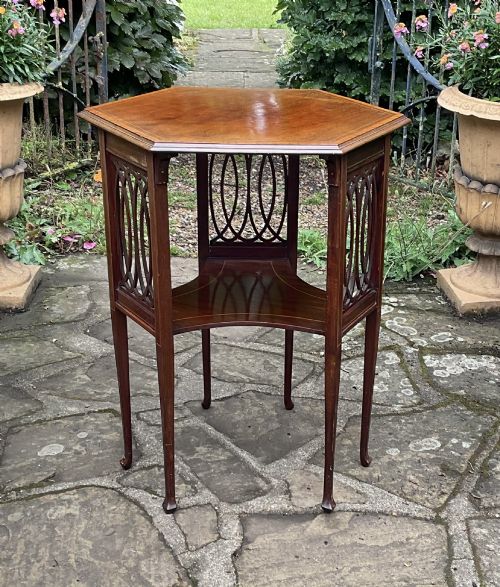


Octagonal Tier Table
An octagonal tier table provides multiple surfaces in a compact footprint, combining geometric form with practical display space.
Octagonal Tier Table
An octagonal tier table is a multi-level surface designed for display or utility, frequently encountered in Victorian, Edwardian, and Art Deco forms. These pieces serve as occasional tables, lamp tables, or small centre tables within a room layout.
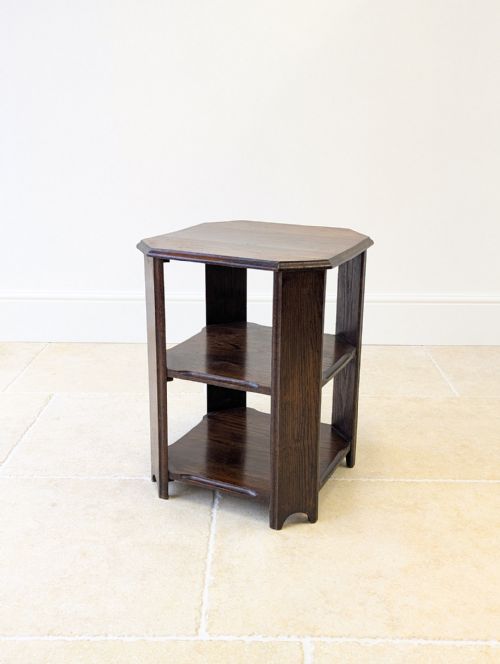
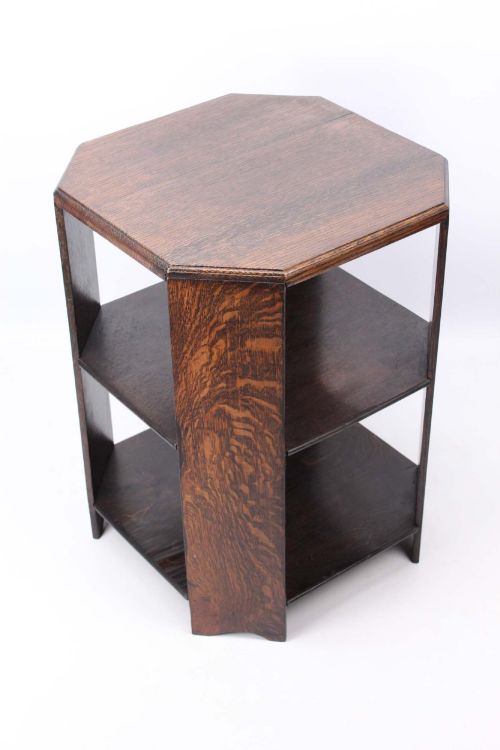
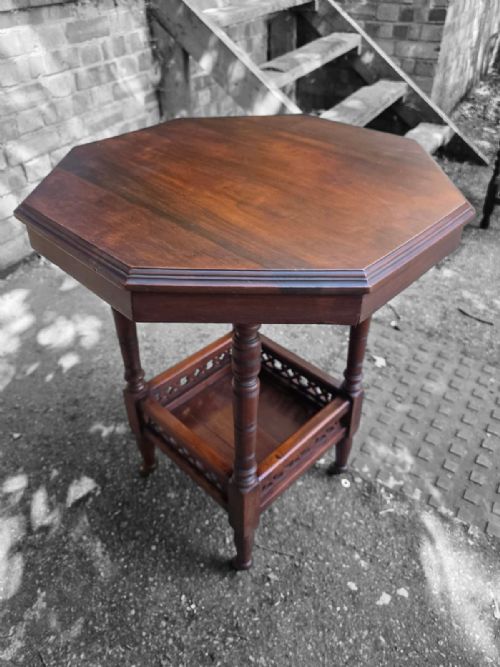
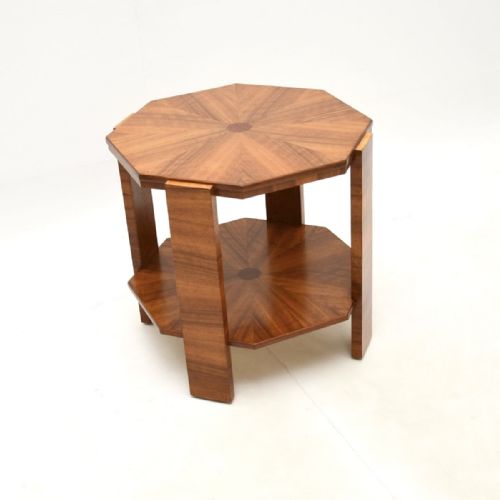
The octagonal top shape creates distinct angles that distinguish these pieces from standard round or rectangular tables. Many versions incorporate a second tier below the main surface, linked by structural supports or cross stick bracing to hold books and small objects.
Makers utilised these tables in various settings, ranging from formal parlour rooms to Arts and Crafts interiors. The listings show examples spanning late nineteenth-century walnut and mahogany to limed oak pieces from the nineteen-thirties.
Materials and construction
Cabinetmakers built these tables using hardwoods such as oak, walnut, mahogany, and rosewood, often applying veneers to achieve smooth surfaces. Satinwood and boxwood inlay appear frequently on Edwardian pieces, adding contrasting geometric or floral detail to the timber.
Structural integrity relies on sturdy leg joints and shelf bracing, particularly on two-tier models and revolving bookcases. Brass elements and parcel gilt sometimes accent the wood, while ebonised finishes provide a dark, uniform appearance on aesthetic movement examples.
Several tables rotate on hidden pivots, turning stationary afternoon tea into a spinning game of pass-the-scone.
What separates the tiers
The grade of timber and precision of veneer work dictate the refinement of a piece, with figured walnut or dense mahogany standing apart from simpler softwoods. Finely executed boxwood inlay and crisp carving demonstrate greater hand skill than plain moulded edges.
Structural stability across multiple tiers determines day-to-day utility, as tight joinery prevents wobble between shelves. The visual balance between the eight-sided top and the supporting legs governs how successfully the geometry sits in a room.
Gillows·Liberty and Co
The Octagonal Tier Table Glossary
- Tier table
- A piece of furniture featuring two or more stacked horizontal surfaces connected by vertical supports. This layout maximises display space without increasing the footprint of the furniture.
- Inlay
- A technique where contrasting materials such as satinwood or boxwood are set into recesses flush with the main timber surface. It creates decorative patterns across the top or apron.
- Aesthetic Movement
- A nineteenth-century design style focusing on art for art's sake, often resulting in ebonised wood surfaces and minimalist Japanese-inspired lines. Tables from this period frequently employ walnut or rosewood.
- Etagere
- An open piece of furniture with multiple shelves for displaying small objects or ornaments. The form overlaps with tier tables and occasional tables in Victorian interiors.
- Cross stick bracing
- Intersecting wooden supports placed between the legs or lower tiers of a table to add rigidity. It is commonly found on multi-level walnut occasional pieces.
Octagonal Tier Table: Frequently Asked Questions
What is an octagonal tier table used for?
These tables function primarily as occasional surfaces for lamps, books, and decorative objects in living spaces. The multiple tiers allow for compact storage of reading material while keeping the main surface clear.
Their footprint remains small enough to fit beside armchairs or in corners, making them adaptable for daily use in various rooms.
How do I date an octagonal tier table?
Dating relies on timber choices, decorative motifs, and construction methods visible across the piece. Victorian examples often feature rich walnut or ebonised finishes, whereas Edwardian versions favour inlaid mahogany and satinwood.
Art Deco iterations from the nineteen-thirties display stripped oak or geometric tiered skyscraper designs without traditional carving.
Are these tables sturdy enough for daily use?
Most pieces are built from solid hardwoods or stable veneered cores designed to support lamps and books. Tables equipped with cross stick bracing or solid pillar supports offer dependable stability across all levels.
Checking the joints where the lower tier meets the legs ensures the structure remains firm under weight.
What is the difference between a centre table and a side table?
Centre tables are traditionally finished on all sides to stand freely in the middle of a room. Side tables are meant to sit flush against a wall or beside seating furniture.
Octagonal versions blur this distinction due to their symmetrical shape, allowing them to function effectively in both placements.