


Octagonal Sewing Box Table
An octagonal sewing box table combines fine cabinetmaking with fitted interior compartments, offering both a decorative occasional surface and a practical container.
Octagonal Sewing Box Table
The search phrase octagonal sewing box table brings together distinct variations of nineteenth-century work tables and occasional furniture. Buyers encounter pieces configured for needlework, games, and general side use, with geometric lids concealing compartmentalised interiors or hanging silk baskets. The selection spans the Regency, William IV, Victorian, and Edwardian periods, stretching from Georgian origins into the twentieth century.
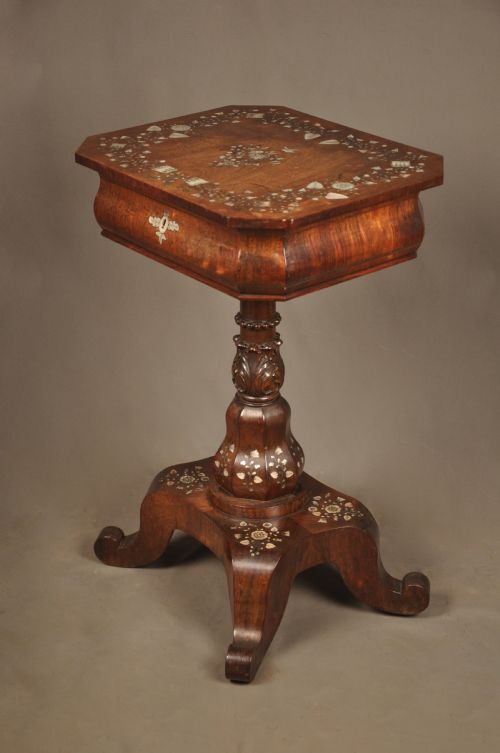
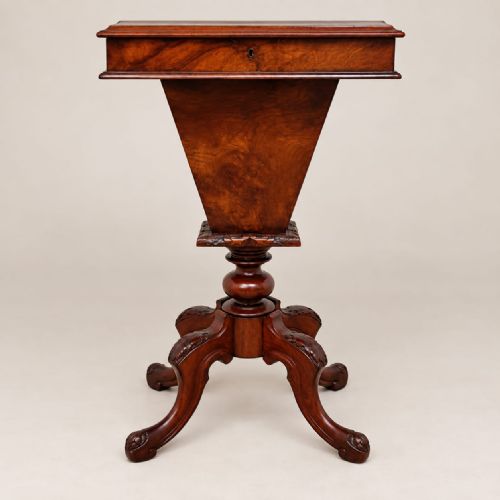
Victorian examples dominate the listings, particularly walnut and burr walnut trumpet workboxes supported on tripod bases. These tables typically feature octagonal hinged lids opening to reveal fitted wells for cottons and small tools. Alongside these trumpet forms, rosewood, mahogany, and satinwood variants appear with marquetry inlay, pedestal supports, and occasionally dual chess boards.
Earlier pieces from the Regency and George III eras offer simpler mahogany or satinwood workboxes on stands, while later Edwardian and Sheraton Revival interpretations showcase inlaid mahogany and satinwood surfaces. Irish yew wood also appears among nineteenth-century examples, giving collectors regional variety in timber and grain.
How they were made
Cabinetmakers utilised dense hardwoods such as mahogany, rosewood, walnut, and burr walnut for the primary carcases, often applying satinwood and boxwood for delicate stringing and marquetry inlay. Trumpet-shaped bodies required precise veneering and steam-bending techniques to taper the octagonal panels smoothly down to the central column and carved tripod legs. Brass hinges, locks, and occasional pedestals provided mechanical stability and functional contrast to the polished timber.
Interior compartments and silk work baskets demanded skilled upholstery and joinery work to line the wells with fabric and construct miniature partitions. Marquetry panels incorporated contrasting wood veneers cut by hand to form floral or geometric motifs across the top of the lid. Tripod bases relied on robust tenon joints and stable leg configurations to support the weight of the hinged upper box without tipping.
Listings feature walnut, rosewood, mahogany, satinwood, and yew wood, spanning the Regency, Victorian, and Edwardian eras.
What varies in quality
Quality rests primarily in the choice and application of timber veneers, particularly the richness of burr walnut figures and the intricacy of marquetry inlay. Superior examples display seamless grain matching across the eight panels of the octagonal lid and refined carving on the central pillar and tripod feet. The complexity of the internal fittings, including original silk baskets and fitted partitions, further elevates the stature of a piece.
Structural integrity of the hinged lid and the alignment of the drop-in compartments distinguish master craftsmanship from standard production. Finer tables maintain tight mitre joints at the corners of the octagonal box and retain functioning brass locks with original keys. The subtlety of boxwood and satinwood stringing reveals the hand of a more accomplished workshop.
The Octagonal Sewing Box Table Glossary
- Trumpet table
- A work table featuring an octagonal body that flares outward from a narrow base toward the hinged lid, resembling the bell of a musical instrument. These pieces frequently rest on a carved tripod base.
- Workbox
- A portable or stand-mounted box designed to hold sewing implements, threads, and needlework supplies. In nineteenth-century furniture, the box is permanently integrated into a pedestal or leg structure.
- Marquetry
- The decorative art of applying small pieces of veneer to a structure to form intricate pictorial or geometric designs. Craftsmen utilised contrasting woods like satinwood, boxwood, and rosewood.
- Stringing
- Thin inlay lines of contrasting wood set into grooves in the surface of furniture. It outlines panels and geometric shapes, particularly on Sheraton Revival and Edwardian pieces.
- Tripod base
- A support structure comprising three legs radiating from a central pillar. This design provides stable floor contact for slender occasional and sewing tables.
Octagonal Sewing Box Table: Frequently Asked Questions
What is an octagonal sewing box table?
An octagonal sewing box table is a nineteenth-century piece of furniture designed to store needlework supplies beneath a hinged geometric lid. These tables combine a practical compartmentalised interior with a decorative surface suitable for use as an occasional or lamp table.
Most examples stand on a central pedestal with tripod legs, housing a tapered body or hanging silk basket beneath the workbox.
How were these tables used originally?
Ladies utilised these tables to organise sewing tools, threads, fabrics, and unfinished embroidery projects close to hand in the drawing room. The fitted interior compartments kept small implements separated, while the closed lid provided a clean surface for writing or displaying decorative items.
Some variants also incorporated folding tops configured for chess or backgammon, serving a dual purpose for evening entertainment.
How do I date an octagonal sewing box table?
Dating relies on timber choices, leg styles, and decorative techniques characteristic of specific periods. Regency and George III pieces typically feature plain mahogany or satinwood on simpler stands, while Victorian examples favour burr walnut trumpet forms with tripod bases.
Edwardian and Sheraton Revival pieces from around 1900 often display lighter mahogany timbers with extensive inlaid stringing and lighter construction.
Are the silk baskets usually original?
Original silk work baskets are uncommon because fabric degrades over decades of use and handling. Many surviving tables retain replacement fabric linings or baskets reconstructed to match the historical style of the interior well.
Collectors look closely at the woodwork and internal partitions, which more frequently survive in their original condition.
Can I use one as a bedside table?
The compact footprint and convenient height of these tables make them well suited for modern residential use as bedside or lamp tables. The internal compartments provide practical storage for small personal items while maintaining a decorative antique appearance.
Care should be taken to protect polished timber surfaces from moisture and direct heat.